
Bigcapital
Open-source double-entry accounting and inventory platform for small businesses, with invoicing, bank feeds, and reports.
Open source alternative to:





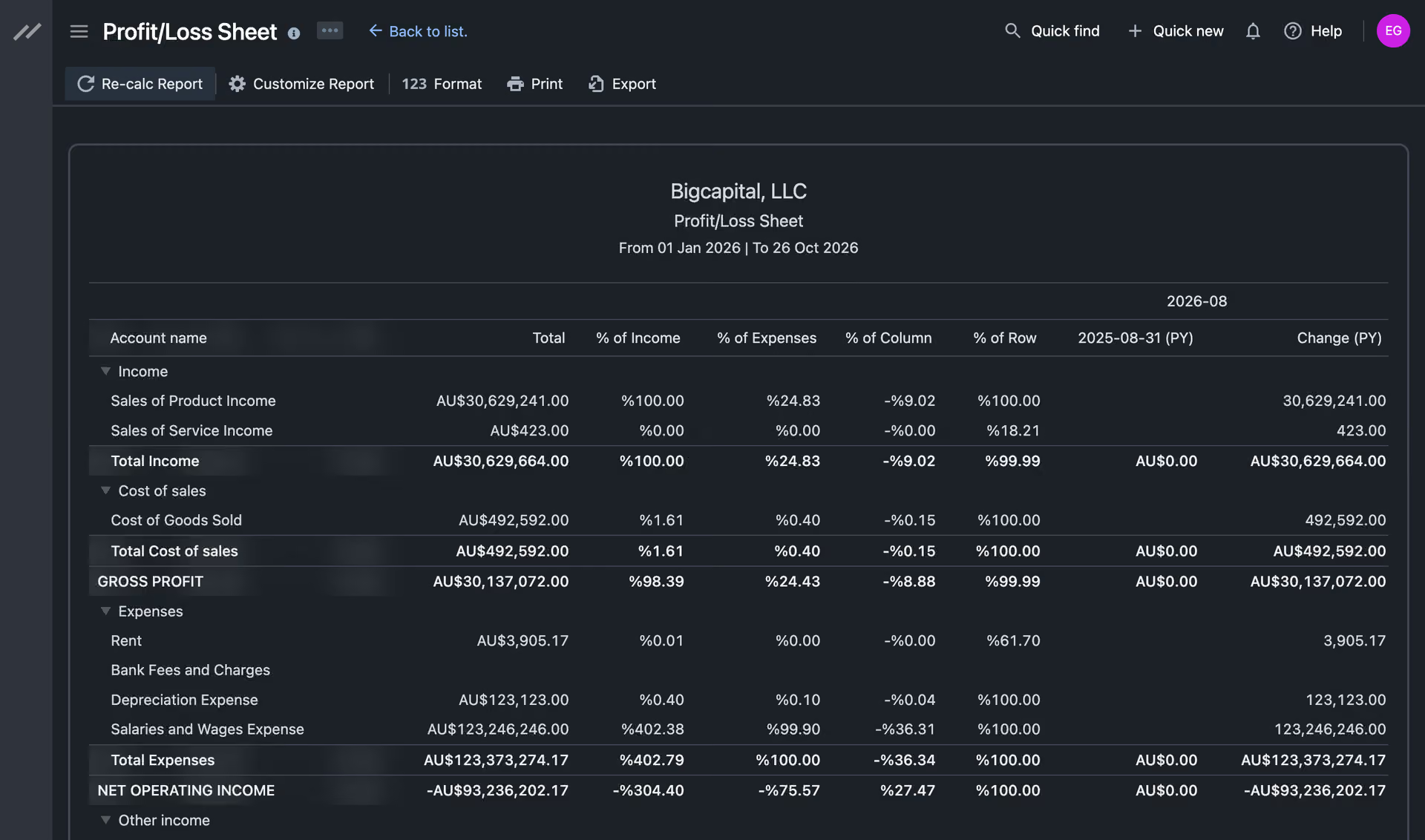
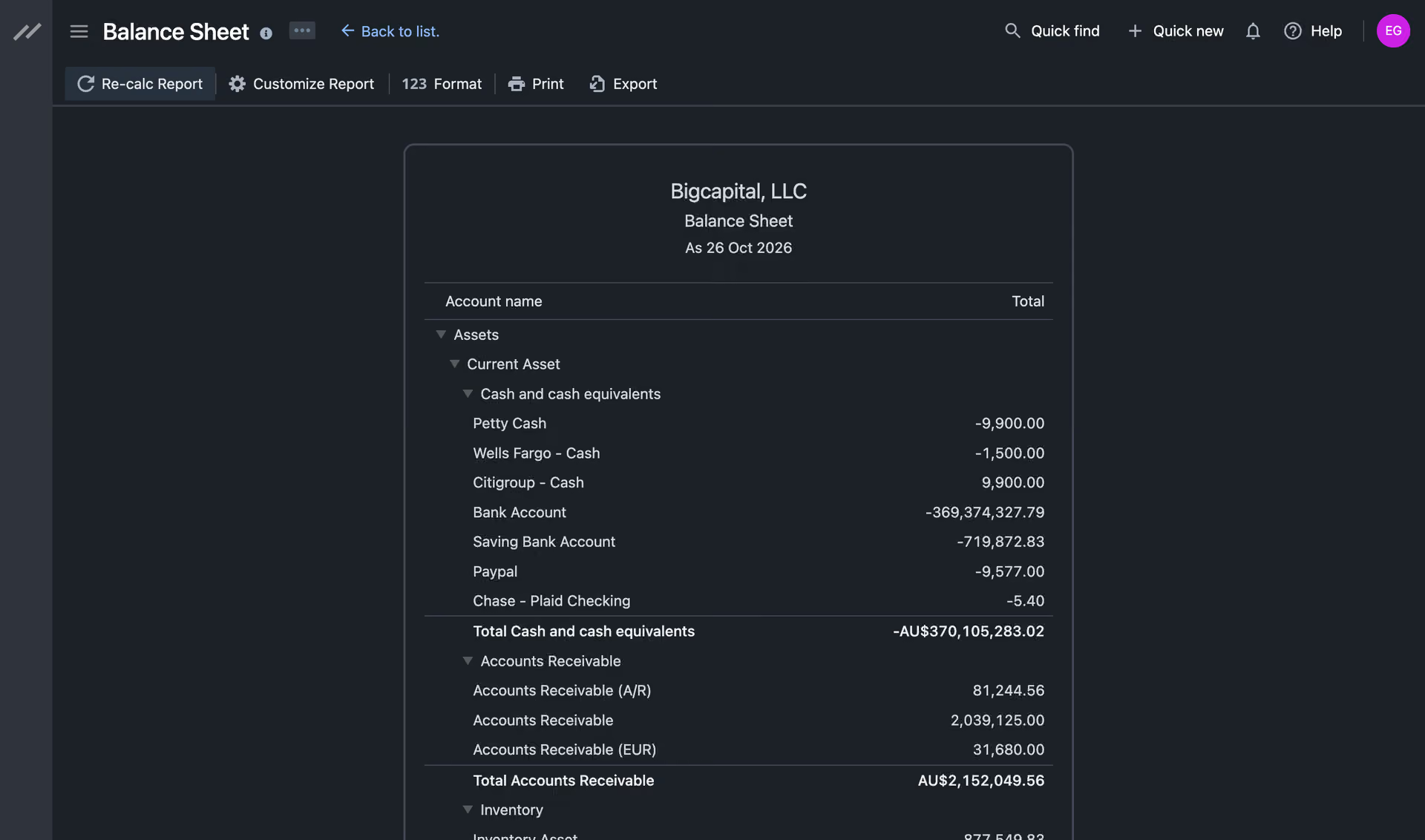
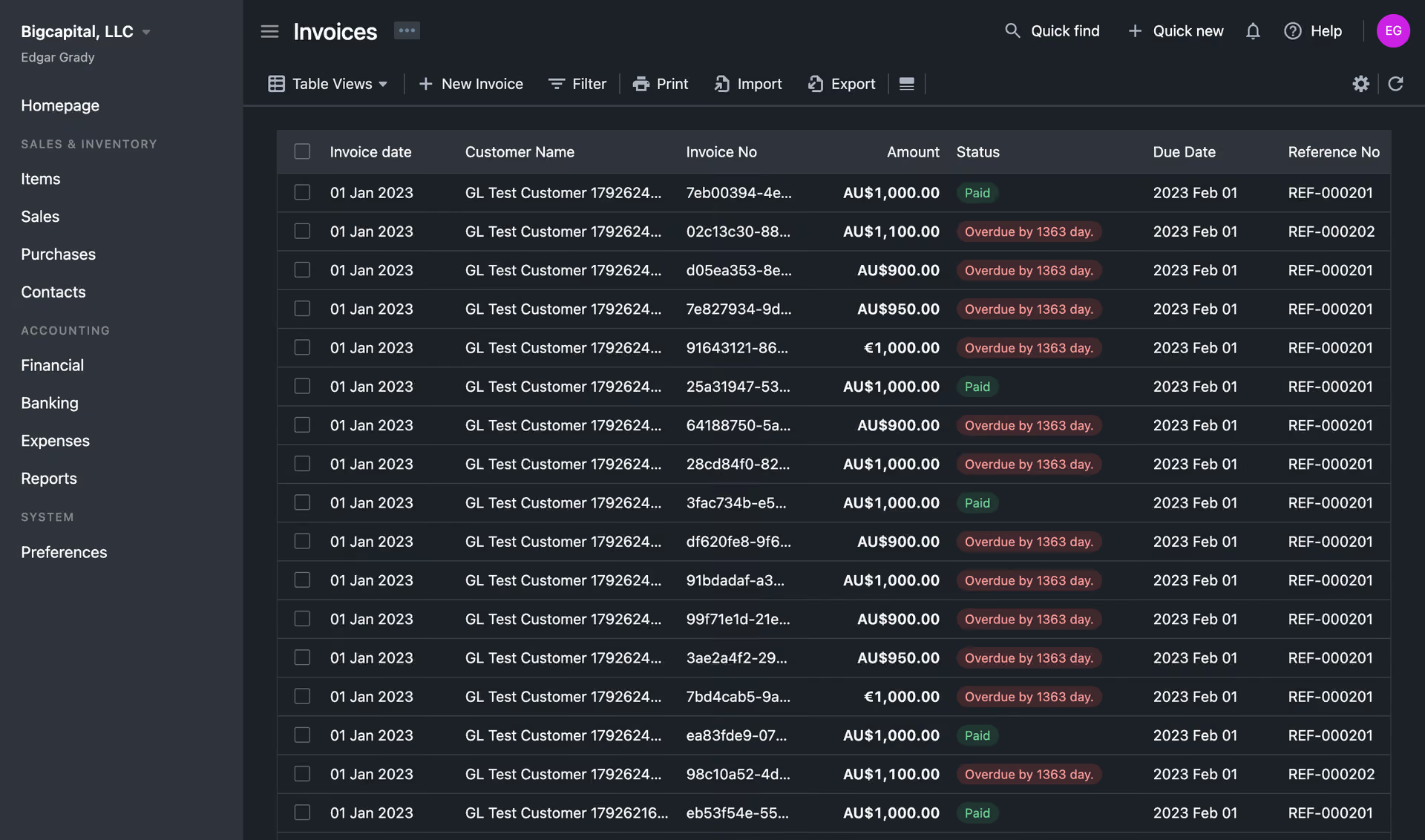
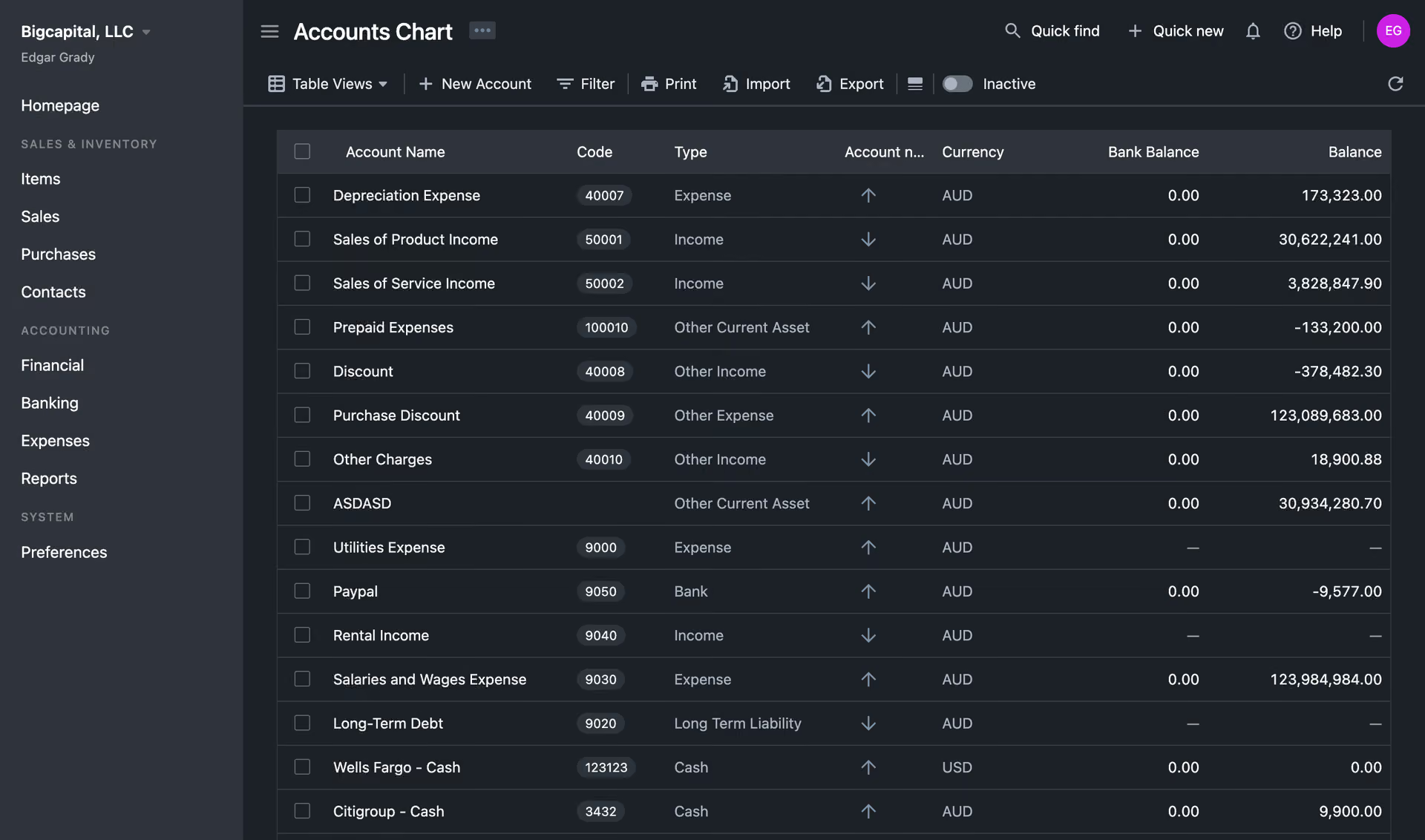
Bigcapital is an open-source accounting and inventory platform for small and medium businesses. It implements double-entry bookkeeping and connects sales invoicing, bills, expenses, inventory, banking, taxes, and multi-currency accounting so every transaction lands in a shared general ledger and the financial statements stay current.
Feature coverage includes customizable invoices with PDF templates, estimates, sale receipts, credit notes, vendor credits, manual journals, inventory adjustments and warehouse transfers, bank feeds through Plaid, bank reconciliation rules, transaction locking, role-based permissions, and multiple branches. Reporting covers balance sheet, profit and loss, cash flow, trial balance, general ledger, receivable and payable aging, sales and purchases by item, inventory valuation, and sales tax liability summaries.
It is AGPL-3.0 and designed to be self-hosted with Docker Compose, which runs the web app, API server, MySQL/MariaDB, MongoDB, Redis, and an Nginx gateway. A managed Bigcapital Cloud is announced as coming soon. The public REST API supports headless accounting, with API keys for integrations. Compared with QuickBooks, Xero, and Wave, a self-hosted Bigcapital has no per-seat subscription and keeps the books on your own infrastructure; the trade-off is that you run upgrades, mail configuration, and backups yourself.
Categories:
Build with:





Frequently Asked Questions
What are the system requirements to self-host Bigcapital?
The documentation recommends at least 2 CPU cores and 4 GB of RAM, which supports up to 10 organizations, plus 5 to 10 GB of storage for the MariaDB database. The production Docker Compose stack runs the web app, the API server, MySQL/MariaDB, MongoDB, Redis, and an Nginx gateway, and serves the app on port 8000. An automated setup script is available if you do not want to configure the stack by hand.
Does Bigcapital support multiple currencies and branches?
Yes. Each organization has a base currency, and you can add other currencies through the currencies settings for multi-currency accounting. The branches feature lets you create branches, mark one as primary, and activate or deactivate them, with branch data available through the API.
How do bank feeds and reconciliation work?
Bigcapital connects to banks through Plaid. On a self-hosted instance you supply your own Plaid credentials and webhook configuration through environment variables. Once connected, transactions sync into bank accounts, where you can categorize them, match them to existing records, create bank rules, and reconcile the account. Syncing can be paused, resumed, or refreshed per account.
Is there a REST API for automation?
Yes. The documented REST API covers accounts, customers, vendors, sale invoices, bills, expenses, inventory, banking, roles, and financial reports, and is intended for headless accounting integrations. Requests authenticate with an API key prefixed with bc_ or a JWT token; with a JWT you also pass an organization-id header. A Postman workspace is linked from the README.
Can Bigcapital track inventory across warehouses?
Yes. Items can be organized into categories and tracked across multiple warehouses, with inventory adjustments, warehouse transfers, landed cost allocation, and inventory valuation reports. Item, warehouse, and inventory cost endpoints are part of the public API.
OpenAltFinder Score
Project Details
Repository details
Updated 10/26/2026, 2:01:01 PM
View RepositoryGet the latest open source alternatives delivered weekly.
Discover tools that give you freedom from proprietary software.
 Bigcapital vs EasyInvoicePDF