
Inbucket
Open source disposable email testing server with built-in SMTP, POP3, REST, and web interfaces — no database required.
Open source alternative to:




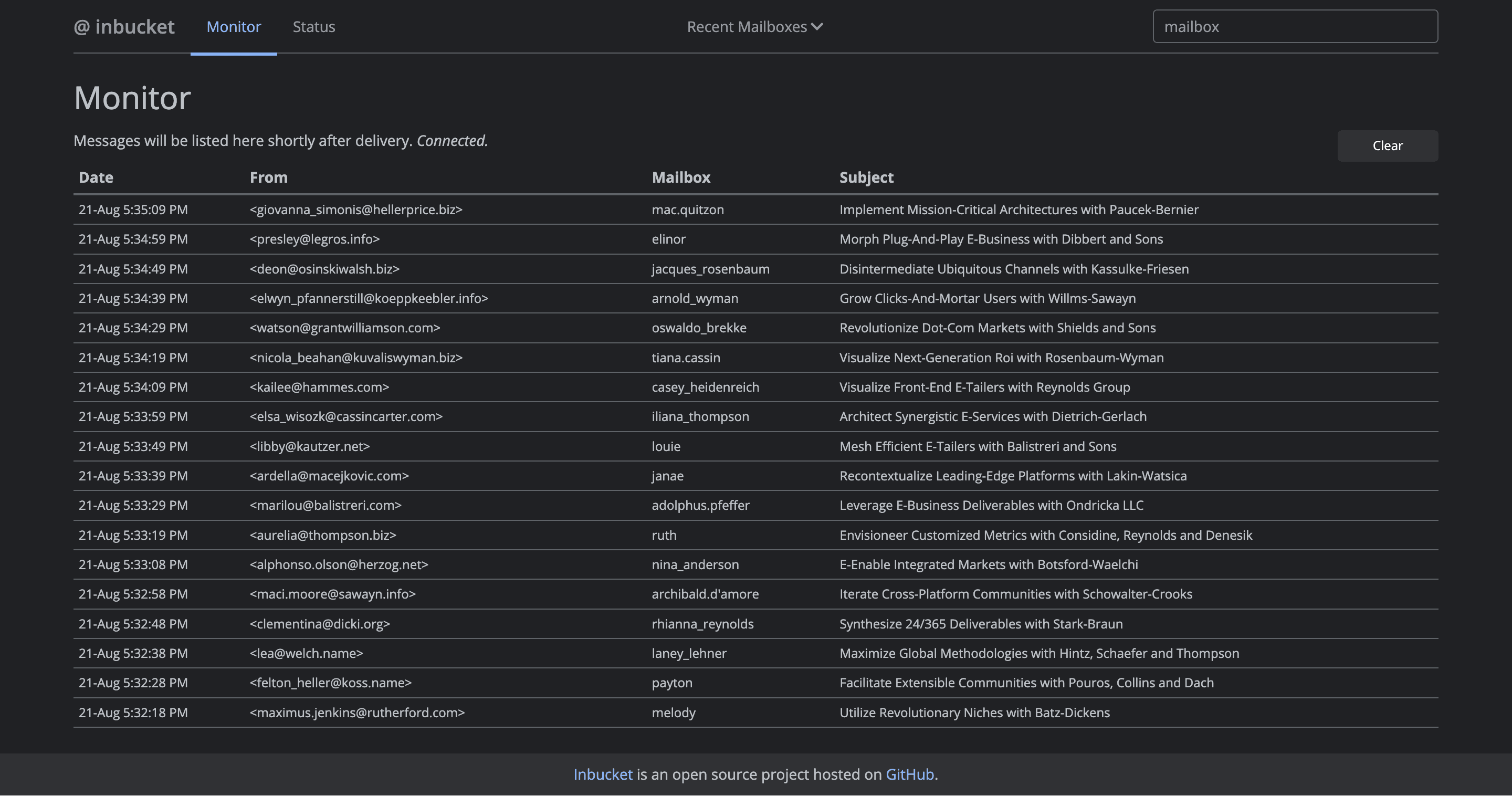
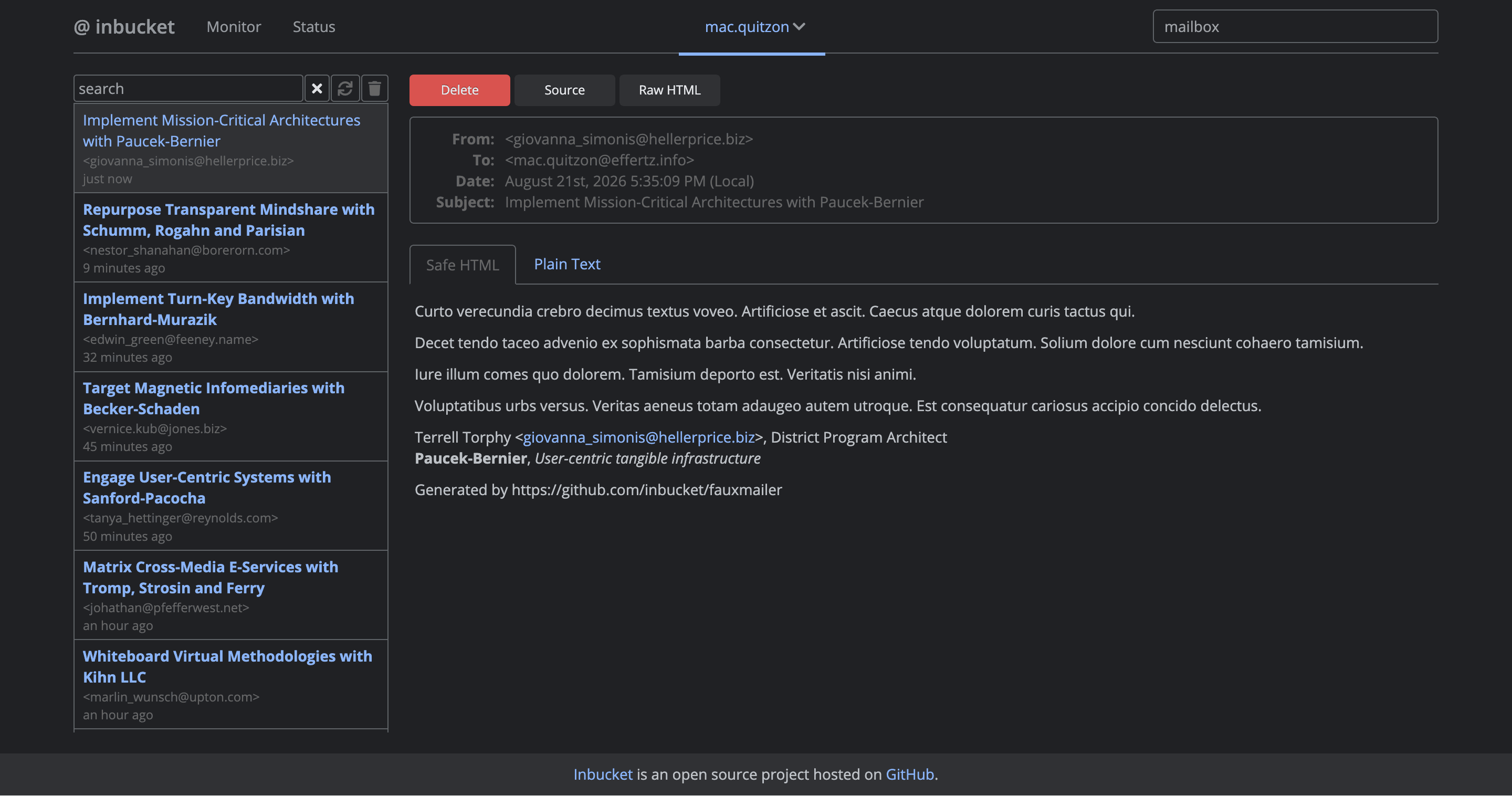
What is Inbucket
Inbucket is a disposable webmail server built for testing and developing applications that send email. It accepts messages for any address, stores them in memory, and exposes them through a web UI, a REST API, and POP3 — making it easy to inspect what your application actually sent without polluting a real inbox or hitting a third-party service.
Unlike hosted tools such as Mailtrap, Inbucket is a single self-contained Go binary with no external dependencies: the HTTP server, SMTP listener, POP3 listener, and storage engine are all built in. The official Docker image has been downloaded over a million times and the project is tagged as production quality by its maintainers.
Key features
- SMTP, POP3, REST, and web — accept mail on SMTP, fetch mail over POP3, query and delete messages via a documented REST API, and browse them in a web inbox at the default port 9000.
- No database required — storage is in-memory by default, so spinning it up for a test run is just one
docker runcommand. - Pluggable storage — in-memory, on-disk, and Redis backends are available, with configuration via environment variables.
- Lua scripting (3.1+) — custom rules for accepting, rejecting, transforming, or forwarding messages.
- TLS support for both SMTP and POP3 services.
- Go client library at
github.com/inbucket/inbucket/pkg/rest/clientfor integration tests. - Cross-platform binaries for Linux, macOS, and Windows, plus Docker images, a Helm chart, and a Homebrew tap.
How it compares to Mailtrap
Mailtrap is a paid SaaS that provides a virtual inbox for capturing staging and development email, with team inboxes, email previews across clients, and CI integrations. Inbucket covers the core use case — a local fake SMTP server that captures outbound mail from your app — entirely on your own infrastructure, with no account, no quota, and no per-seat pricing. You give up Mailtrap's polished email-client previews and team-shared inboxes, and you gain a fully self-hostable, MIT-licensed tool you can run in CI, in air-gapped environments, and in unit tests against a localhost SMTP port.
Self-hosting
Inbucket is trivial to self-host. The fastest path is the official Docker image:
docker run -d --name inbucket -p 9000:9000 -p 2500:2500 -p 1100:1100 inbucket/inbucket
A Helm chart is maintained by the community for Kubernetes deployments, and Linux/macOS/Windows binaries are published with each release on GitHub.
Categories:


Frequently Asked Questions
Which platforms does Inbucket run on?
Inbucket ships as a single Go binary for Linux, macOS, and Windows. Official Docker images are published on Docker Hub, the community maintains a Helm chart for Kubernetes, and there is a Homebrew tap for macOS. The web UI runs in any modern browser.
Does Inbucket have an API, webhooks, or CLI?
Inbucket exposes a REST API for listing, viewing, and deleting messages, a Go client at github.com/inbucket/inbucket/pkg/rest/client for use in tests, a built-in SMTP server for receiving mail from your app, and a POP3 server for fetching mail. There is no separate CLI tool, but the REST API can be driven with curl or any HTTP client.
Can I extend or customize Inbucket?
Inbucket 3.1 introduced Lua scripting that lets you write custom rules for accepting, rejecting, transforming, or forwarding messages. Storage backends are also pluggable: in-memory, on-disk, and Redis stores are built in, and the project documents how to add new ones.
Does Inbucket support authentication or multi-user access?
No. Inbucket is designed to run on localhost or inside a private network as a development tool, so it does not ship with user accounts, logins, or per-mailbox access control. Restrict access at the network or reverse proxy layer if you need to.
What are the system requirements to self-host Inbucket?
Inbucket is a single static binary with no external database dependency and a small memory footprint. By default it listens on port 2500 for SMTP, 1100 for POP3, and 9000 for the web UI and REST API; all of these can be remapped or set via environment variables.
Looking for contributors
This project is actively seeking help, join the community!
OpenAltFinder Score
Project Details
Repository details
Updated 10/5/2026, 2:00:16 PM
View Repository