
Spinifex
Open-source AWS-compatible cloud platform that runs EC2, S3, EBS, VPC, and IAM APIs on your own bare-metal servers.
Open source alternative to:



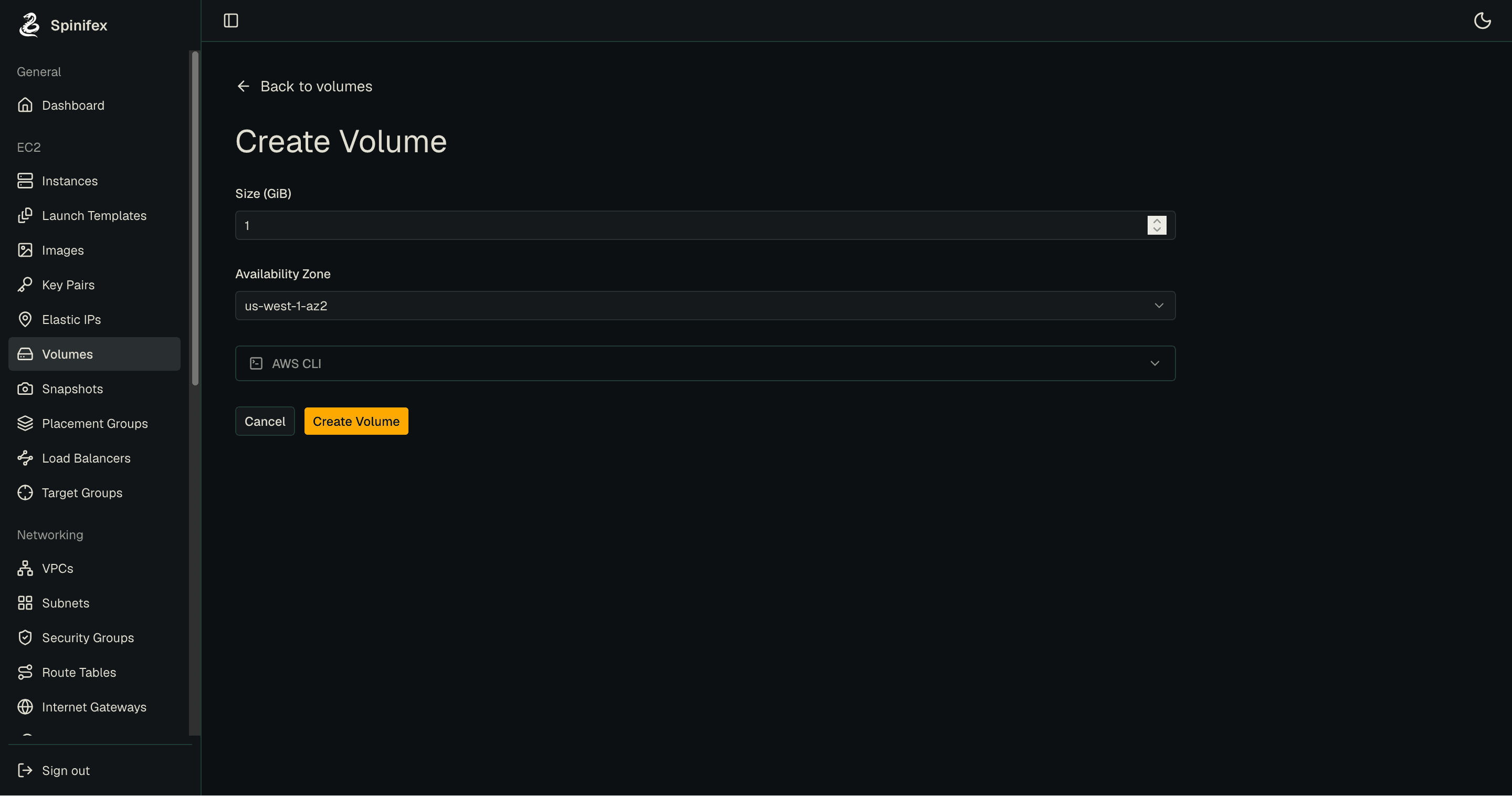
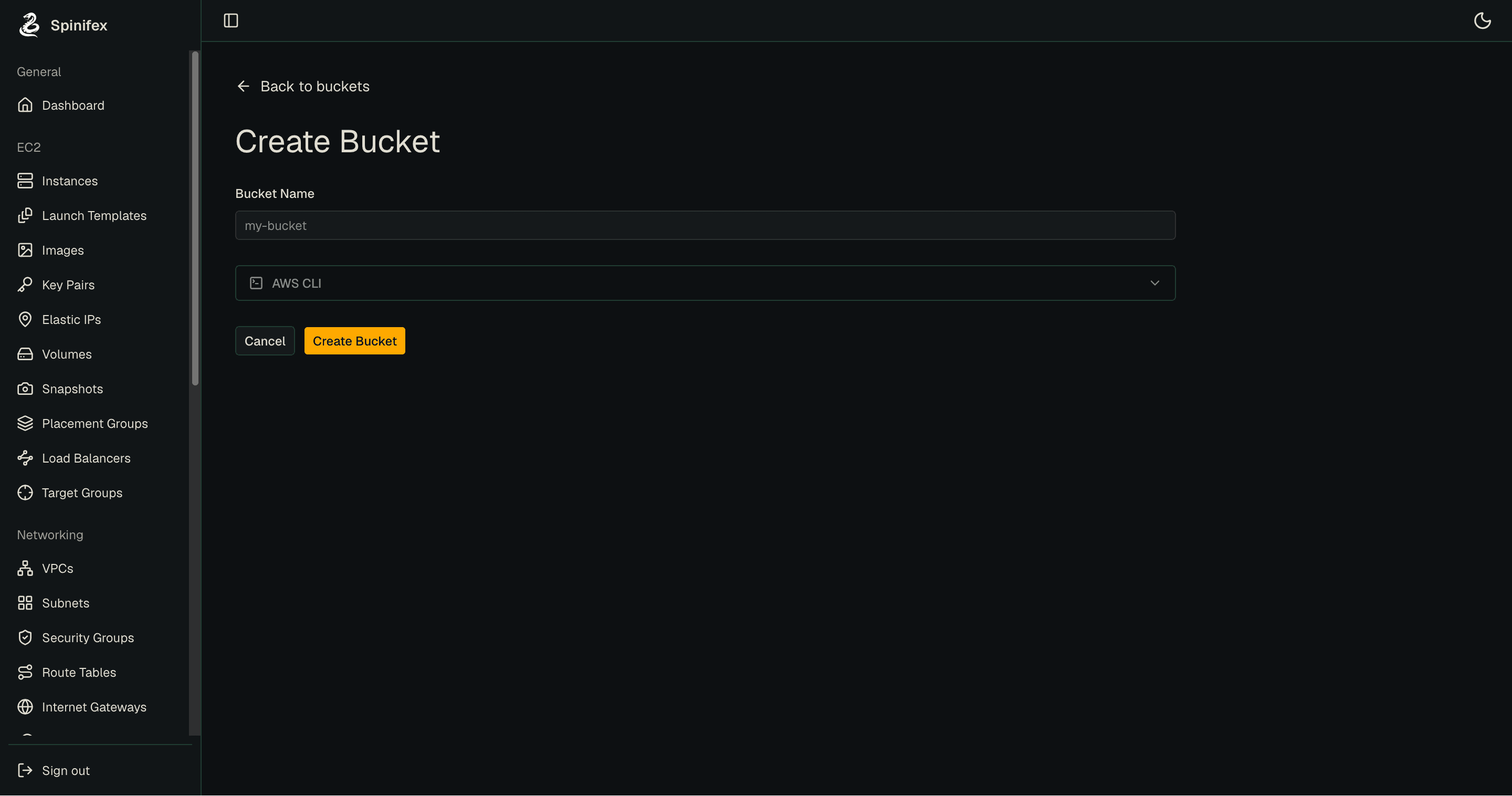
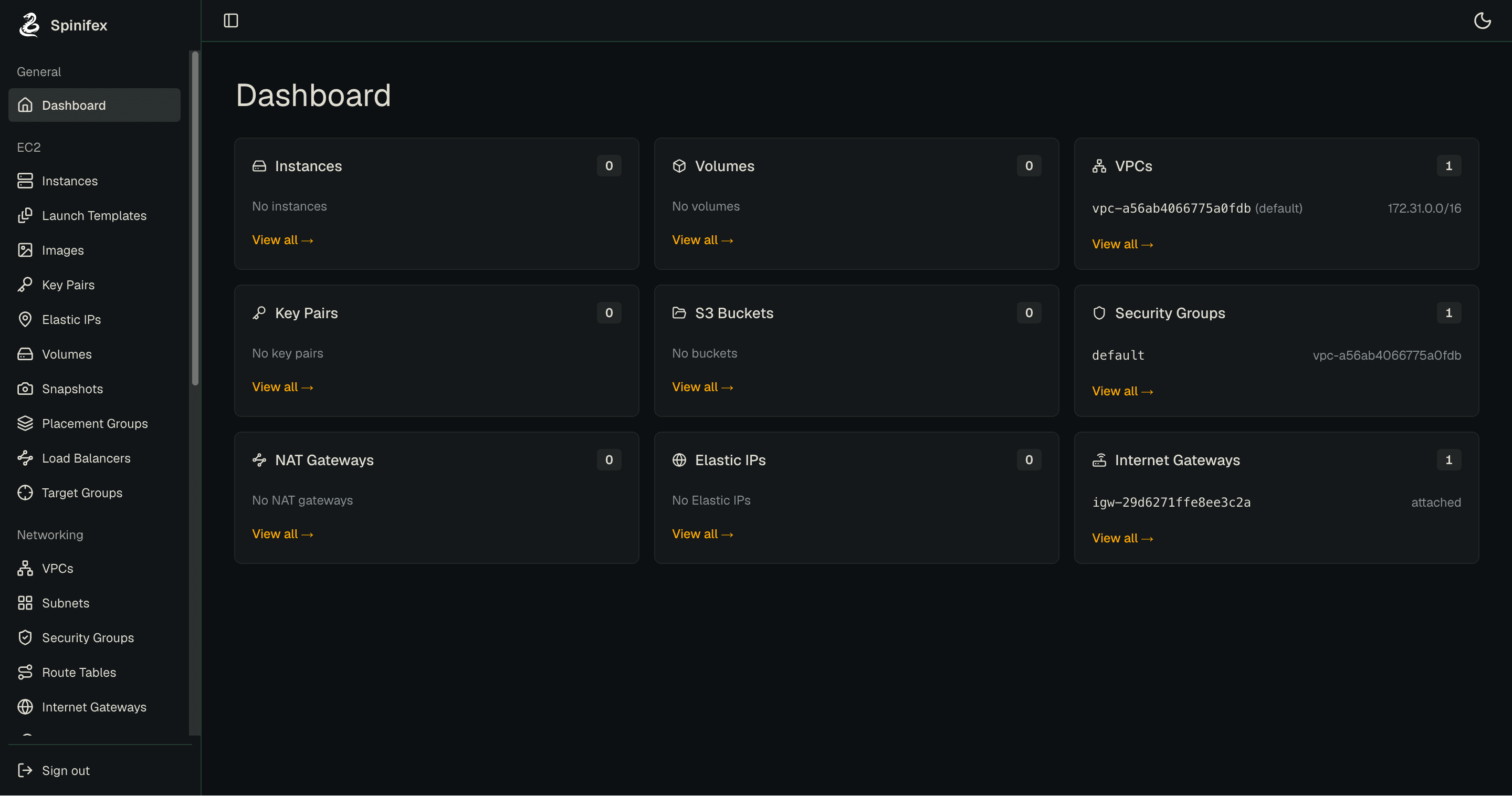
Spinifex, built by Mulga, is an open-source infrastructure platform that recreates the AWS service surface — EC2, EBS, S3, VPC, IAM, EKS, ECS, ECR, RDS, and load balancers — on bare-metal, on-premise, and edge environments. Because it speaks the real AWS API surface with SigV4 authentication, your existing AWS CLI, SDKs, and Terraform configurations work unchanged: you change where your software runs, not what it is.
The platform is designed for teams moving workloads off hyperscalers, running AI workloads at a fraction of the cost on partner Neoclouds (H100/H200/B200 GPUs), or operating in places a public cloud cannot reach — air-gapped sites, vehicles, vessels, factories, and clinics. It keeps running through disconnection with no external control plane, and the AGPL-3.0 open core keeps the stack auditable and yours to keep.
Architecturally, Spinifex is minimal by design: every AWS API call is authenticated at the gateway, published to a NATS bus, and answered by stateless daemons over local backends — no etcd, no Kubernetes for the control plane, just systemd units and your hardware. Compute is VM orchestration on QEMU with GPU passthrough, storage comes from Viperblock (WAL-backed replicated block storage) and Predastore (S3-compatible object storage with Reed-Solomon erasure coding), and networking is OVN-backed VPC with security groups. A built-in web console mirrors the AWS Management Console experience, served from each node on port 3000. Bedrock-compatible AI deployment is on the roadmap for Q4 2026.
Categories:



Frequently Asked Questions
Which operating systems does Spinifex run on?
Spinifex requires an Ubuntu 26.04 or Debian 13 Linux system. The recommended installation is a bootable x86 bare-metal ISO you write to USB, and there is also a single-node install script for existing hosts. It runs on standard Linux on CPU and GPU hardware, on-premise, at the edge, or on partner Neocloud capacity.
What authentication options does Spinifex support?
Spinifex uses AWS-style IAM: access keys, roles, policies, and SigV4 authentication applied across every service. The built-in web console signs in with the access keys from your ~/.aws/credentials file on the node — there is no separate user database — and IAM policies and RBAC apply to console actions the same way they do to API calls.
Does Spinifex have a web console like the AWS Management Console?
Yes. Spinifex ships a built-in web console that is embedded in the Spinifex binary and served by each node on port 3000 over TLS when spinifex.target starts. It issues the same SigV4 calls as the CLI, works fully offline with no external CDN or analytics calls, and gives you a browser view of instances, volumes, buckets, VPCs, and IAM resources.
Does Spinifex support GPU workloads?
Yes. The EC2-compatible compute layer supports GPU passthrough into QEMU virtual machines, and the EKS and ECS services support GPU-aware placement. Spinifex can also be deployed on partner Neocloud capacity with H100, H200, and B200 GPUs for AI workloads at lower cost than hyperscalers.
Can I try Spinifex before self-hosting it?
Yes. A live sandbox can be created at mulgadc.com/signup in under a minute with no card and no install. You get a real AWS-compatible endpoint, access keys, and console for 72 hours, with EC2, EBS, S3, VPC, IAM, EKS, and RDS ready to call from your existing AWS CLI or Terraform.
OpenAltFinder Score
Project Details
Repository details
Updated 9/30/2026, 7:00:19 AM
View Repository Spinifex vs Olares