calrs
A fast, self-hostable scheduling platform written in Rust, like Cal.com but without Node.js or a database server.

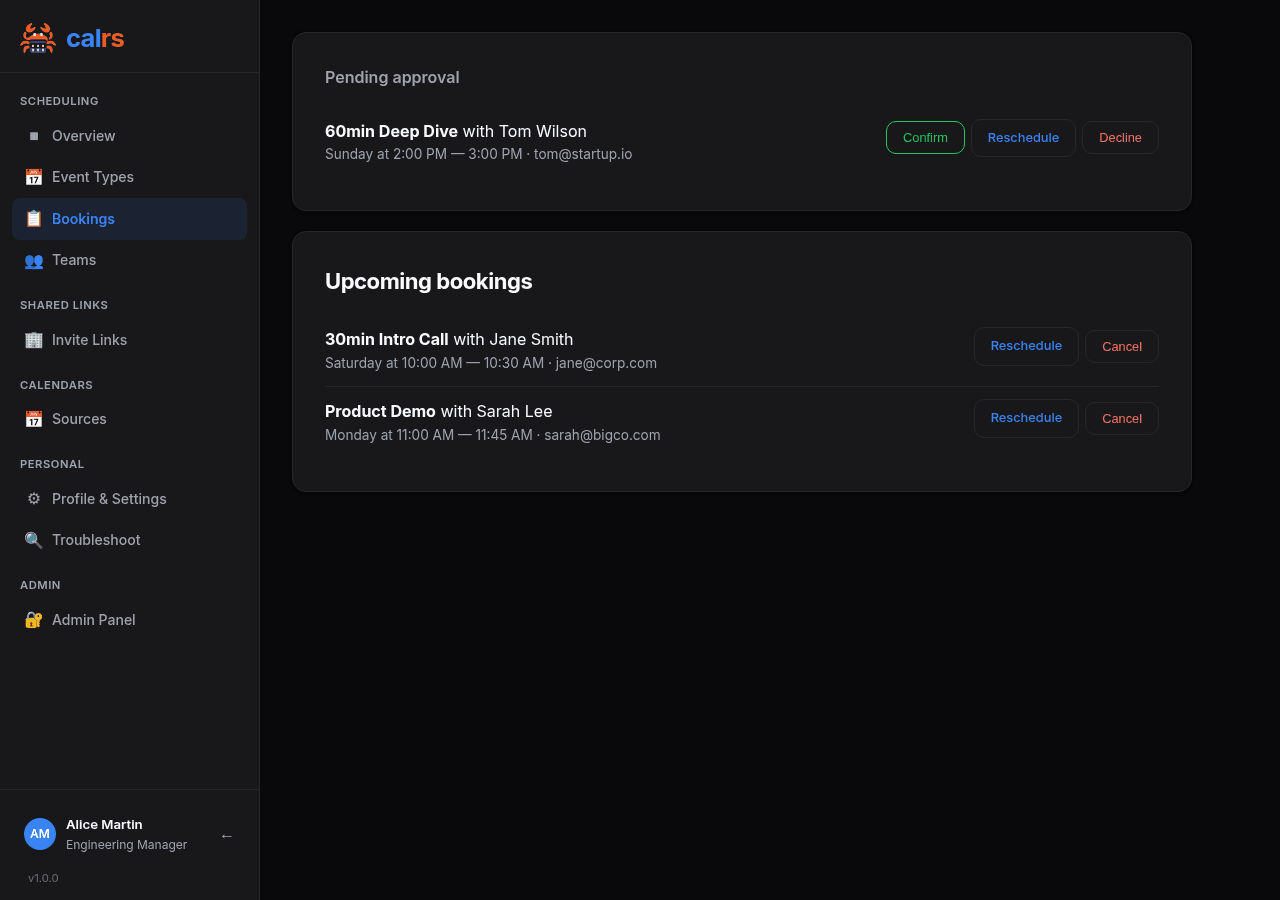
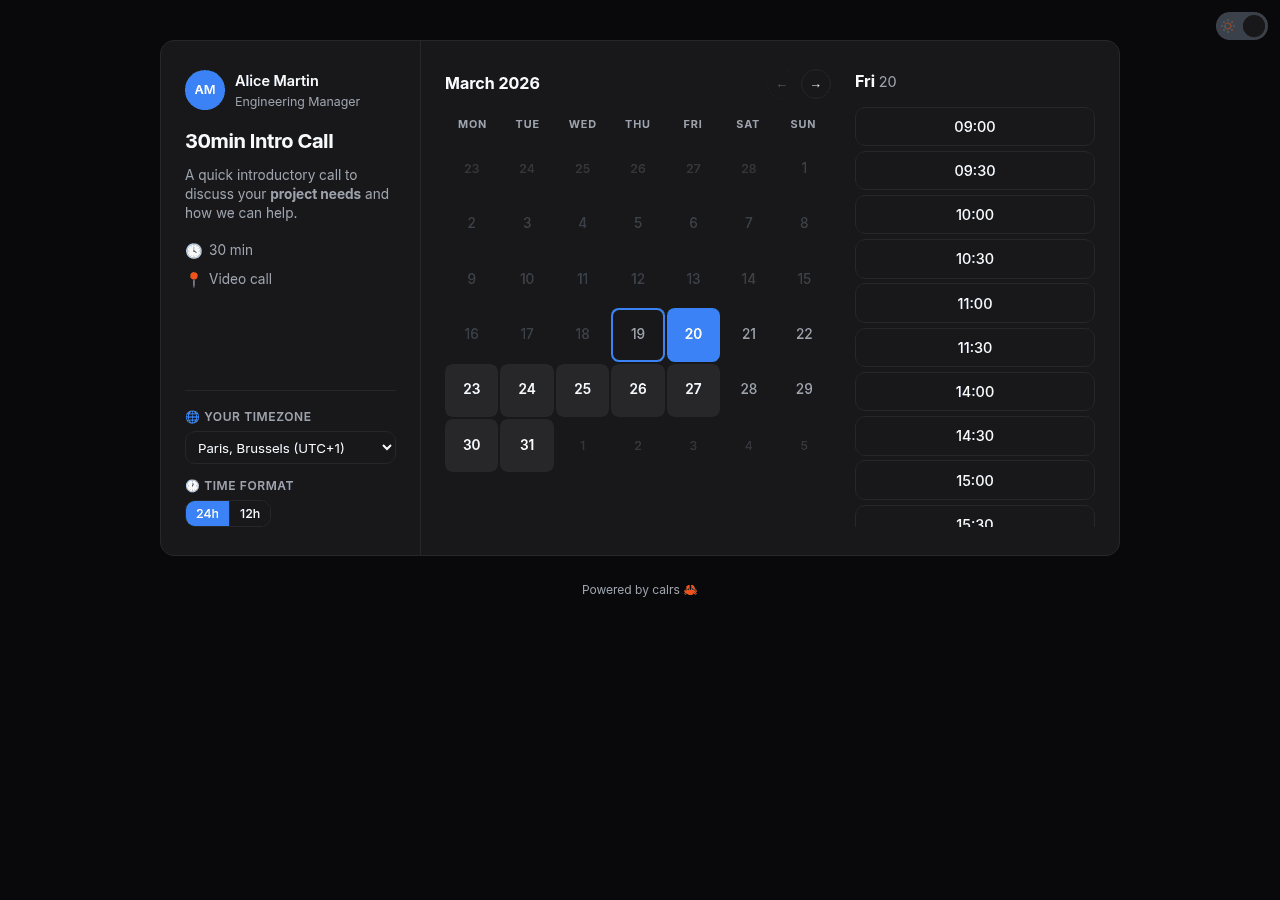
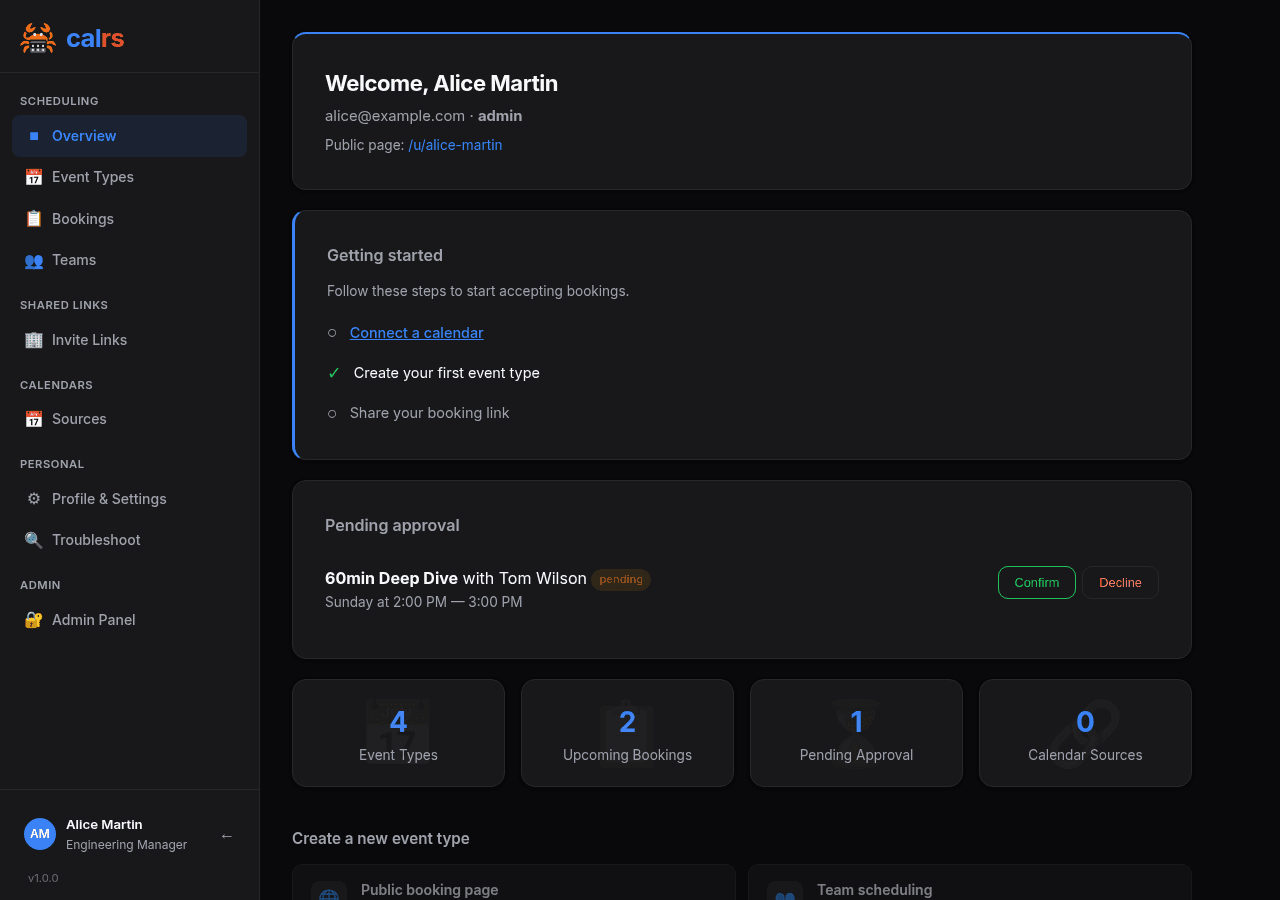
calrs is an open-source scheduling platform written in Rust. You connect your CalDAV calendar (Nextcloud, Fastmail, BlueMind, iCloud, and more), define bookable meeting types with durations, buffer times, and availability schedules, then share a link people can use to book time with you.
It is built for people who want a Cal.com-style booking experience without the heavy stack. calrs ships as a single binary or Docker image, stores everything in one SQLite file, and has no runtime dependencies beyond itself. Confirmed bookings are written back to your CalDAV calendar, and guests can reschedule or cancel from links in the confirmation email.
Compared to Cal.com and Calendly, calrs focuses on self-hosting and simplicity. It supports personal, team, and dynamic group event types, round-robin scheduling for teams, OIDC/SSO authentication, and a multi-language booking flow. There is no subscription and no vendor lock-in — the only thing you need is a CalDAV calendar.
Categories:


Frequently Asked Questions
Which CalDAV providers does calrs work with?
calrs connects to any CalDAV server, including Nextcloud, Fastmail, BlueMind, iCloud, Zimbra, SOGo, and Radicale. It auto-discovers your calendar via PROPFIND, and provider presets fill in the correct CalDAV URL. Google Calendar is not supported directly.
What authentication options does calrs support?
calrs supports local accounts with email and password, hashed with Argon2 and using server-side sessions with HttpOnly cookies. It also supports OpenID Connect SSO via providers like Keycloak and Authentik. The first registered user becomes admin, and open registration can be restricted or disabled.
Does calrs have an API or CLI?
calrs ships a full CLI for headless operation, with commands to init, manage calendar sources, sync, create event types, check slots, create bookings, and configure the server. There is no public REST API; the web dashboard covers most management tasks.
What are the system requirements to self-host calrs?
calrs runs as a single binary with no runtime dependencies, storing data in one SQLite file with WAL mode. Pre-built Docker images are available for amd64 and arm64. It listens on port 3000 by default, so a reverse proxy is recommended for TLS.
Does calrs support team and collective scheduling?
Yes. You can create teams from individual users or OIDC groups and schedule in round-robin (least-busy member) or collective (all members free) mode. Teams can be public, bookable at a team page, or private and accessed via an invite token link.
OpenAltFinder Score
Project Details
Repository details
Updated 9/22/2026, 1:00:18 AM
View RepositoryRepository activity
Compare calrs with
Similar open source alternatives

CloudMeet
Open source Calendly alternative that runs on Cloudflare’s free tier with Google Calendar and Outlook sync.
 Calendly
Cal.com
Open-source scheduling infrastructure — a self-hostable alternative to Calendly for booking meetings and appointments.
Calendly
Someday
Free, self-hostable meeting scheduler built on Google Apps Script — a Cal.com and Calendly alternative for Gmail users.
Calendly