
PriceBuddy
Self-hosted price tracker that watches products from any store and alerts you when prices drop or stock returns.
Open source alternative to:



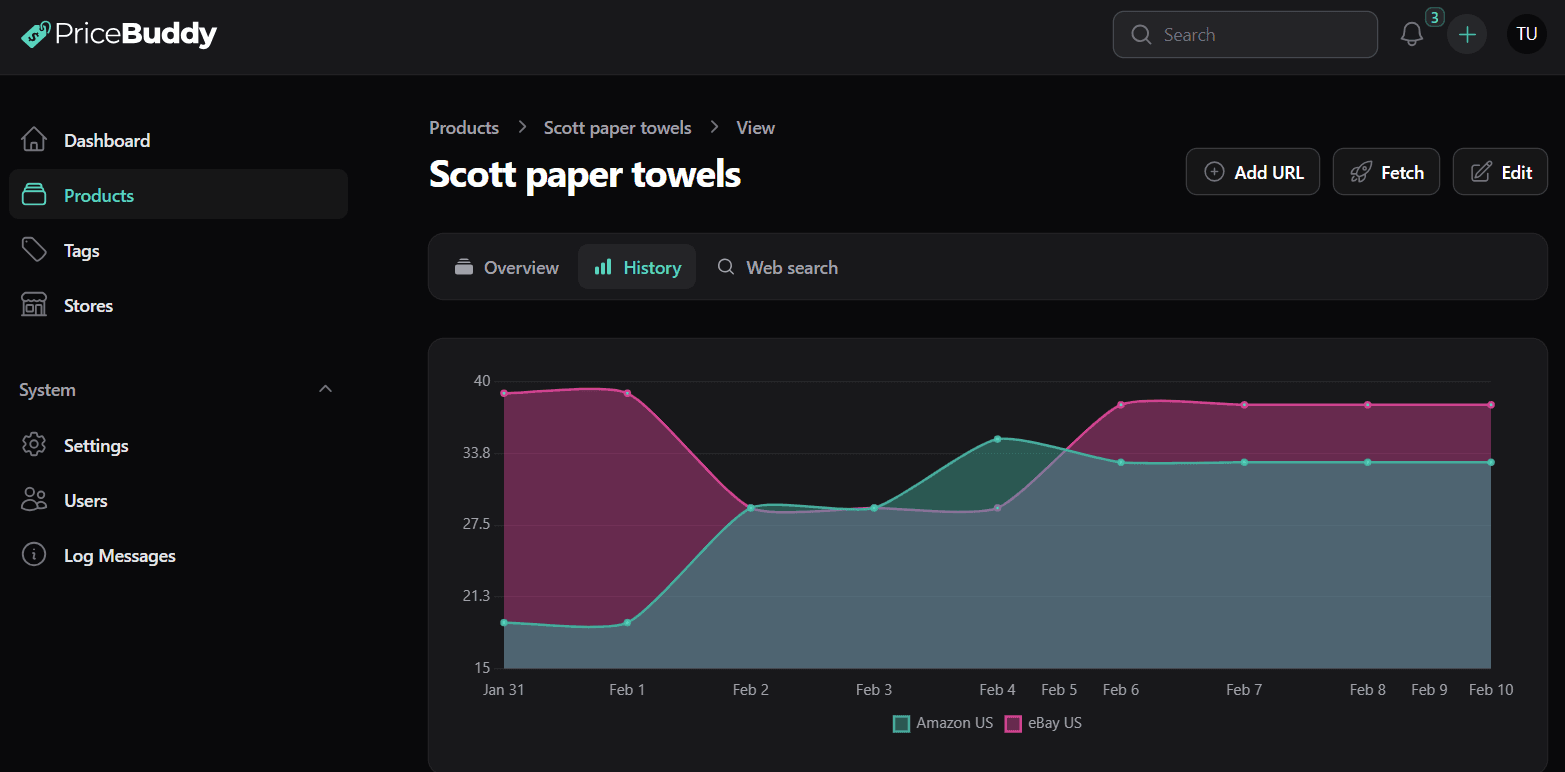
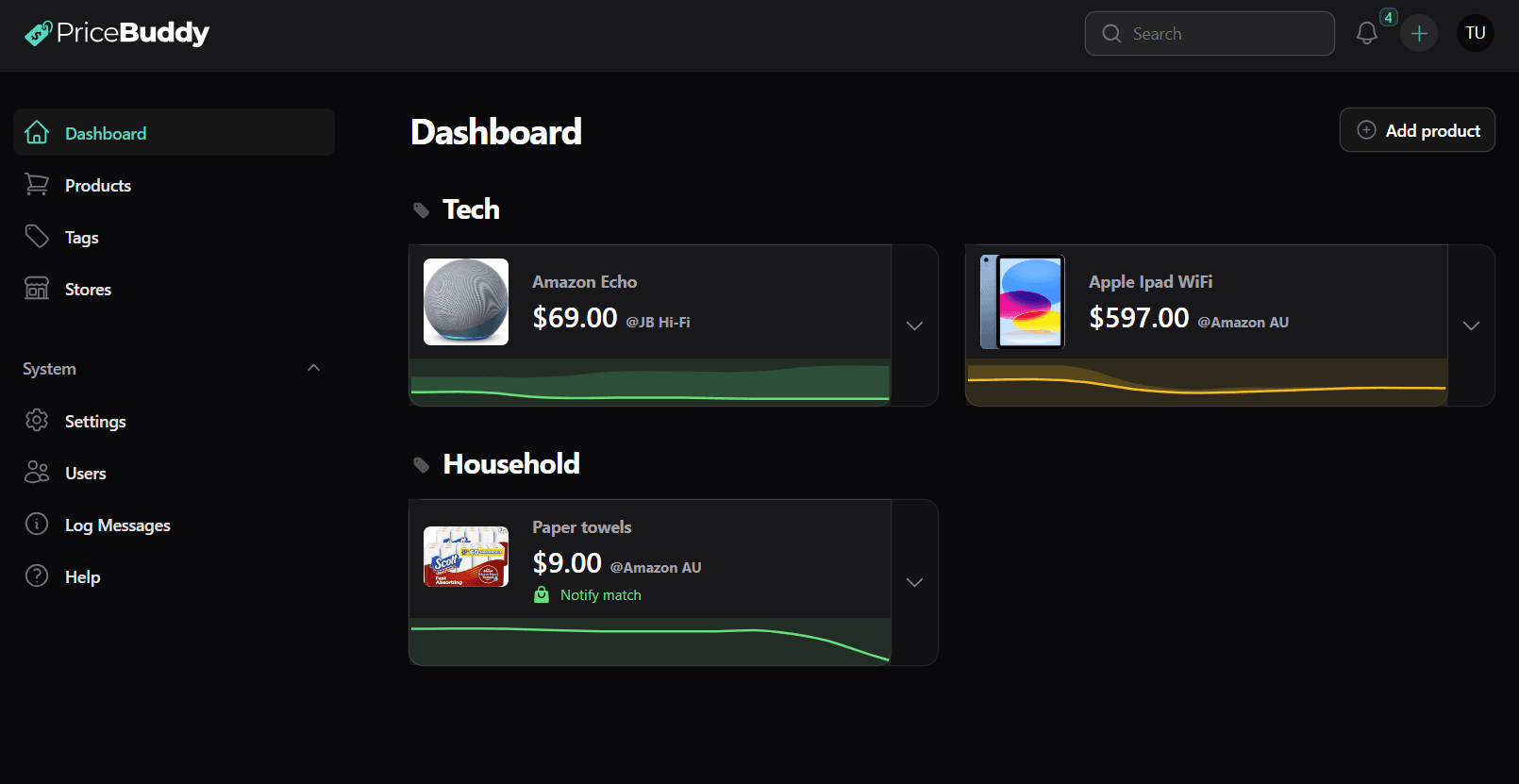
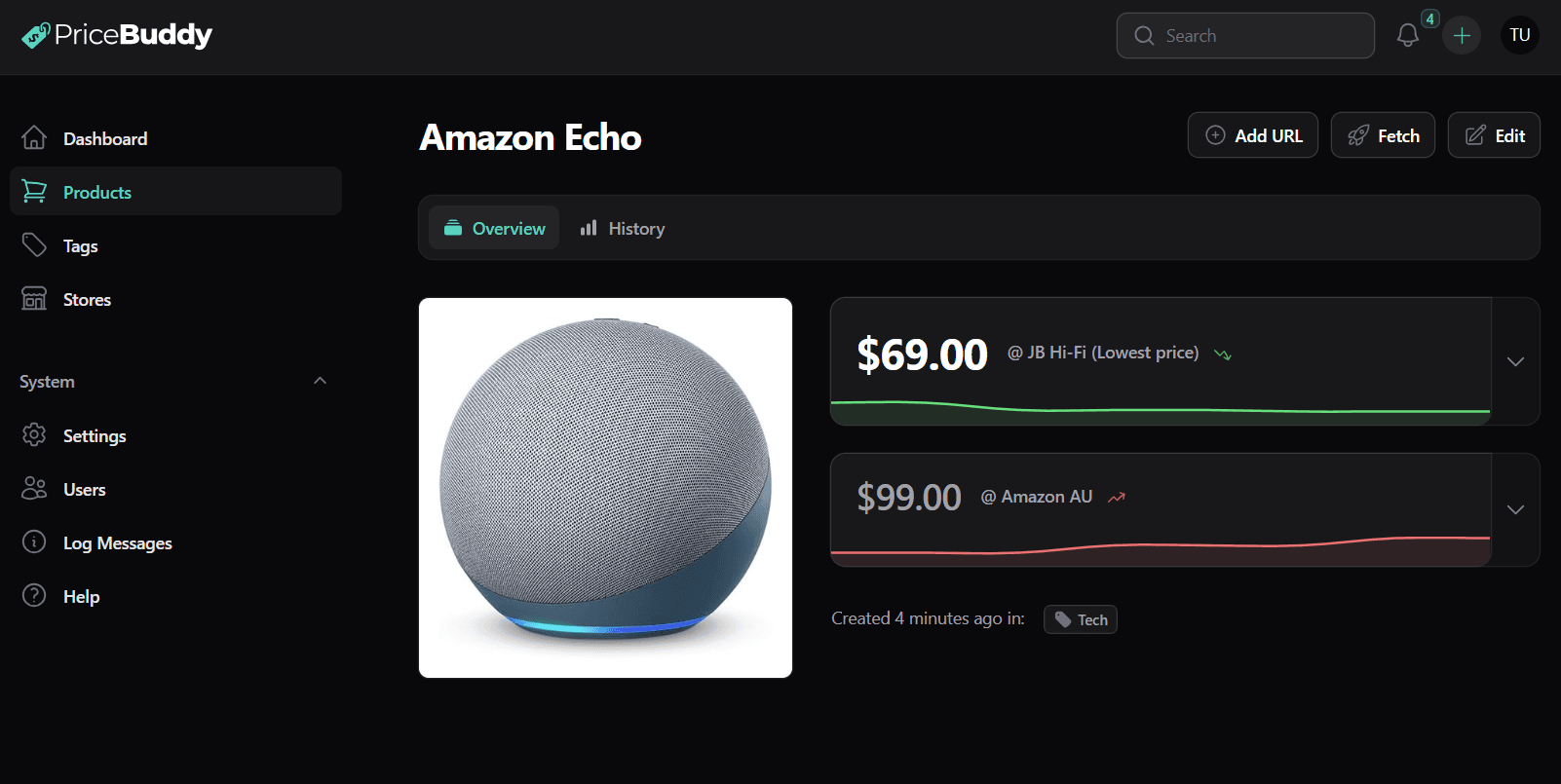
PriceBuddy is an open source, self-hostable price tracker built with Laravel and Filament. You paste in a product URL from virtually any online store, and PriceBuddy scrapes the title, image, price, and availability on a schedule — no per-retailer integrations required. For awkward pages you can tune the scrape strategy without touching code, and optionally connect your own OpenAI, Anthropic, Gemini, or Ollama provider to recover missing data.
It keeps full price history so you can spot fake discounts and judge whether today's price is actually good, compares the same product across multiple stores or marketplace listings, and even calculates price-per-unit so a 10-pack and a 3-pack can be compared fairly. Availability states like in stock, pre-order, back order, and discontinued are tracked too, since a cheap listing is useless if it's out of stock.
Where it differs from cloud services like Keepa or CamelCamelCamel is scope and control: those track Amazon specifically, while PriceBuddy tracks almost any store and keeps all your watchlists, history, and notification settings on your own server via Docker. Notifications go through the app, email, Pushover, Gotify, Apprise, Telegram, Discord, or ntfy. A Chrome/Edge companion extension adds tracking from any product page, and a separate CLI offers REST API access and MCP support for agents. Multi-user accounts, tags, and filters make it usable as a shared household wishlist.
Categories:




Frequently Asked Questions
Which platforms does PriceBuddy support?
PriceBuddy is a self-hosted web app you run with Docker and use in any browser. A separate Chrome/Edge browser extension (PriceBuddy Companion) lets you track products directly from a product page, and a standalone CLI provides command-line and API access.
Which notification channels does PriceBuddy support?
You can receive alerts through the app itself, email, Pushover, Gotify, Apprise, Telegram, Discord, and ntfy. You set a target price or a percentage drop and PriceBuddy notifies you when it is reached.
Does PriceBuddy need per-store integrations to track a shop?
No. You paste a product URL and PriceBuddy attempts to read the title, image, price, and stock status automatically. Many stores work out of the box, and for difficult sites you can adjust the scrape strategy in the app without changing code. An optional Selenium-based scraper container handles JavaScript-heavy pages.
Can PriceBuddy use AI to improve scraping?
Yes, optionally and off by default. You can bring your own OpenAI, Anthropic, Gemini, or local Ollama provider, and PriceBuddy will use it to recover missing product data from a page or help repair scraping rules when normal extraction fails.
Does PriceBuddy support multiple users?
Yes. PriceBuddy has multi-user accounts, and each person can maintain their own products, target prices, and notification preferences. Tags and filters help organise a shared household watchlist.
OpenAltFinder Score
Project Details
Repository details
Updated 9/22/2026, 4:00:15 AM
View Repository