
Rootprint
Open-source, self-hosted log management with full-text search on object storage, OpenTelemetry ingestion, and team access control.
Open source alternative to:




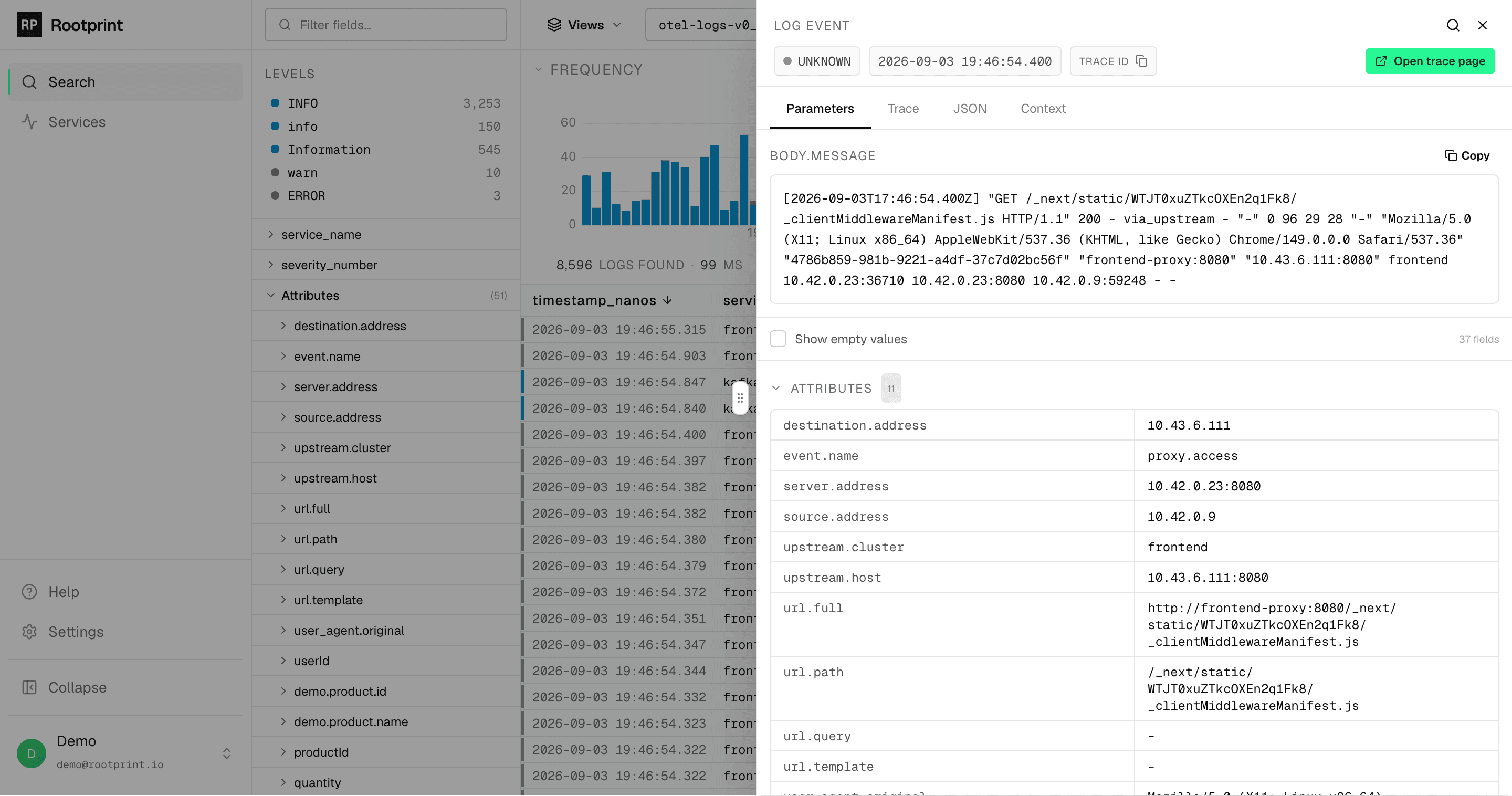
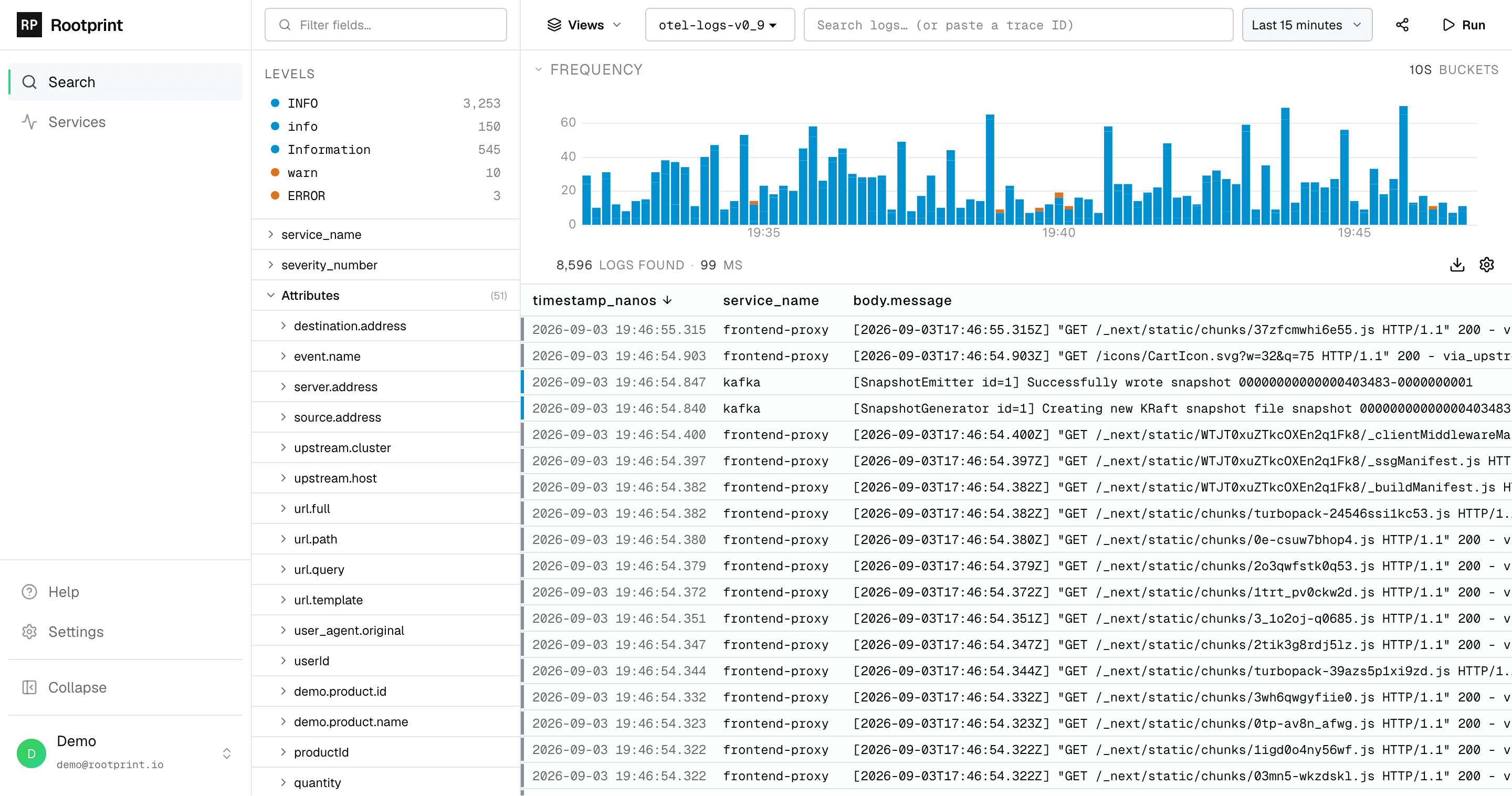
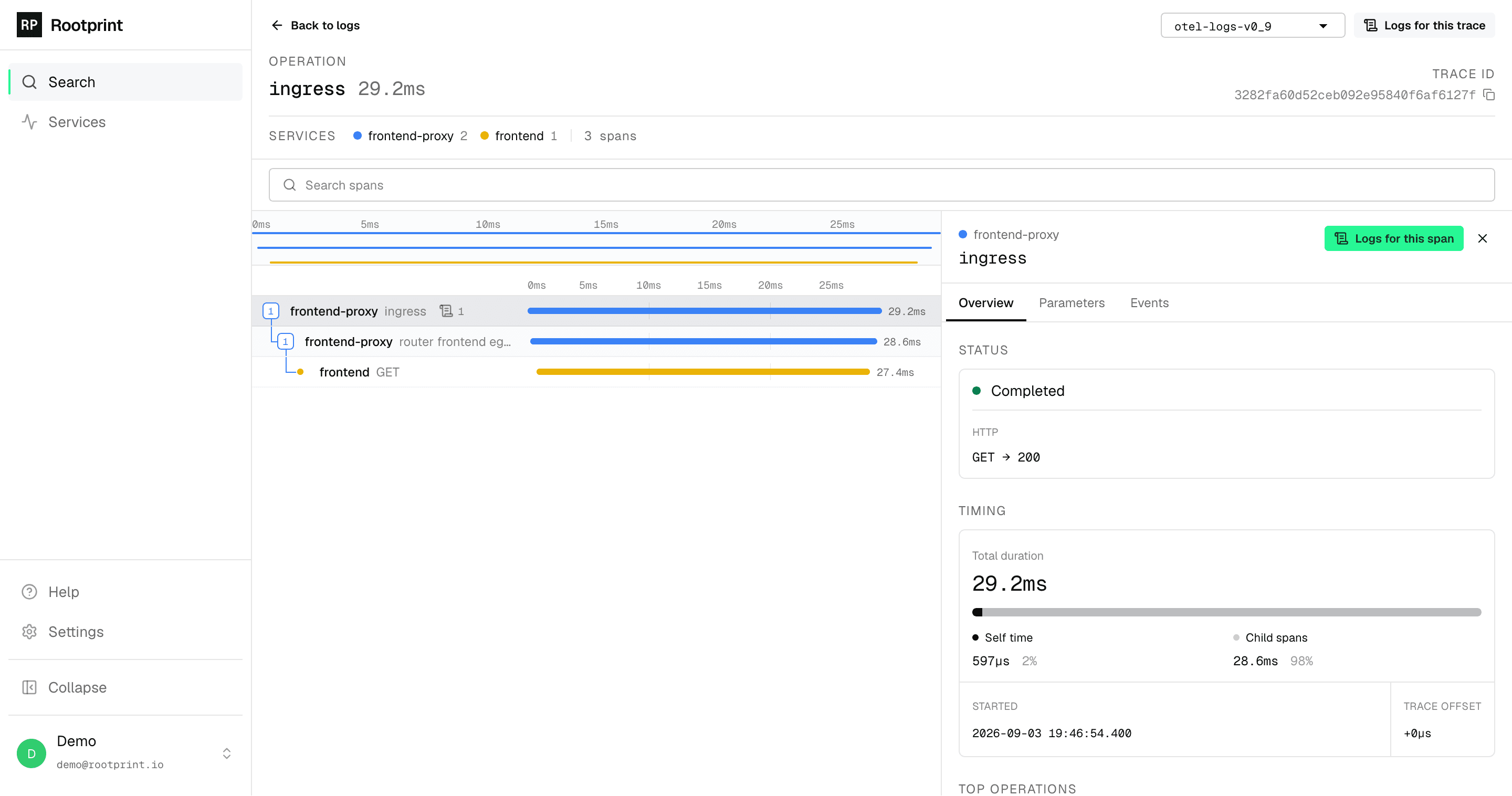
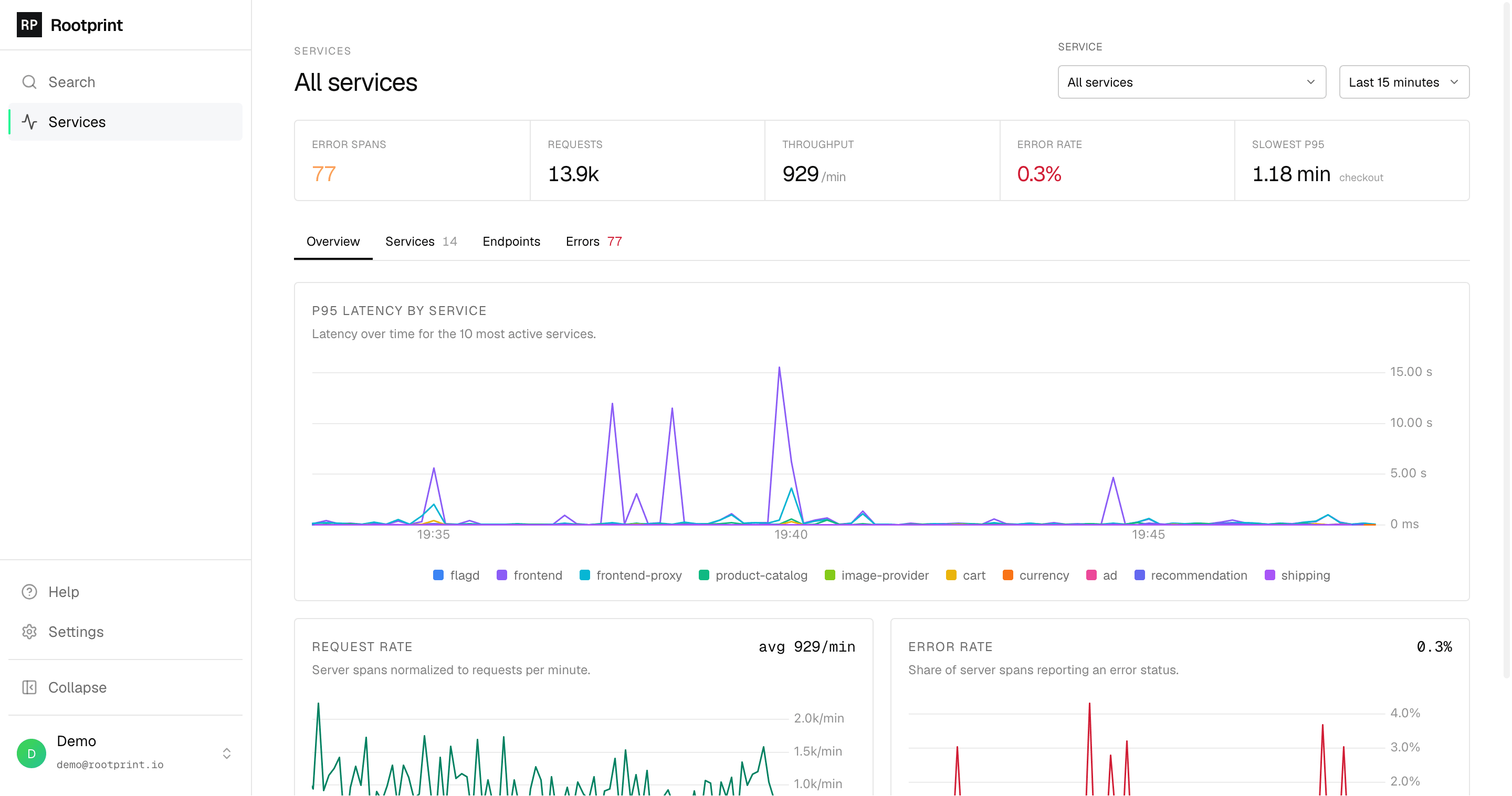
Rootprint is an open-source log management platform for engineering teams that want the log search experience of tools like Datadog or Splunk without shipping logs to a hosted SaaS. It pairs a focused search UI with Quickwit, a search engine designed for object storage, so your indexes live on S3, MinIO, Cloudflare R2, Google Cloud Storage, Azure Blob, or plain local disk instead of an expensive proprietary cluster.
Ingestion is OpenTelemetry-native: logs arrive over OTLP Protobuf or NDJSON HTTP from sources like the OpenTelemetry Collector, Vector, and Fluent Bit. The search UI is built for incident work, with severity-aware rows, time histograms, field filters, saved views, detail drawers, share links, and result exports, all driven by a documented query language.
For teams, Rootprint supports user invites, roles, scoped ingest keys, service accounts, personal API keys, and Google or GitHub OAuth, while admins manage indexes, sources, field configuration, activity, and the bundled Quickwit service. The whole stack is Apache-2.0 licensed and deploys with a single Docker Compose file. Unlike the commercial platforms it replaces, everything stays on your infrastructure and there is no per-GB licensing — your cost is just the object storage you already run.
Categories:






Frequently Asked Questions
Which log sources can send data to Rootprint?
Any OpenTelemetry-compatible source. Rootprint ingests logs over OTLP Protobuf or NDJSON HTTP, so you can ship data from the OpenTelemetry Collector, Vector, Fluent Bit, and similar agents. Setup guides for each source are in the Send Logs section of the docs at docs.rootprint.io.
Where are my logs stored?
Searchable log indexes are stored on object storage of your choice: Amazon S3, MinIO, Cloudflare R2, Google Cloud Storage, Azure Blob, or local disk. Quickwit provides full-text search over those indexes, while Rootprint itself uses PostgreSQL for its own application data such as users and settings.
What authentication options does Rootprint support?
Users can sign in with local accounts or OAuth through Google and GitHub. Admins manage roles for invited users, and programmatic access is handled through scoped ingest keys, service accounts, and personal API keys.
Does Rootprint have an API?
Yes. Ingestion uses the OTLP Protobuf and NDJSON HTTP endpoints, and search is available through an API that uses the same query language as the web UI. The full API reference is at docs.rootprint.io/api/overview.
What are the system requirements to self-host Rootprint?
Rootprint ships as a Docker Compose stack that bundles the API, web UI, Quickwit, and PostgreSQL, with the web UI served on port 8282. You point it at an S3-compatible bucket or a local disk path for log storage, and a full compose file is available from docs.rootprint.io.
OpenAltFinder Score
Project Details
Repository details
Updated 10/18/2026, 4:00:20 PM
View RepositoryRepository activity
Compare Rootprint with
Similar open source alternatives

Beszel
Lightweight self-hosted server monitoring hub with historical data, Docker stats, and configurable alerts.
 Datadog
Kuvasz
Open-source uptime and SSL monitoring service with status pages, multiple notification channels, and Prometheus integration.
 UptimeRobot
Pingflare
Pingflare is a self-hosted uptime monitoring stack built natively for Cloudflare Workers. Get fast global checks, instant alerts, and a beautiful status page on your own domain.
 Better Stack
SigNoz
Open-source observability platform with logs, traces, and metrics — an alternative to Datadog and New Relic.
Datadog
UptimeKit
UptimeKit is a distributed monitoring and status page platform with fault-tolerant architecture. Watch services worldwide and keep users informed at a glance with clean public pages.
Better Stack