Grimmory
Self-hosted library for ebooks, comics, and audiobooks with built-in readers, metadata lookup, and Kobo and OPDS sync.
Open source alternative to:

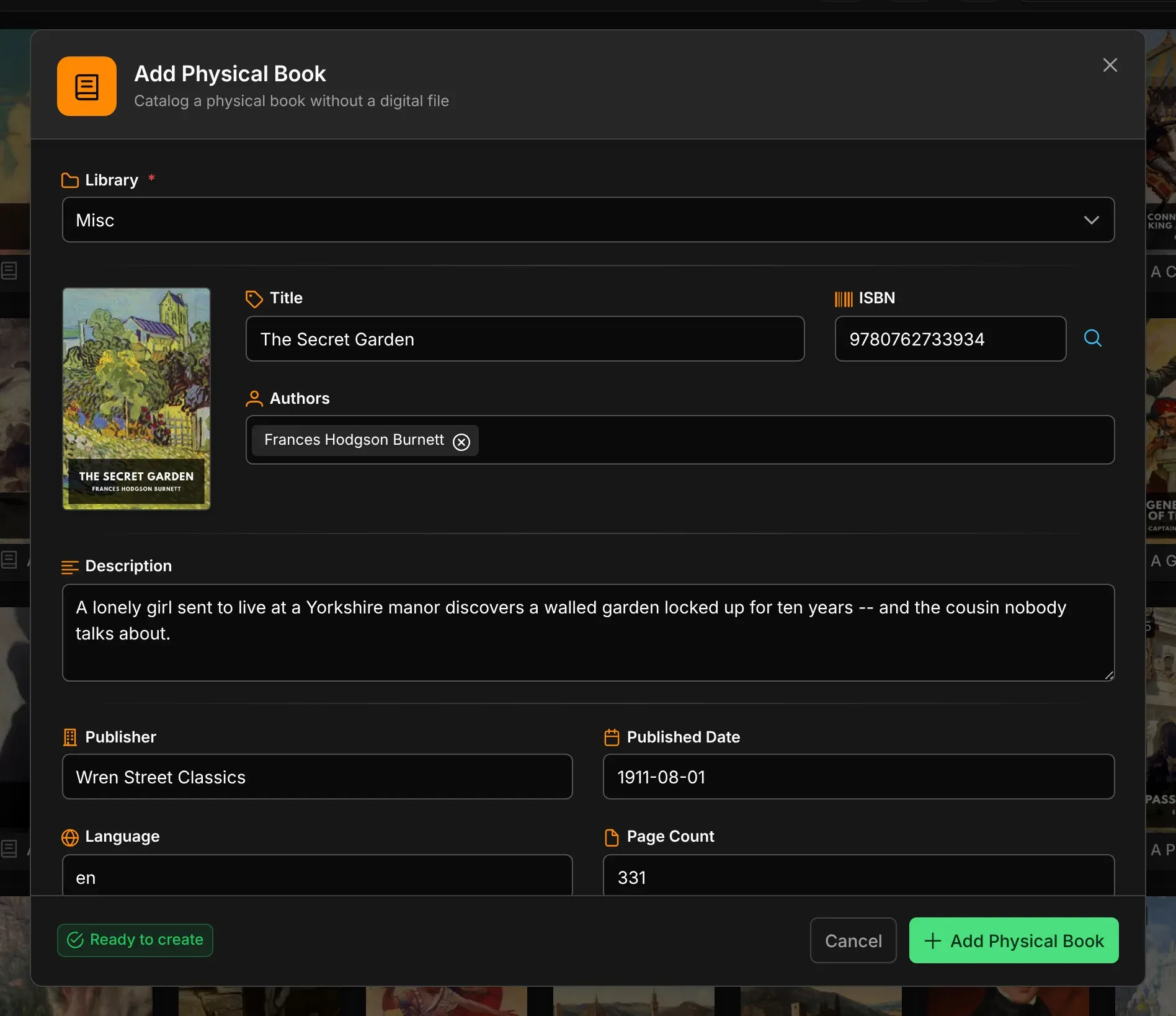
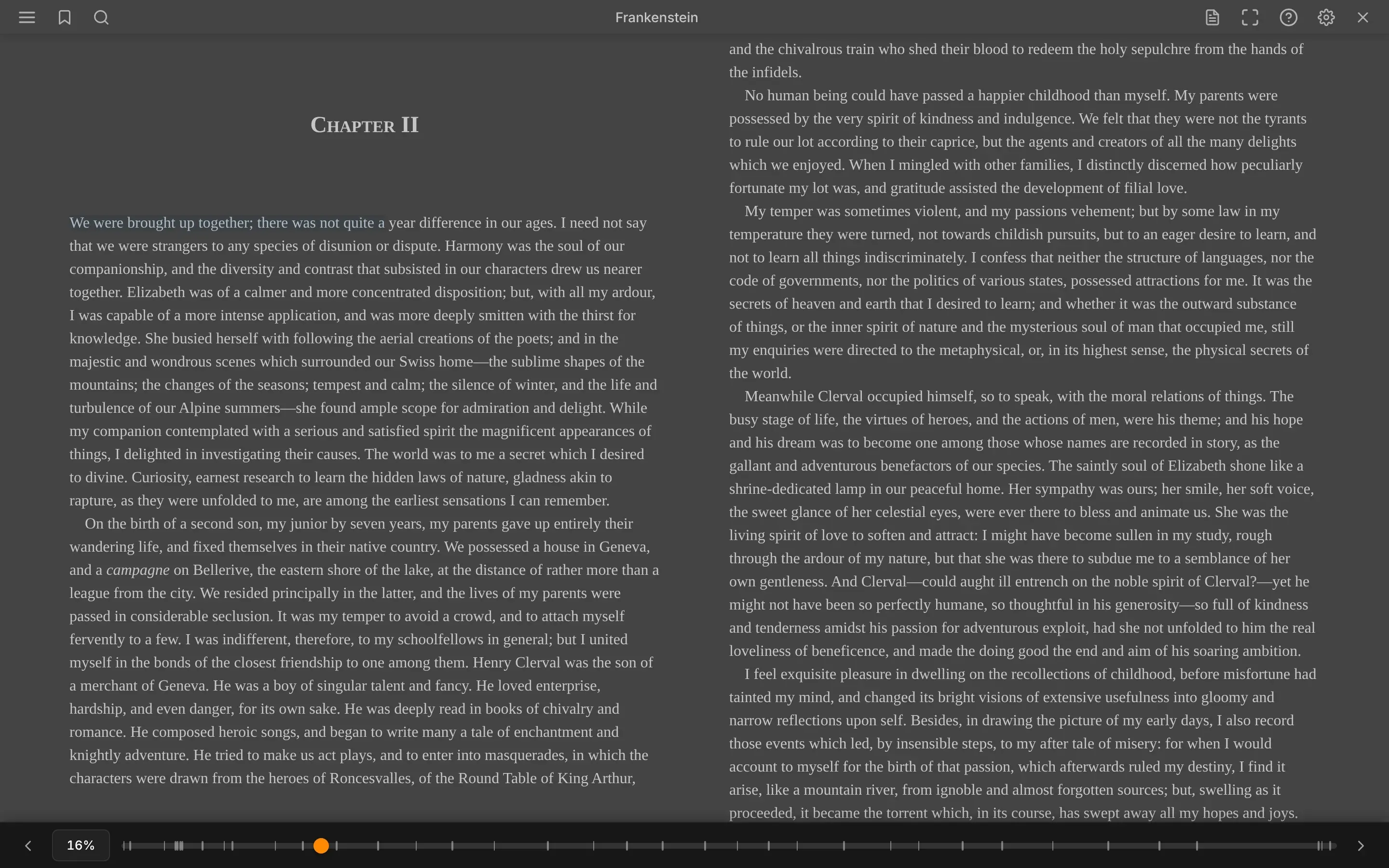
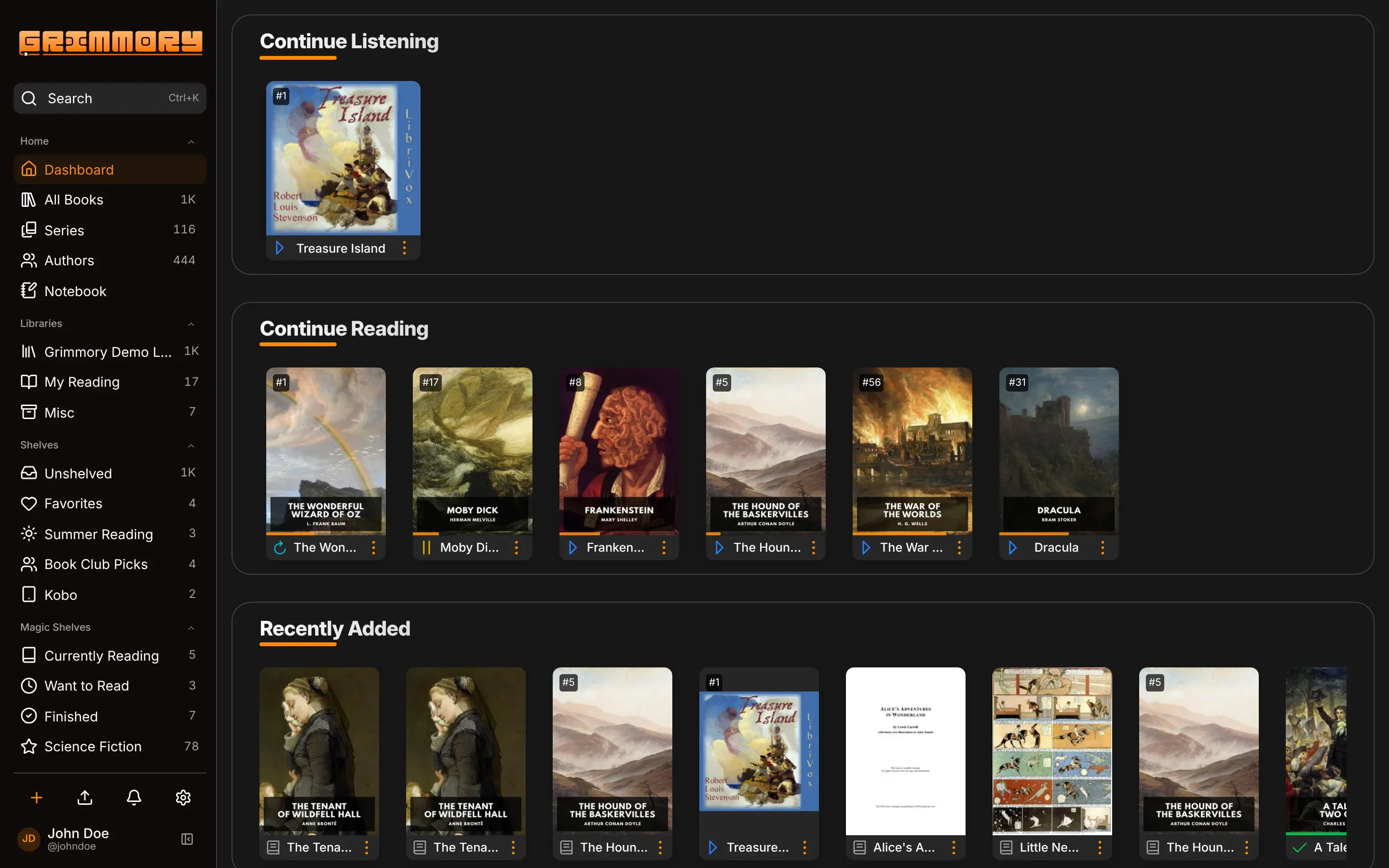
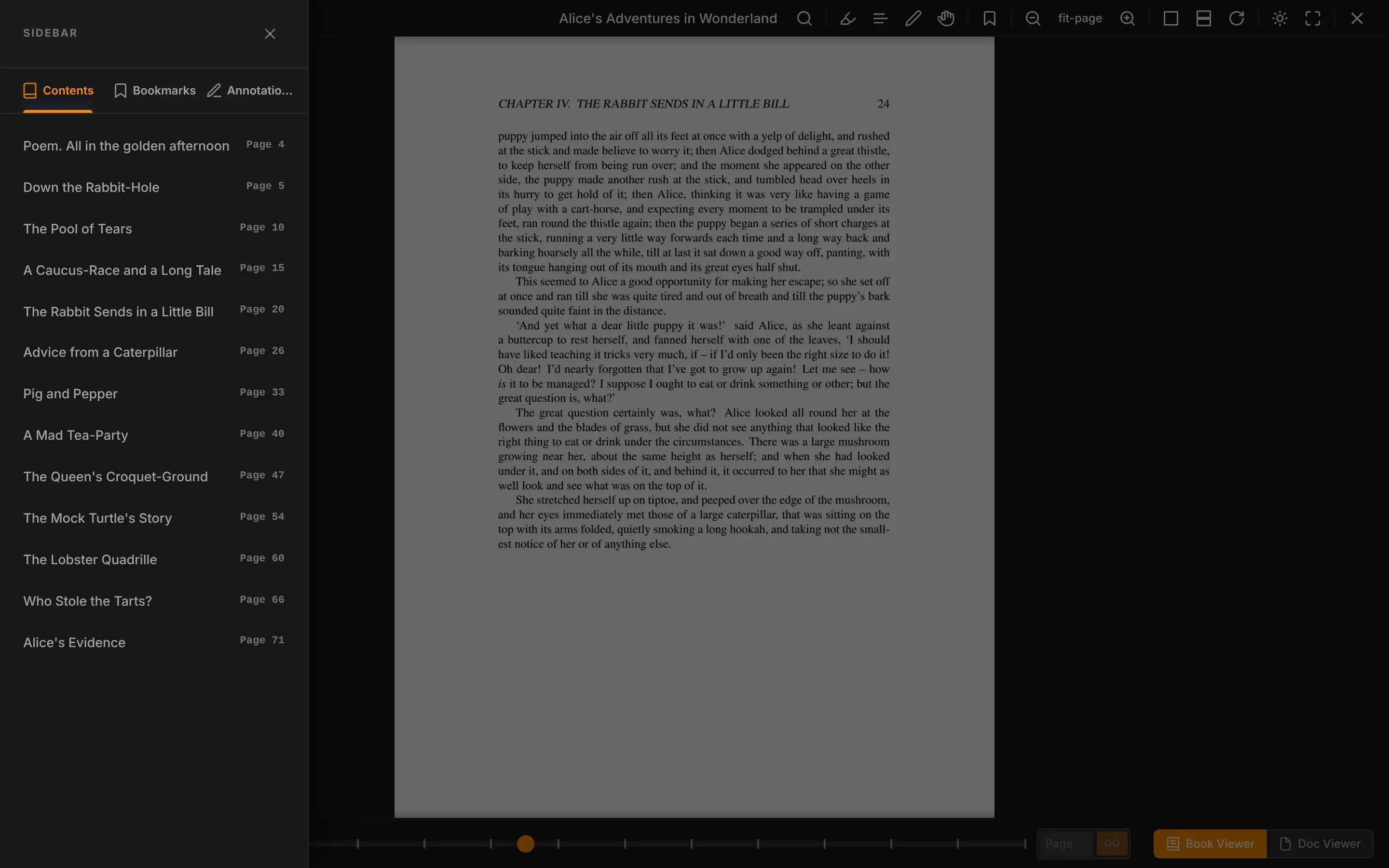
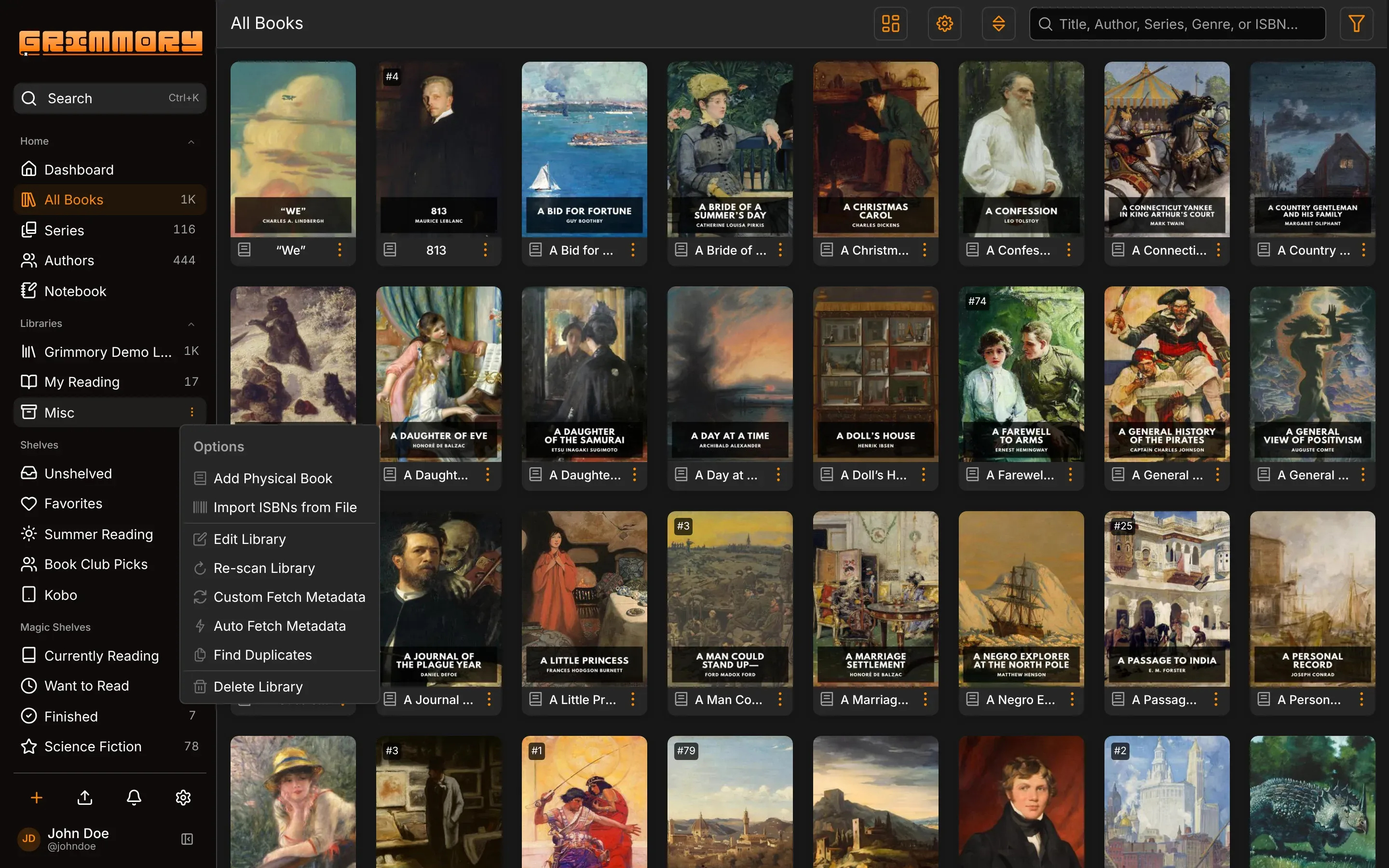
Grimmory is a self-hosted library management system for ebooks, comics, audiobooks, and PDFs. It scans your own folders and serves the collection through dedicated browser readers, so the files and the reading data stay on your server. Supported formats cover EPUB, MOBI, AZW3, FB2, PDF, CBZ/CBR/CB7 for comics, and M4B, M4A, MP3, and OPUS for audiobooks. It runs from a Docker Compose stack backed by MariaDB and listens on port 6060 by default.
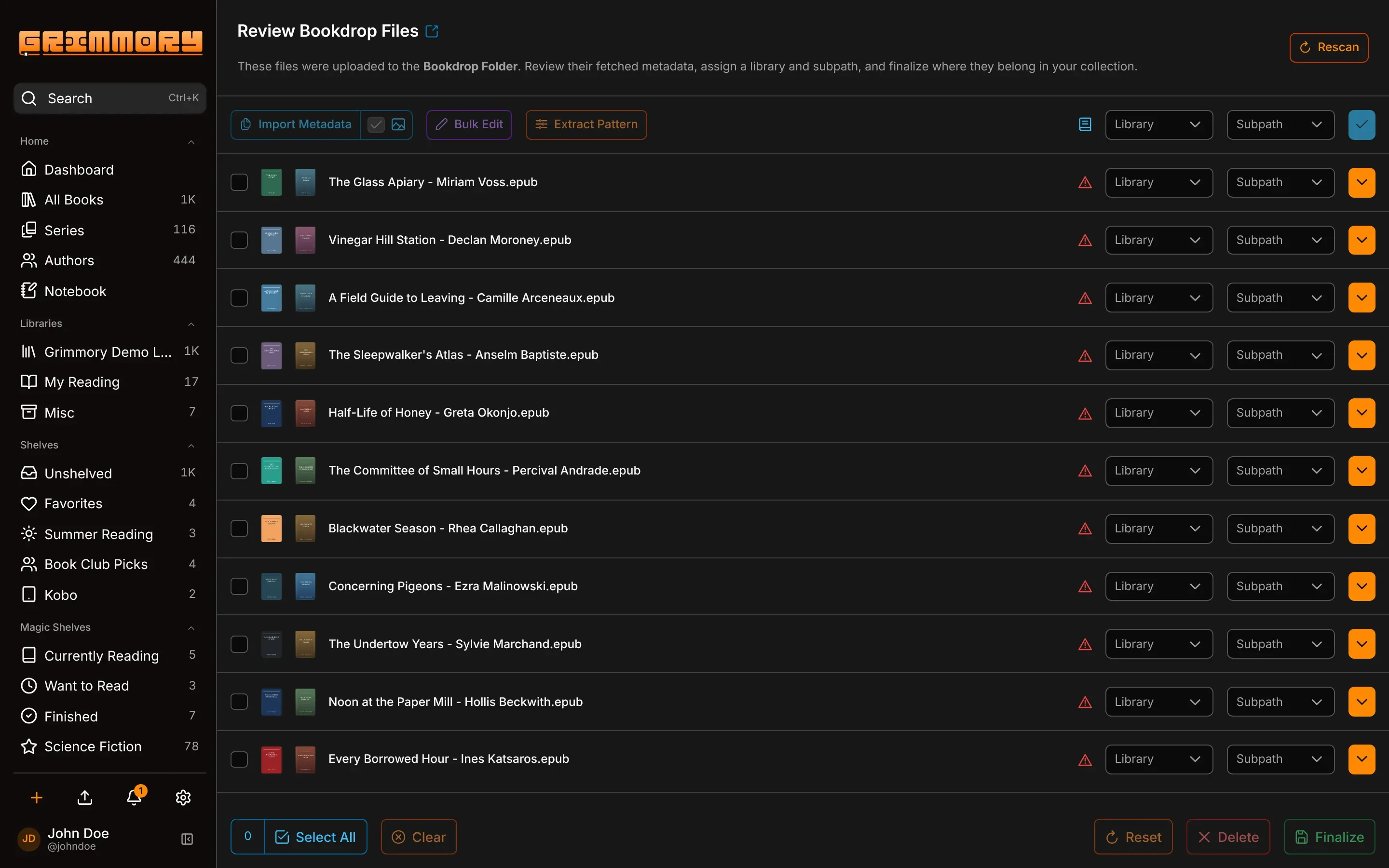
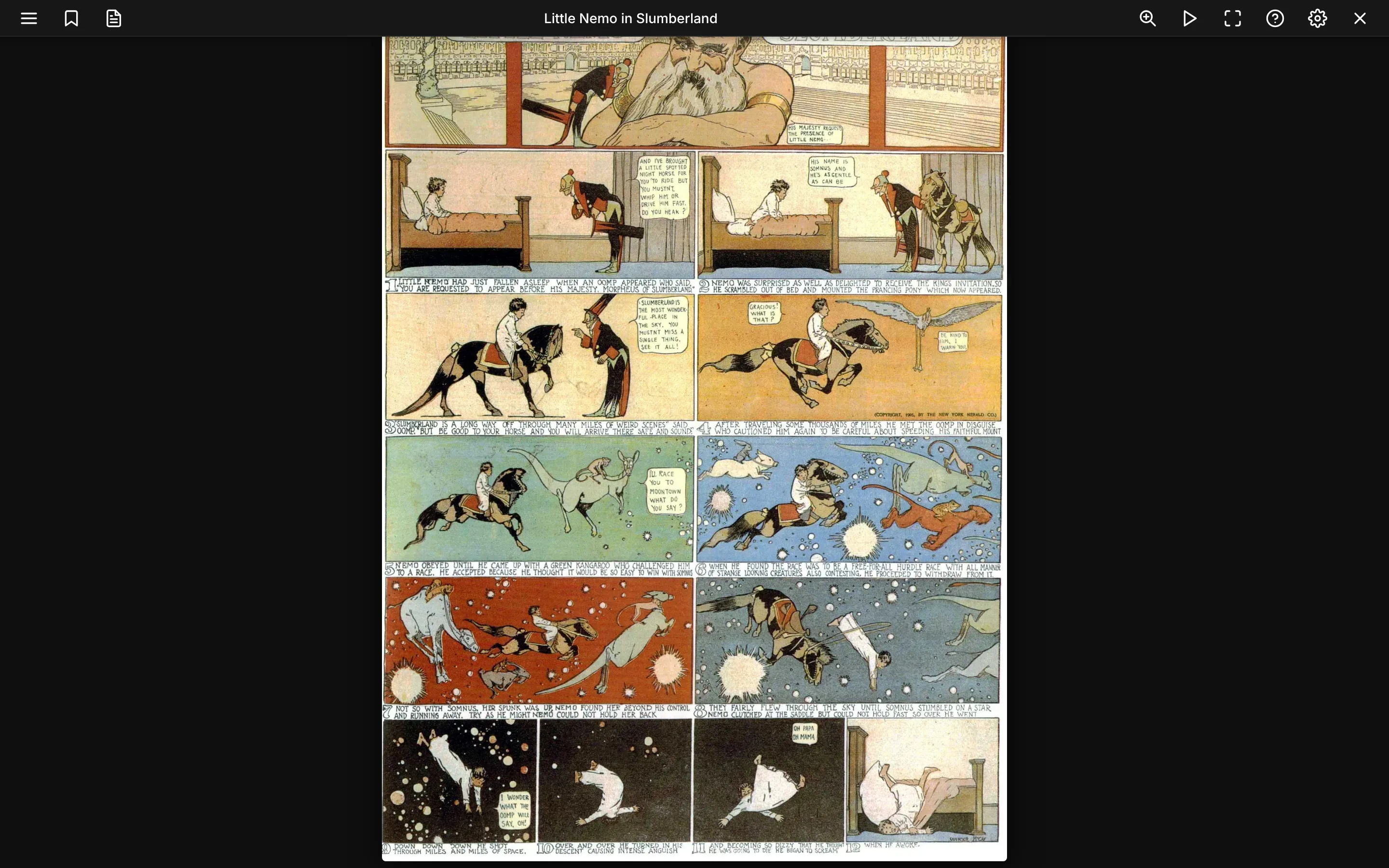
Each format gets its own reader: an ebook reader with annotations, highlights, bookmarks, search, and custom fonts; a PDF reader with page-level progress and page-spread modes; a comic reader with fit and scroll modes plus left-to-right or right-to-left paging; and an audiobook player with chapters, track listings, and playback speed. Libraries are organised with Smart Shelves and magic shelves driven by rule-based filters, tags, and full-text search. Metadata, covers, descriptions, reviews, and ratings can be pulled from Google Books, Open Library, Amazon, Hardcover, LubimyCzytac, and RanobeDB, then edited field by field or locked so scans do not overwrite them. BookDrop watches a folder and stages incoming files with fetched metadata for review before import, and duplicate detection and sidecar files keep a large collection consistent.
Grimmory is multi-user, with separate shelves, progress, and preferences per account, local logins, and OpenID Connect single sign-on through providers such as Authentik, Pocket ID, and Authelia, including group mappings and content restrictions. Books reach real devices through Kobo sync, which pushes the Kobo shelf and pulls reading progress and ratings back, through KOReader progress sync, or through the OPDS server used by apps like Moon+ Reader. A Komga-compatible API lets Tachiyomi and Komelia clients stream comic pages. Everything is free and open source under AGPL-3.0 with no subscription, which is the main contrast with storefront libraries like Kindle, Scribd, and Audible, and with older self-hosted servers such as Ubooquity.
Categories:
Build with:




Frequently Asked Questions
Which e-readers and reading apps can connect to Grimmory?
Grimmory exposes an OPDS server that works with any OPDS-capable app, such as KOReader and Moon+ Reader, and it provides a Komga-compatible API for Tachiyomi and Komelia, which can stream individual comic pages without downloading the whole archive. Kobo devices get a dedicated integration: books on the Kobo shelf are pushed to the device, and reading progress and ratings sync back. OPDS uses its own user accounts, created by admins on the OPDS settings page, separate from regular Grimmory logins.
How do I get books into a Grimmory library?
There are three routes. You can copy files directly into a library folder and rescan, or let watch folders pick them up automatically. You can drop files into the BookDrop folder, where Grimmory detects them, fetches metadata, and stages them for review before you finalise the import. Or you can upload through the web interface, subject to a default 100 MB per-file limit that admins can raise.
What authentication and user management options does Grimmory support?
Grimmory has local accounts and OpenID Connect single sign-on, with setup guides for Authentik, Pocket ID, and Authelia, plus OIDC group mappings. Each user gets their own shelves, reading progress, and preferences, and admins can apply content restrictions and grant per-user permissions such as Kobo sync, which is admin-only by default.
Does Grimmory have an API?
Yes. The backend is a Spring Boot REST API covering books, shelves, metadata, reading sessions, and users, and it can export an OpenAPI specification when the API_DOCS_ENABLED environment variable is set to true. Alongside it, Grimmory serves the OPDS catalog endpoints and a Komga-compatible API surface for existing Komga clients.
What are the system requirements for self-hosting Grimmory?
Grimmory runs as a Docker Compose stack with a MariaDB container alongside the application, and the docs list 2 GB of RAM, 10 GB or more of storage, and free port 6060 as the baseline. An internet connection is needed for online metadata fetching, and remote access is expected to go through a reverse proxy with HTTPS.
OpenAltFinder Score
Project Details
Repository details
Updated 10/30/2026, 10:00:55 AM
View RepositorySponsor Grimmory
Get the latest open source alternatives delivered weekly.
Discover tools that give you freedom from proprietary software.
Compare Grimmory with
Similar open source alternatives

Bookshelf
A self-hosted ebook library that runs on Cloudflare R2 or a local Node server, with in-browser EPUB and PDF readers and per-profile reading positions.
 Kindle

Kavita
Self-hosted reading server for manga, comics, and ebooks with responsive web readers, smart filters, and an OPDS feed.
 Ubooquity
BookOrbit
Self-hosted library and reading platform for ebooks, audiobooks, PDFs, and comics with built-in web readers and Kobo/KOReader sync.
 Audible

Kumiho
A self-hosted, lightweight web media server for streaming your personal comics, manga, ebooks, and audiobooks.