
HealthCoach
Local-first desktop and Android app for food journaling, weight tracking, and blood pressure monitoring, with no cloud account required.
Open source alternative to:



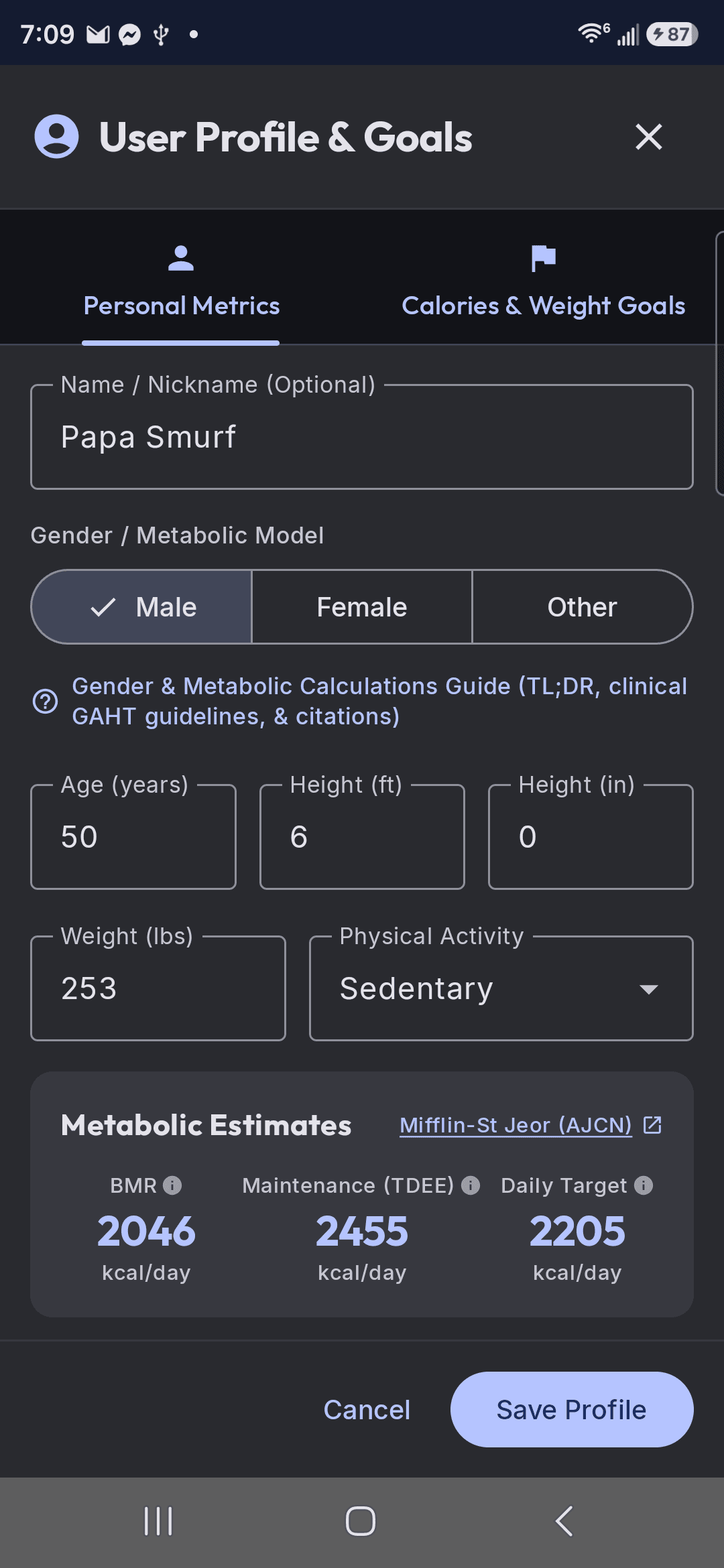
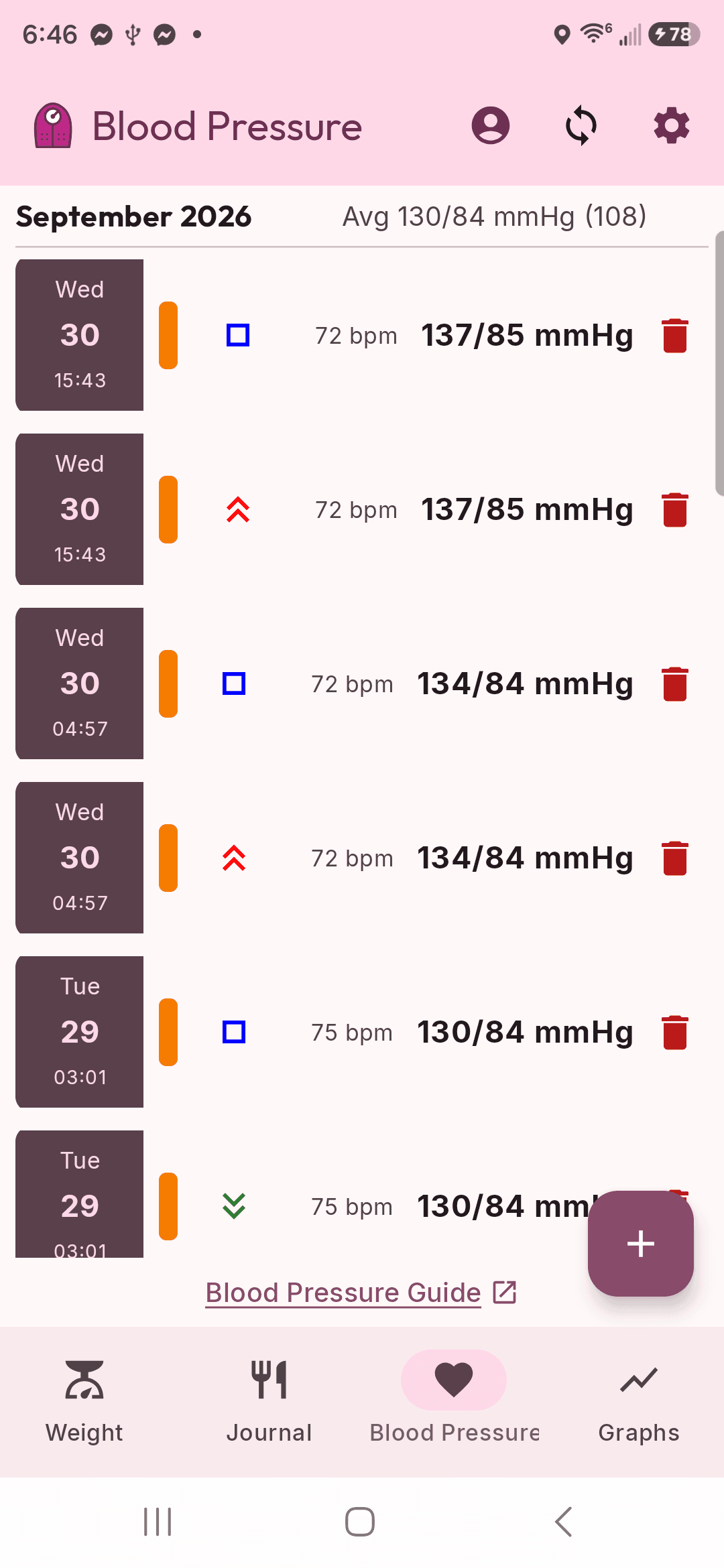
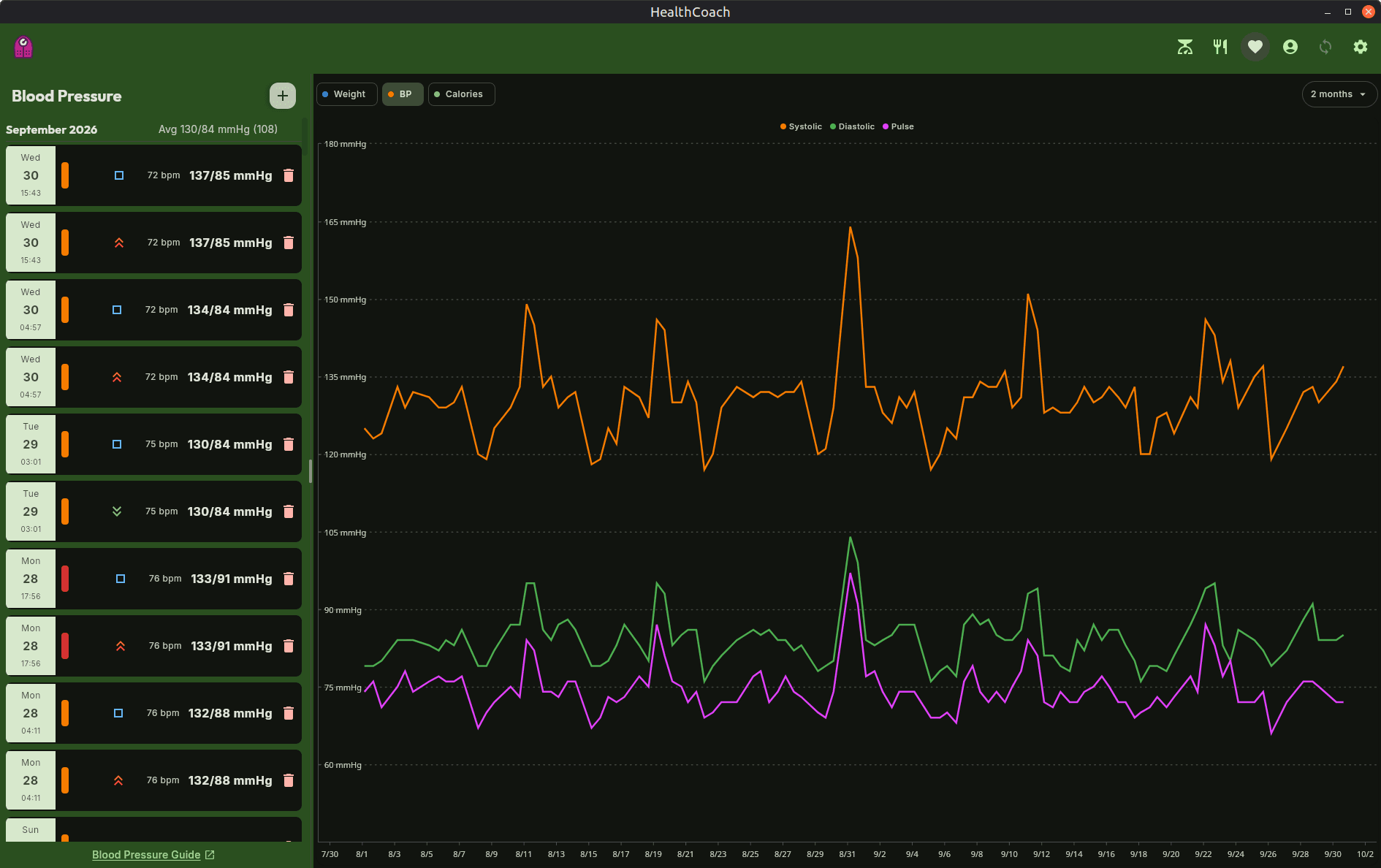
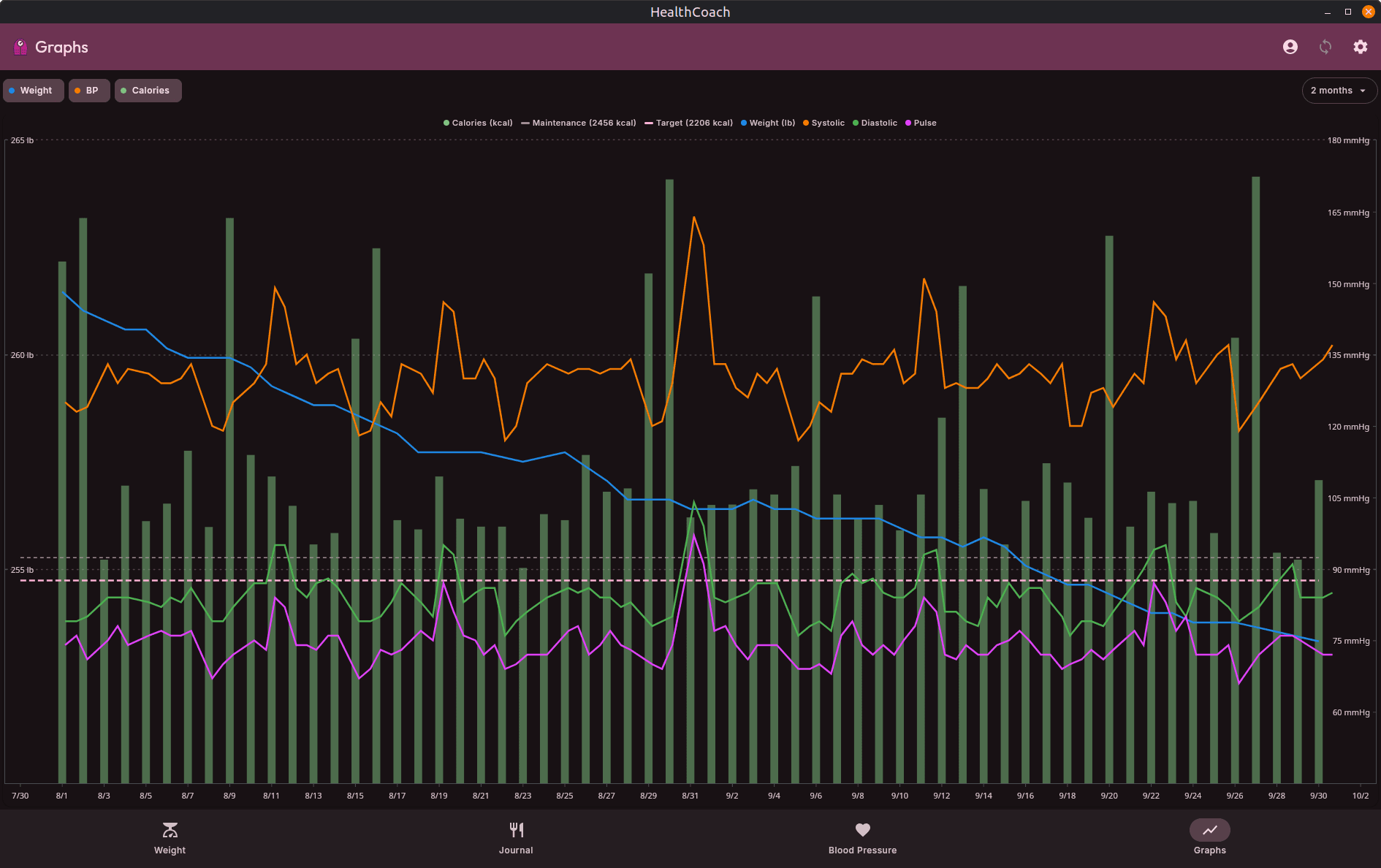
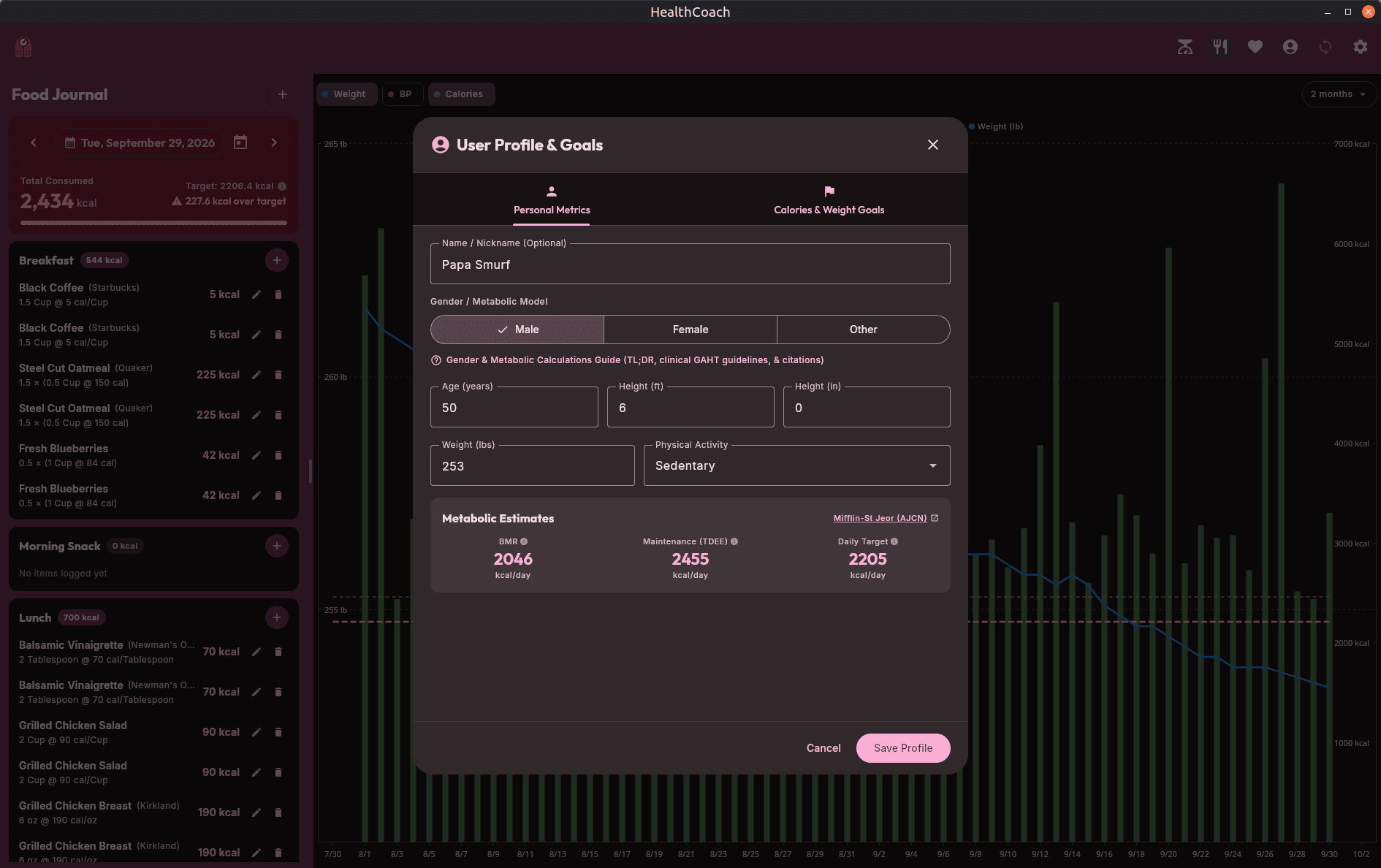
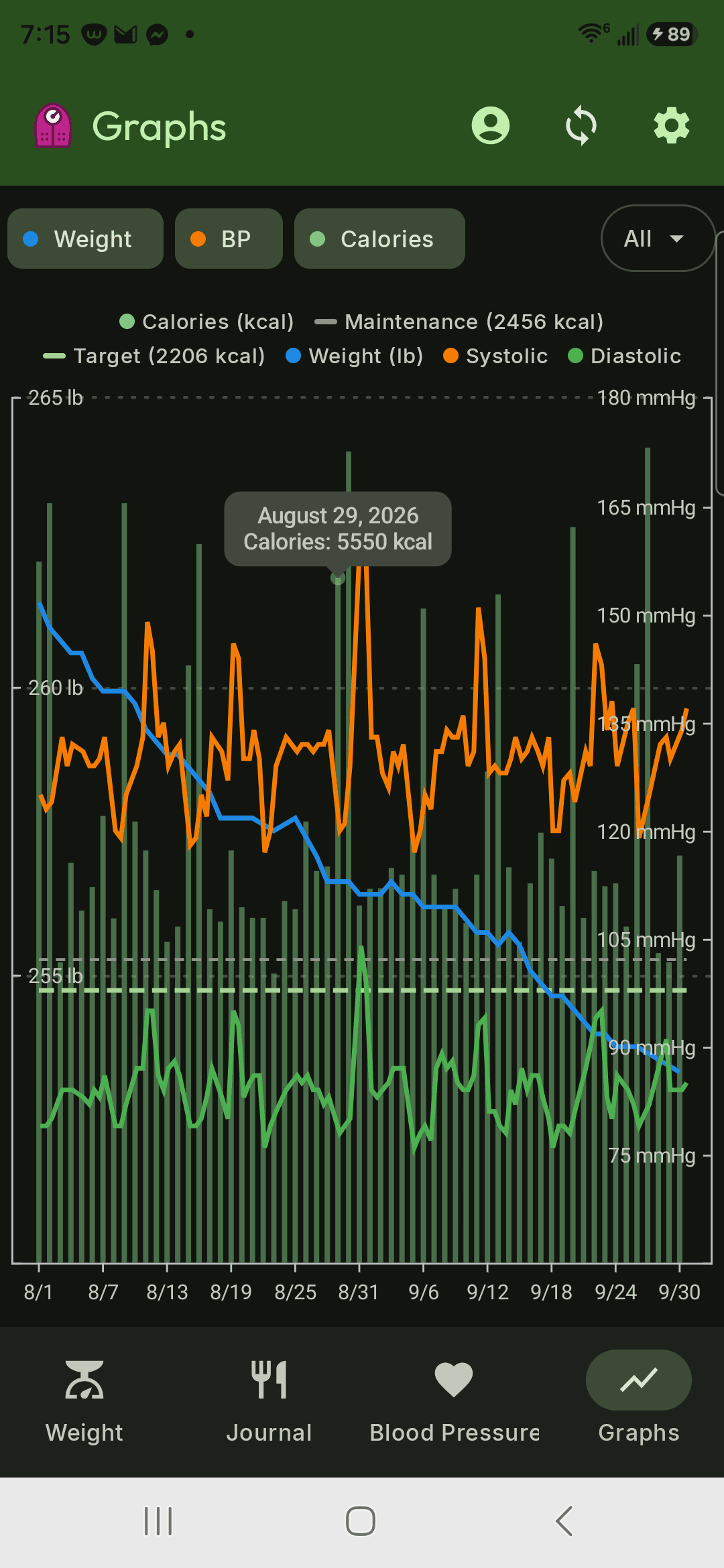
HealthCoach is a personal health tracker built with Kotlin Multiplatform and Compose Multiplatform. It runs as a desktop app on Linux, Windows, and macOS and as a native Android app, and stores everything in an embedded SQLite database on the device. There is no account system and no telemetry: the app does not contact any server unless you configure sync yourself.
The app covers three tracking areas in one place. A food journal splits meals into breakfast, lunch, dinner, and snacks, keeps a reusable food library with serving sizes and calorie densities, recalculates calories as you change portions, and shows daily intake against a maintenance baseline and a goal. Goals come from a Mifflin-St Jeor BMR and TDEE estimate and can be set as a weekly rate, a target weight by date, or a manual calorie adjustment. Weight entries are grouped by month with net-change summaries and color-coded deltas, and blood pressure logs capture systolic, diastolic, and optional pulse readings with automatic American Heart Association classification from normal through hypertensive crisis. A compound chart layers weight, blood pressure, pulse, and calorie intake on independent axes.
Sync is opt-in and peer-free. You can point HealthCoach at a local folder or a mounted cloud drive, authorize its own Google Drive appDataFolder with PKCE OAuth, or pair a desktop and an Android device over the local network with mDNS discovery and PIN authentication. A three-way BASE/LOCAL/REMOTE merge with last-write-wins on update timestamps and a schema-version check keeps devices consistent without a central server.
HealthCoach replaces the paid subscription tiers of calorie and weight-loss apps for the tracking part: the daily food log, calorie targets, weight history, and progress projections that MyFitnessPal, Cronometer, Lose It!, and Noom charge for. It also stands in for dedicated blood pressure logbooks. It is not a medical device, and the AHA categories and metabolic numbers are reference calculations rather than advice.


Frequently Asked Questions
Which platforms does HealthCoach run on?
HealthCoach ships desktop builds for Linux (.deb, .rpm, Flatpak, and tarball) and Windows (.msi and .zip), plus an Android APK and app bundle. The desktop app can also be built from source for macOS, where its data paths are documented, but no macOS package is published in the GitHub releases. There is no iOS build.
How does HealthCoach sync data between my devices?
You choose the transport yourself. HealthCoach can write to a local folder or mounted drive, including folders synced by Proton Drive, OneDrive, or Dropbox, save into the private Google Drive appDataFolder using its own PKCE OAuth flow, or pair a desktop and an Android device directly over Wi-Fi using mDNS discovery and PIN authentication. Conflicts are resolved with a three-way BASE/LOCAL/REMOTE merge and last-write-wins on the updated_at timestamp.
How do I back up or move my HealthCoach data?
All records live in a single SQLite file, healthcoach.db, and preferences live in a plain JSON file, settings.json. Both sit in the platform data directory: ~/.local/share/healthcoach on Linux, %LOCALAPPDATA%\healthcoach on Windows, ~/Library/Application Support/healthcoach on macOS, and the app's private files directory on Android. Copying those two files is a complete backup, and the database can be opened with any SQLite tool. HealthCoach does not document a CSV or PDF export wizard.
What do I need to build HealthCoach from source?
The desktop app needs JDK 17 or newer plus the Gradle wrapper, which you run with ./gradlew :desktopApp:run or :desktopApp:packageDistributionForCurrentOS. Building the Android app additionally requires the Android SDK at API level 34 or higher. Linux Flatpak packages need flatpak, flatpak-builder, and the Freedesktop 23.08 runtime and SDK installed.
How are calorie targets and weight goals calculated?
HealthCoach estimates basal metabolic rate and total daily energy expenditure with the Mifflin-St Jeor formula from your profile data. You can then set a goal as a weekly rate such as one pound per week, as a target weight with a target date, or as a manual calorie adjustment, and the app projects the expected weight trajectory against your logged weights. Weight can be entered in pounds or kilograms with automatic conversion.
OpenAltFinder Score
Project Details
Repository details
Updated 10/24/2026, 1:00:57 PM
View RepositoryGet the latest open source alternatives delivered weekly.
Discover tools that give you freedom from proprietary software.
Compare HealthCoach with
Similar open source alternatives
Stronk
Free, open-source weightlifting tracker for logging lifts, sets and reps — a private, installable web app and alternative to Hevy and Strong.
 MyFitnessPal
NutriTrace
Self-hosted personal nutrition tracker with PWA and Android app. No telemetry, no cloud sync, full data ownership.
MyFitnessPal
wger
Self-hosted workout and fitness manager with nutrition tracking and mobile apps.
MyFitnessPal
SparkyFitness
Track meals, workouts, water, and health metrics with AI-powered insights for the whole family. SparkyFitness is a self-hosted, privacy-friendly fitness tracker that puts you in control.
MyFitnessPal