
Authentik
Open source identity provider and SSO solution that replaces Auth0 and Okta with a self-hostable, flexible authentication platform.
Open source alternative to:

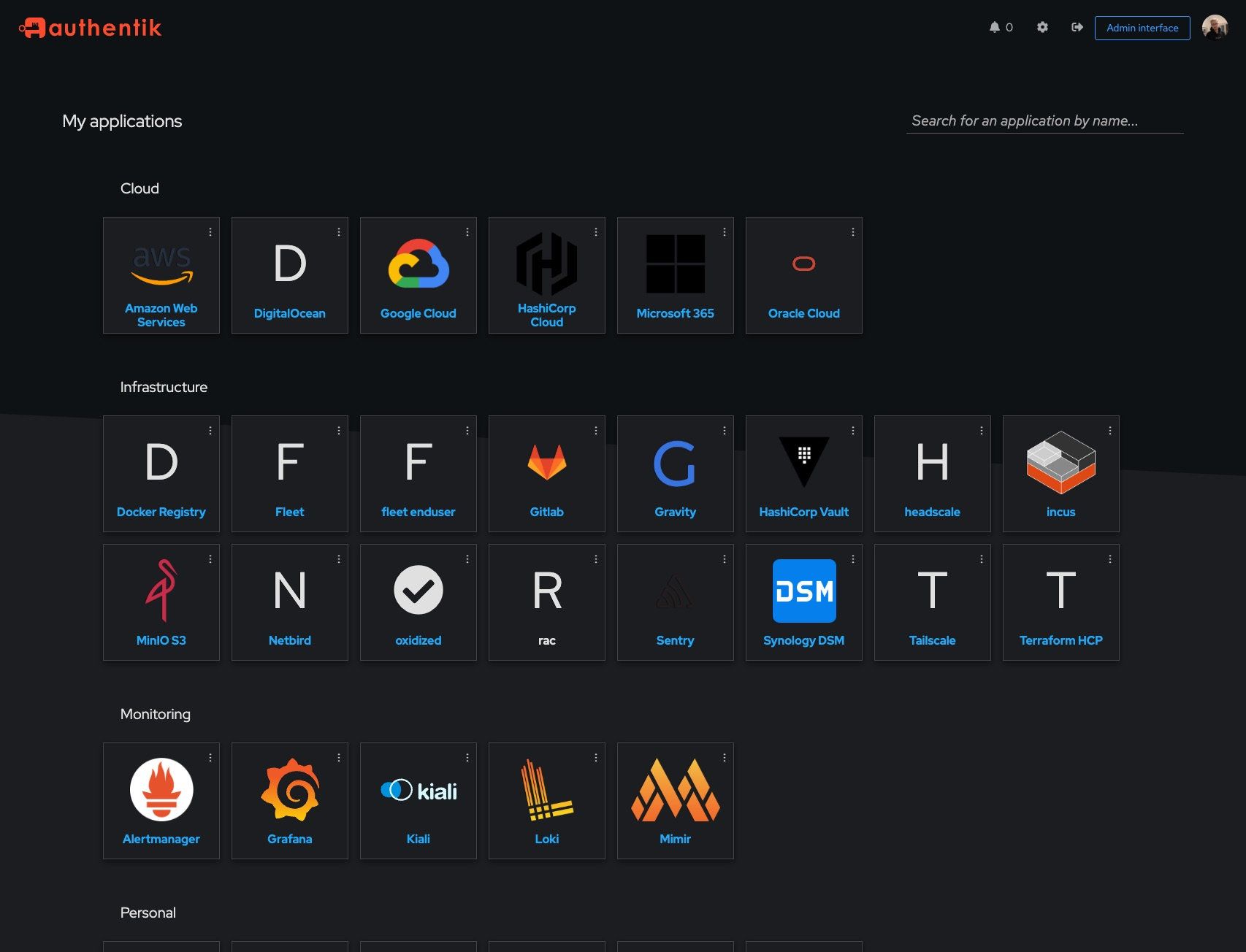
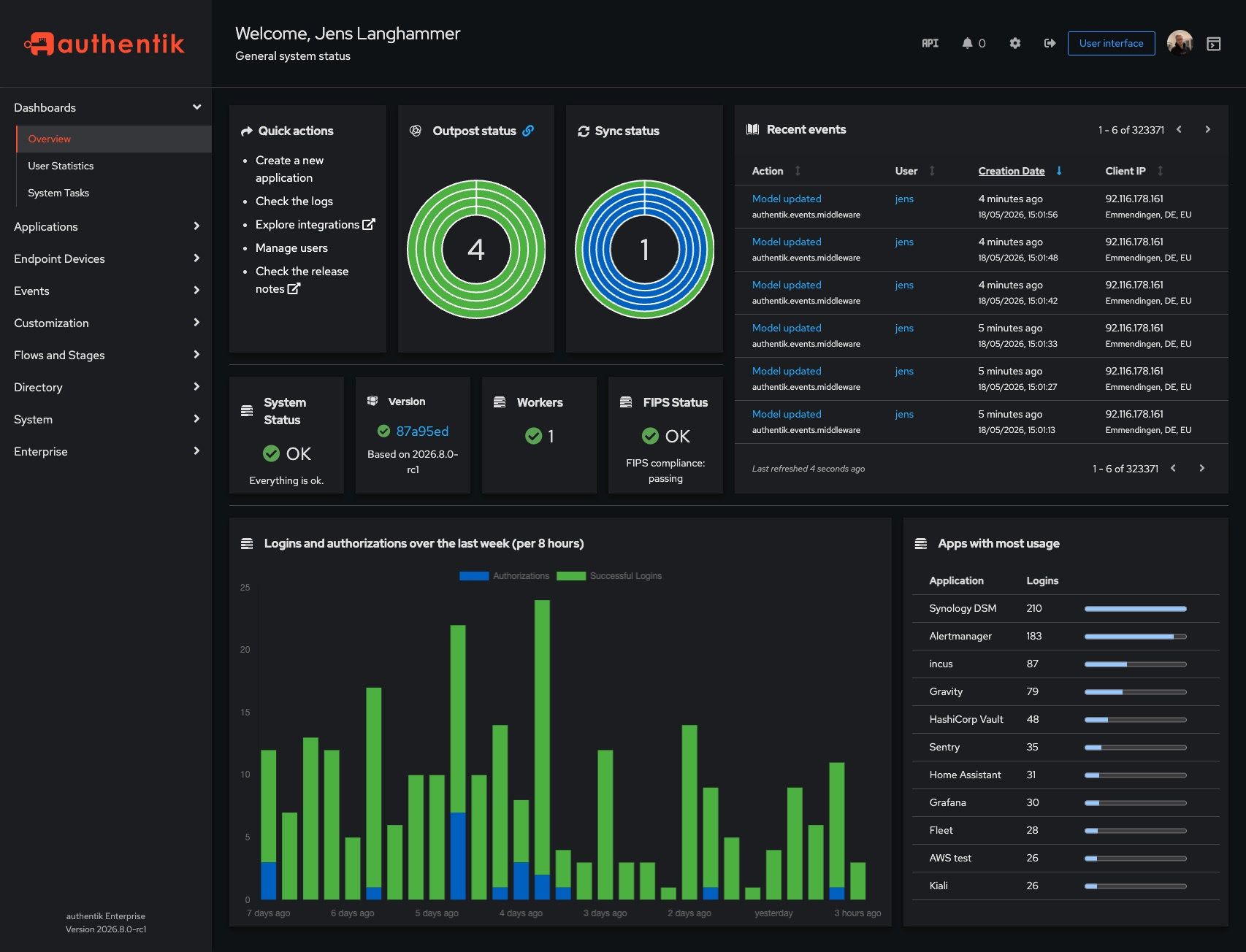
Authentik is a versatile, open source identity provider that provides single sign-on, user enrollment, and authentication flows for modern applications. It is a popular self-hostable alternative to Auth0, Okta, and OneLogin for teams that want full control of their identity stack.
Authentik supports SAML, OAuth2, OpenID Connect, LDAP, RADIUS, and SCIM, and ships with a polished admin UI, configurable flows for passwordless login, MFA, passkeys, and social logins, and a powerful proxy provider for adding auth in front of legacy apps. It integrates natively with hundreds of services through a comprehensive provider catalog.
Released under an MIT-style license and built on Python and React, Authentik is widely used by small businesses, universities, and homelabbers that want an enterprise-grade identity provider without the per-user pricing of commercial IAM platforms.
Categories:
Build with:

Frequently Asked Questions
Which platforms does authentik run on?
authentik is a self-hosted application that you deploy with the official Docker Compose setup or on Kubernetes via the published Helm chart. The server runs as a Python/Django backend plus a Go-based proxy outpost, and can be installed on any modern Linux host. The admin, user, and flow interfaces are web-based and work in any modern browser.
What protocols and identity standards does authentik support?
authentik acts as a provider for OAuth2, OpenID Connect (OIDC), SAML 2.0, LDAP, SCIM, and RADIUS through lightweight proxy outposts. The same instance can serve any combination of these, so you can use OIDC for one application, SAML for another, and SCIM for provisioning, without standing up separate systems.
What authentication factors can end users use?
Out of the box, authentik supports username and password, TOTP authenticator codes, WebAuthn passkeys and security keys, push notifications through the authentik mobile app, magic links, and recovery codes. Admins assemble these into login flows using stages and policies, and can add social login sources such as GitHub, Google, or generic OIDC/SAML providers.
Is there a managed or enterprise version of authentik?
Yes. In addition to the MIT-licensed open source project, Authentik Security Inc. sells a source-available Enterprise edition with extra features, support SLAs, and a support center. The core platform, including all the providers and outposts, is identical between the two editions.
Does authentik expose an API for automation?
authentik provides a REST API for users, groups, applications, sources, and every other resource, with API tokens that can be scoped and rotated from the admin interface. It also supports Blueprints, which are declarative YAML files you can apply to provision or replicate entire setups, and it ships webhooks for outbound notifications.
OpenAltFinder Score
Project Details
Repository details
Updated 9/20/2026, 1:00:51 PM
View RepositoryRepository activity
Compare Authentik with
Similar open source alternatives

Keycloak
Open-source identity and access management with SSO, OAuth2, OIDC, and SAML support for modern applications.
 Auth0
Auth0
Trezur
Fast, secure, light-weight web-app to generate TOTP and HOTP tokens.
 Google Authenticator
2FAuth
Self-hosted web app to manage your Two-Factor Authentication (2FA) accounts and generate TOTP and HOTP codes from any browser.
 Authy
Authy
Tinyauth
The tiniest OpenID Certified self-hosted authentication and authorization server, with OAuth, OIDC, LDAP, 2FA, and Traefik/Nginx/Caddy middleware support.
Auth0
OTPHub
Simple OTP app for desktop and mobile.
Google Authenticator
Stack Auth
Open-source authentication platform for Next.js and React, built as an alternative to Auth0 and Clerk.
Auth0