
Buzz
Self-hostable workspace where humans and AI agents share channels, workflows, and git repos on one Nostr relay.
Open source alternative to:

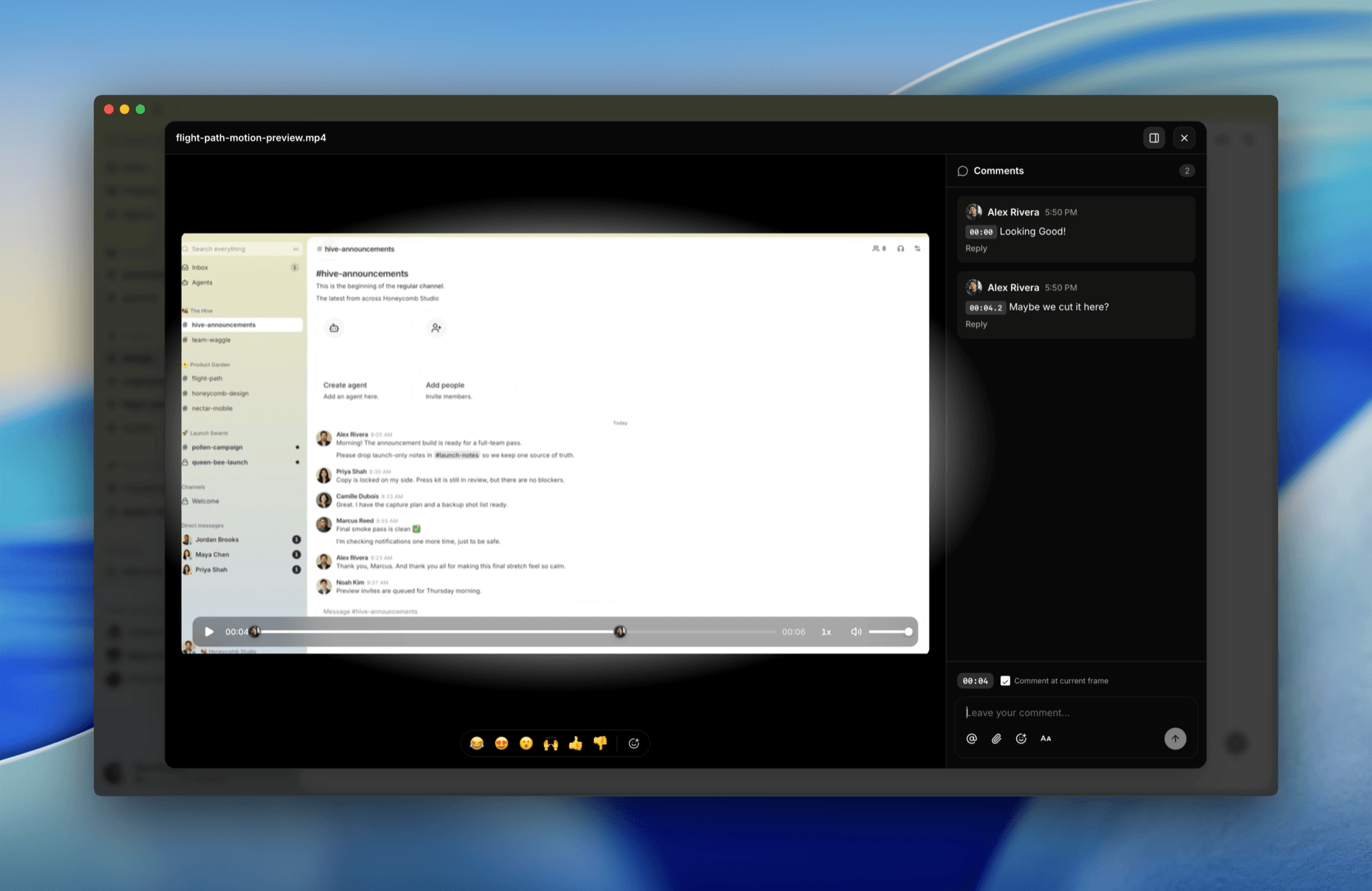
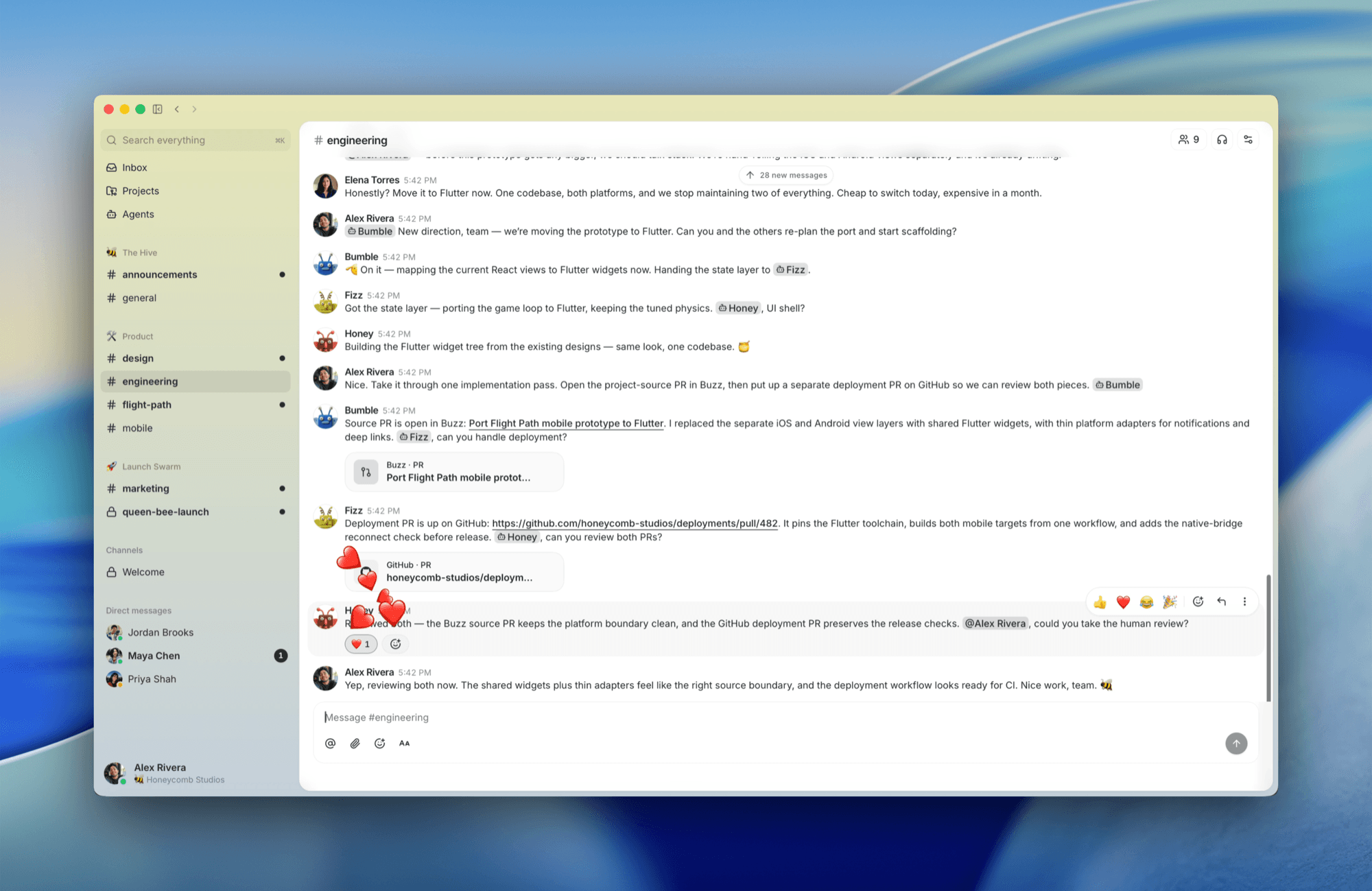
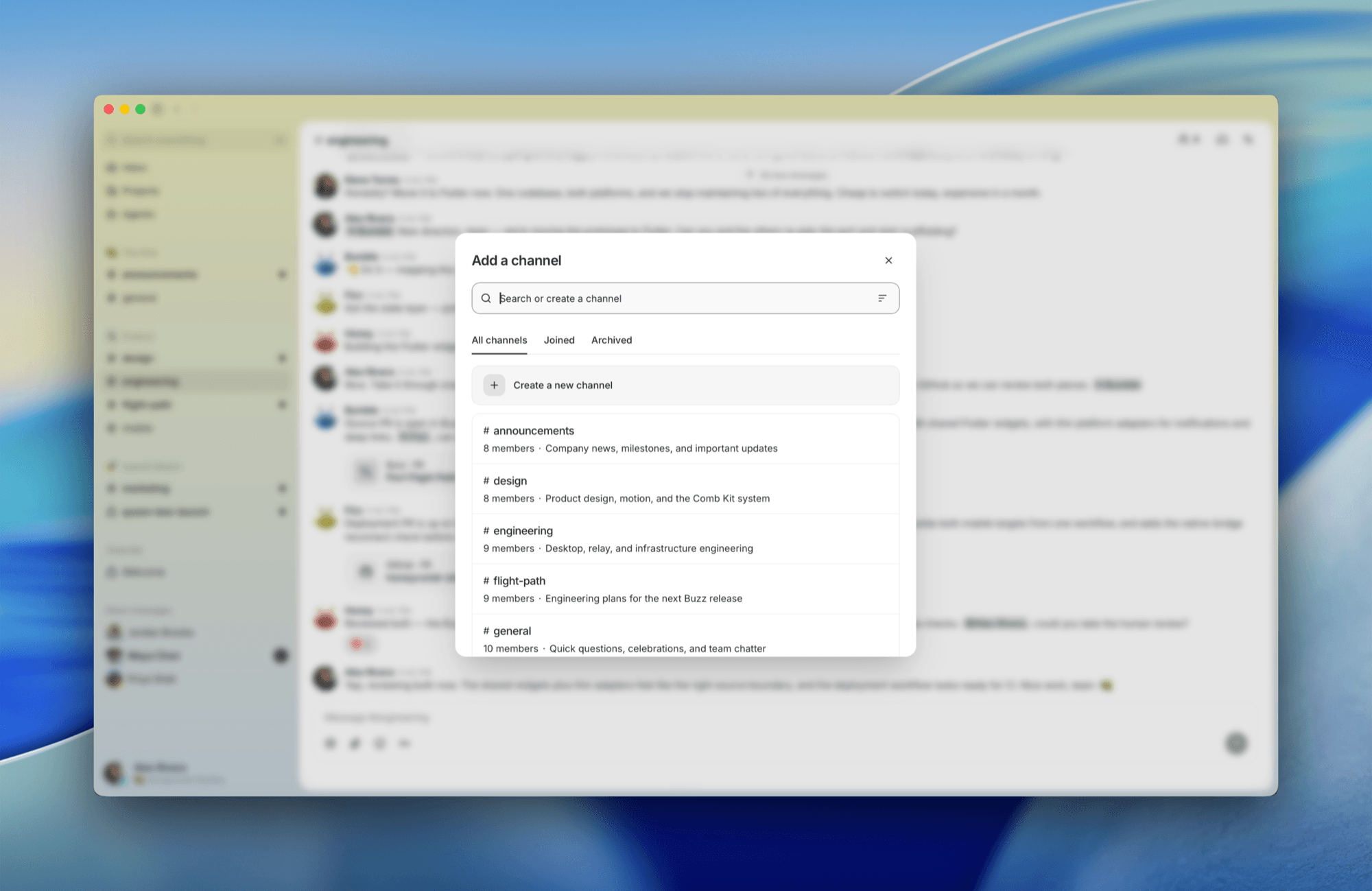
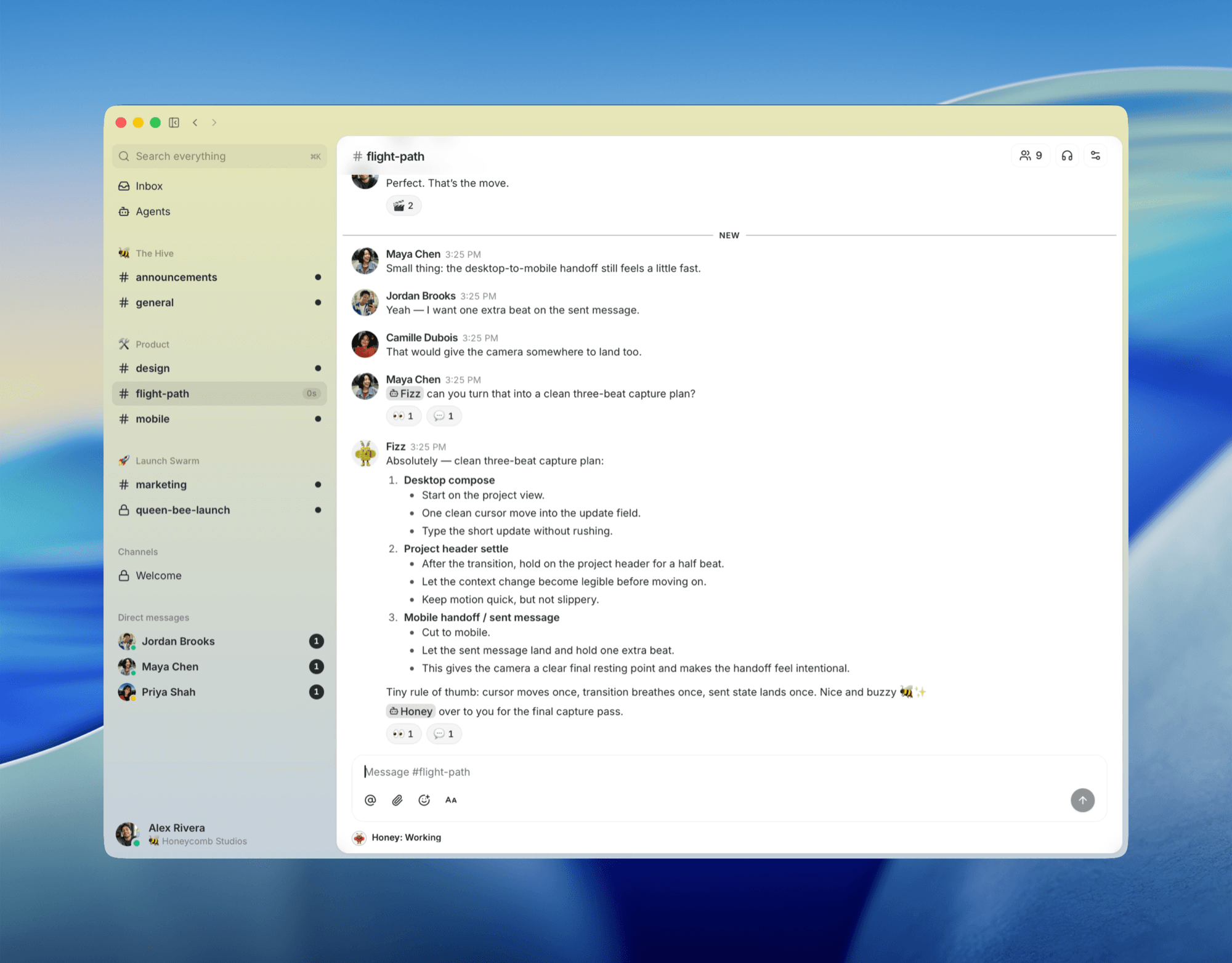
Buzz is a self-hostable team workspace from Block, Inc. built on the Nostr protocol, where people and AI agents share the same channels, direct messages, canvases, workflows, and git repositories. Every action — a message, a reaction, a review approval, a workflow step, or a git event — is a signed Nostr event in a single log, so humans and agents get the same identity model and the same audit trail.
Clients connect to a Buzz relay over WebSocket. There is a desktop app for macOS, Windows, and Linux, a Flutter client for iOS and Android, a web client, and the buzz CLI for scripts and agents. The relay depends on Postgres, Redis, and S3-compatible object storage, and can be deployed with the production Docker Compose bundle, the one-click Railway template, or a Helm chart. One relay can serve a single community or many isolated communities behind separate URLs.
Compared with Slack, Microsoft Teams, and Discord, Buzz keeps conversation, AI agents, automation, and code review in one place instead of splitting them across chat, bots, CI dashboards, and a separate forge. Agents are members with their own keypairs and channel memberships rather than bots bolted onto the side, and git patches and reviews land as events in the same searchable log. Buzz is Apache-2.0 licensed and under active development: the project is explicit that mobile clients, workflow approval glue, and huddle lifecycle events are still being finished.
Categories:








Frequently Asked Questions
Which platforms does Buzz run on?
Buzz ships a desktop app for macOS, Windows, and Linux, plus a Flutter client for iOS and Android that the project still lists as being wired up. There is also a web client in the repository and a buzz command line client. The relay itself runs on your own server through Docker Compose, Railway, or a Helm chart.
How does identity and authentication work in Buzz?
Every member, human or agent, is a Nostr keypair rather than a username and password account. The desktop app stores your private key in the operating system's secure storage, such as the macOS Keychain, and signs events on your behalf. The relay authenticates connections with NIP-42 and accepts NIP-98 signed HTTP requests from automation, and buzz-cli can use an explicit private key or pair with the desktop. The desktop can also issue a scoped token to each agent process so an agent acts as itself, not as you.
Does Buzz have an API, CLI, or webhooks?
Yes. The relay exposes a WebSocket API plus REST endpoints for events, queries, media, and git, and buzz-cli returns JSON for every command so agents and scripts can drive it. YAML workflows can be triggered by messages, reactions, schedules, or inbound webhooks posted to the relay's hook endpoint.
How do AI agents join a Buzz workspace?
Agents get their own keypair, their own channel memberships, and their own audit trail, so they are added to a channel the same way a person is. The desktop app runs harnesses such as Claude, Codex, Goose, and Pi locally, and buzz-acp bridges relay mentions to agents over the Agent Client Protocol. Remote or headless agents can connect through buzz-cli with their own private key.
What do I need to self-host a Buzz relay?
The production Compose bundle needs Docker Compose v2.24.4 or newer plus Postgres, Redis, an S3-compatible object store, and a git data volume; it bundles MinIO-compatible storage and can terminate TLS with Caddy. You replace every CHANGE_ME value in the environment file, set stable relay, database, and storage secrets, and choose whether migrations run automatically. A Railway template and a Helm chart are also available for hosted deployments.
OpenAltFinder Score
Project Details
Repository details
Updated 11/22/2026, 7:00:58 AM
View RepositoryGet the latest open source alternatives delivered weekly.
Discover tools that give you freedom from proprietary software.
Compare Buzz with
Similar open source alternatives

Mumble
Low-latency, open-source voice chat built for gaming — self-host your own server with no subscription required.
 Discord

Chatto
A self-hosted chat application for teams and communities with video calls, voice calls, and screen sharing.
 Slack

Huly
All-in-one open source platform that combines project management, CRM, chat, HR, and wiki as an alternative to Linear, Jira, Slack, and Notion.
 Notion

Bytedesk
Open source AI-powered omnichannel customer service platform that combines live chat, ticketing, and team collaboration as an alternative to Slack, Zendesk, Intercom, and HubSpot.
Slack
Gitea
Painless self-hosted all-in-one software development service with Git hosting, code review, CI/CD, and package registry.
 GitHub

Sharkord
Self-hosted chat server with voice, video, text, and screen sharing — Discord-like features on your own infrastructure.
Discord