
Sentry
Self-hosted error tracking and performance monitoring: issues, traces, replays, logs, and cron monitors on your own infrastructure.
Open source alternative to:









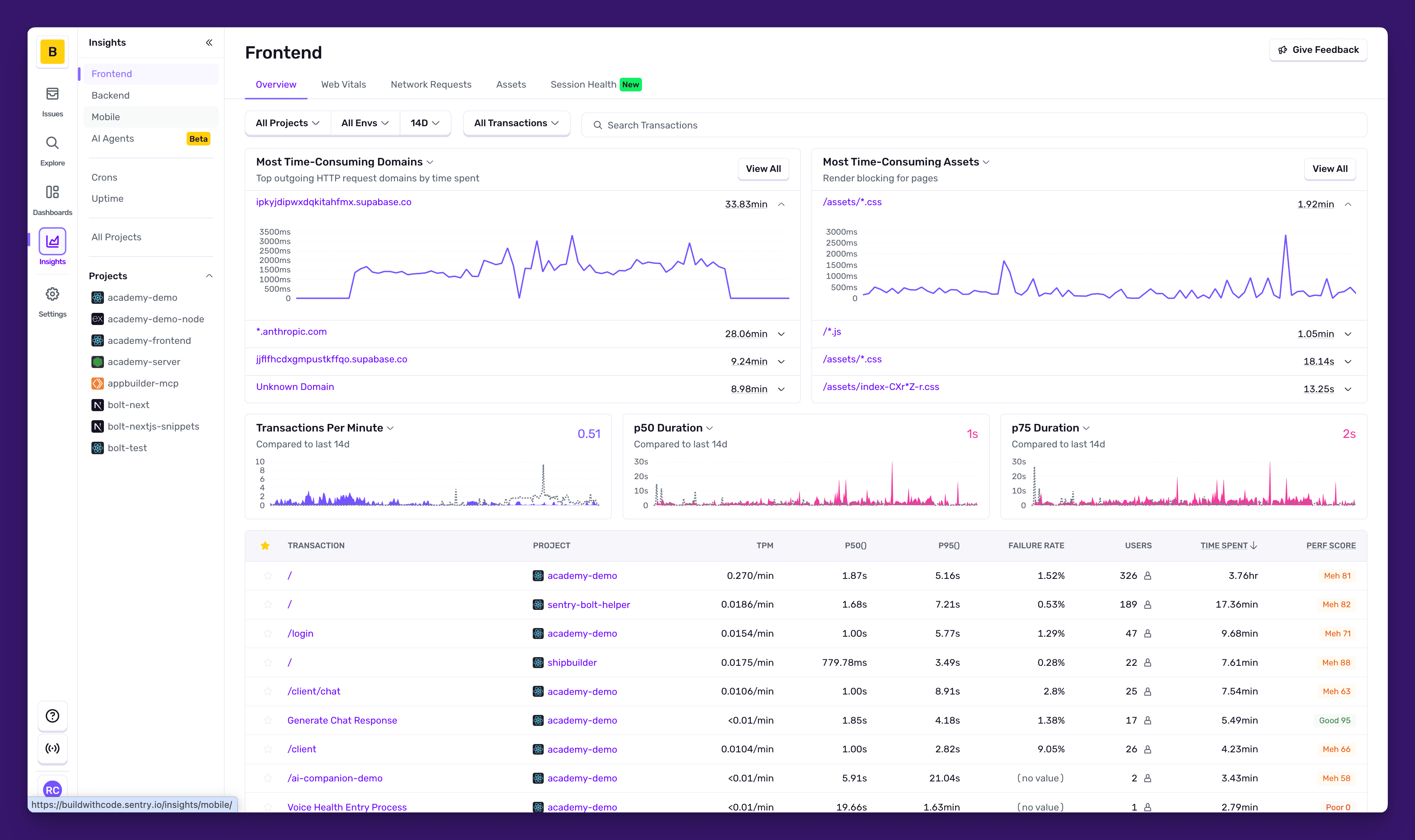
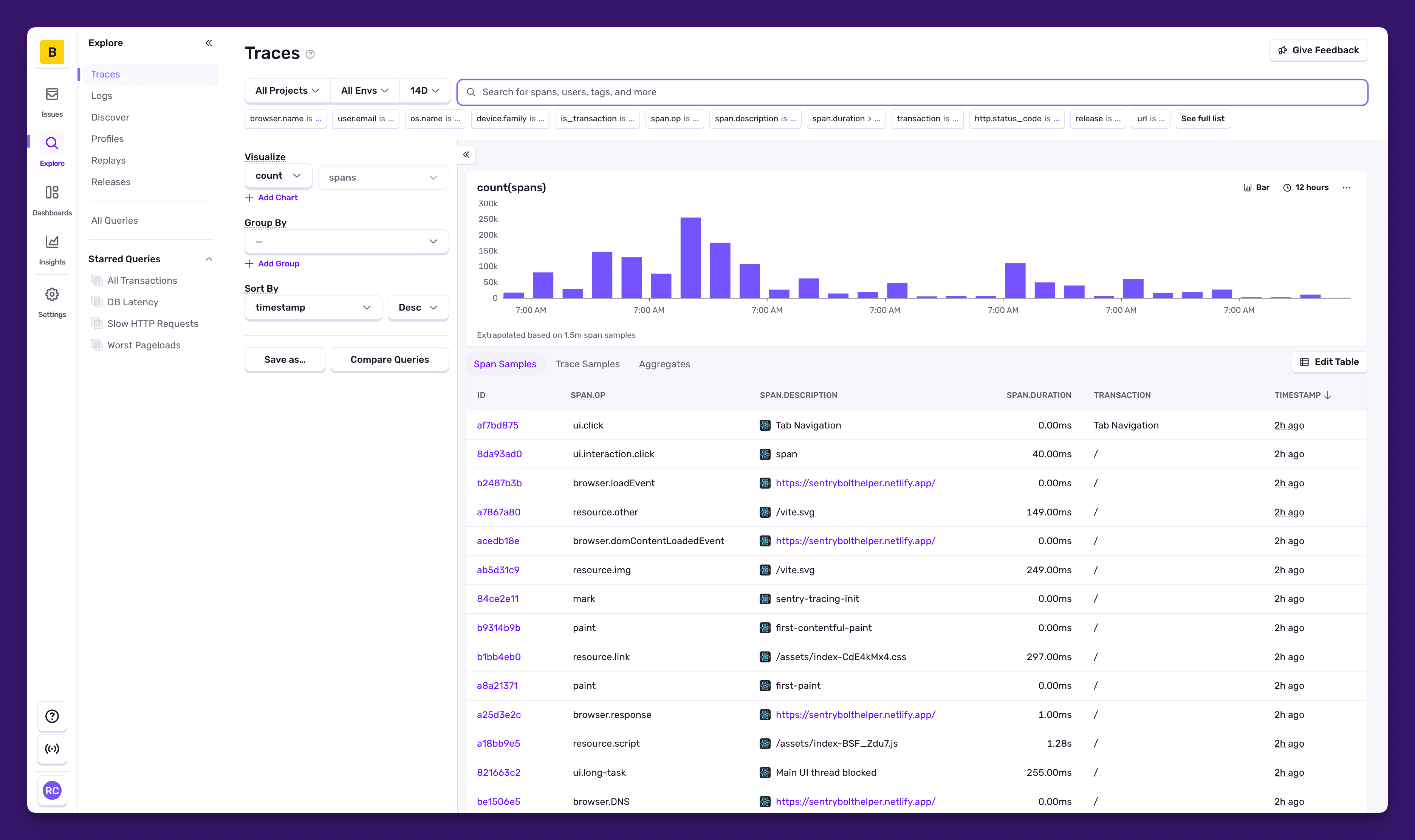
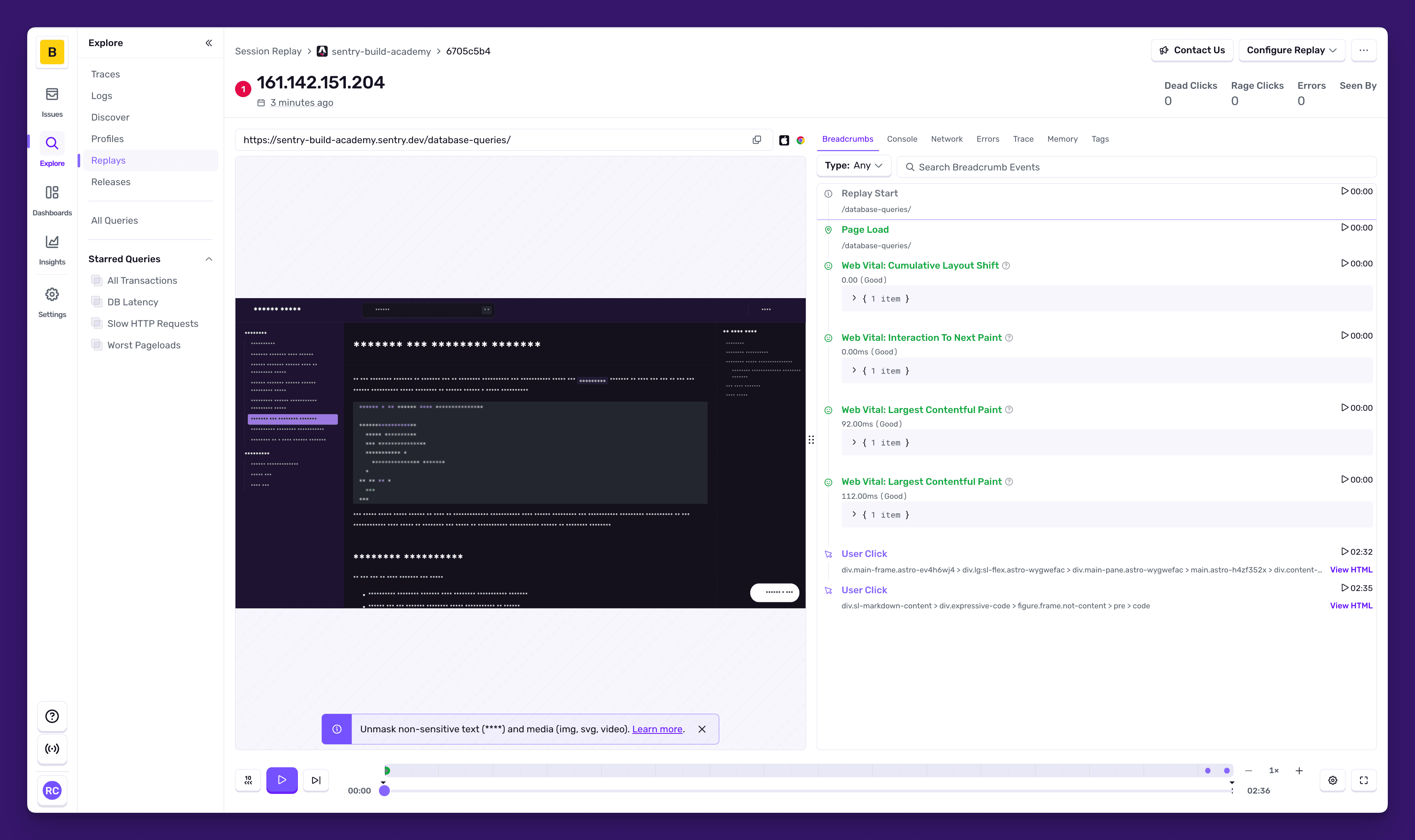
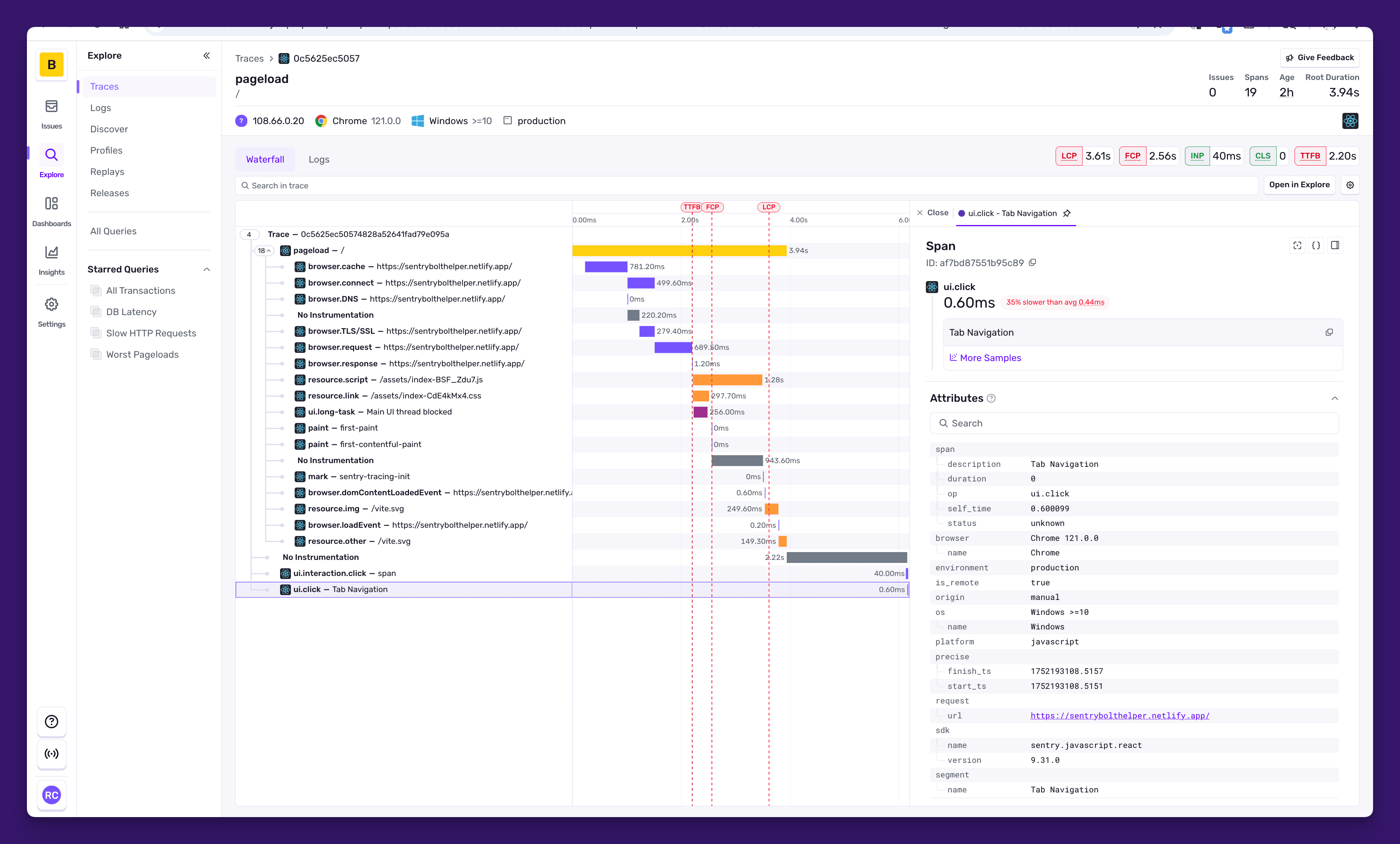
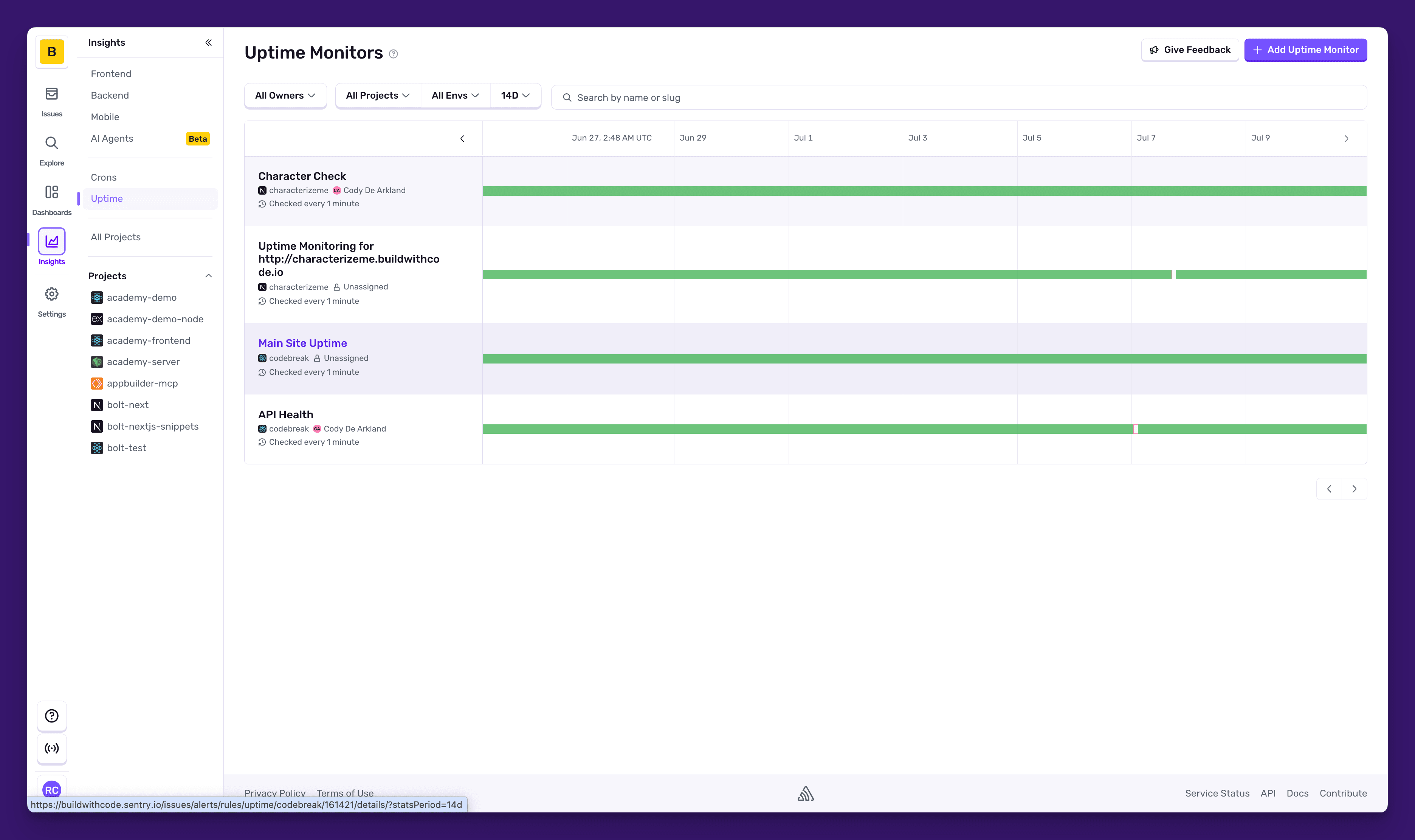
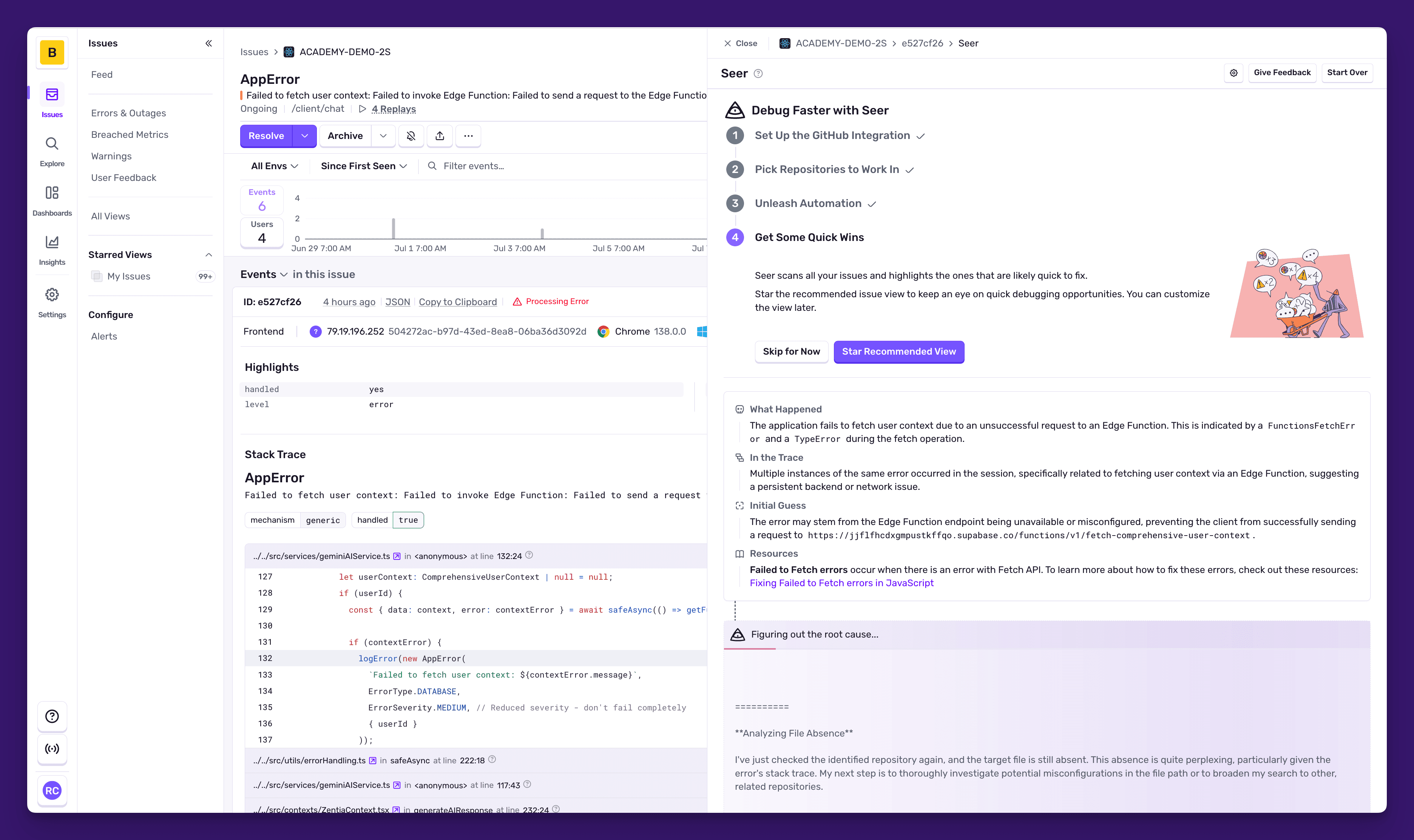
Sentry is an error tracking and performance monitoring platform built for developers. Applications send events to it through an SDK or its DSN endpoint, and Sentry groups them into issues with stack traces, breadcrumbs, release context, and the tags needed to see exactly who is affected. Around that core it bundles tracing and spans, session replay, structured logs, cron monitors, uptime checks, and profiling, all reachable from the same issue view.
The platform is the same codebase that powers sentry.io, with a maintained Docker Compose deployment in the getsentry/self-hosted repository. Official SDKs cover JavaScript, Python, Ruby, PHP, Go, Rust, Java, Kotlin, Swift, Objective-C, .NET, C/C++, Dart/Flutter, Elixir, Perl and Clojure, plus game engines such as Unity, Unreal and Godot. Self-hosted Sentry behaves like the SaaS Business plan without billing, so quotas and paid tiers do not exist — you own the storage and the data retention window.
Compared with SaaS error trackers such as Bugsnag, Rollbar, Raygun, Honeybadger and AppSignal, self-hosting keeps event data inside your own network and removes per-event pricing. The trade-off is operational: Sentry runs a stack of services (Postgres, Redis, Kafka, ClickHouse, Snuba, Relay) that wants a dedicated machine, and the project does not offer commercial support for self-hosted installs. It is released under the Functional Source License, which turns into Apache 2.0 two years after each release.
Categories:





Frequently Asked Questions
What are the system requirements for self-hosting Sentry?
Sentry needs Docker 19.03.6 or newer and Docker Compose 2.32.2 or newer. The documented minimum is 4 CPU cores, 16 GB of RAM plus 16 GB of swap, and 20 GB of free disk space, though 32 GB of RAM is recommended. Debian and Ubuntu based distributions are preferred; RHEL based systems have known install problems and Alpine Linux is unsupported by the install script.
Does self-hosted Sentry include every feature from sentry.io?
Almost all of them. Self-hosted Sentry is equivalent to the Business plan without billing, so pricing tiers, spike protection and spend allocation are missing. The closed-source Seer and other AI and ML features are also SaaS only, you cannot choose a data storage location because the data is already yours, and stack-trace resolution is limited for iOS and for native Android system symbols. PlayStation and Nintendo Switch support is limited as well.
Which SDKs can send data to a self-hosted Sentry instance?
Official Sentry SDKs exist for JavaScript, Electron, React Native, Python, Ruby, PHP, Laravel, Go, Rust, Java and Kotlin, Objective-C and Swift, .NET, C and C++, Dart and Flutter, Elixir, Perl and Clojure, plus Unity, Unreal Engine, Godot and PowerShell. Any client that can POST events to your instance's DSN endpoint also works.
Can I back up and restore a self-hosted Sentry instance?
Yes. The self-hosted scripts directory ships backup.sh and restore.sh for partial JSON backups that cover users, organizations, projects, teams, alerts, monitors and configuration but not events or issues. The sentry-admin.sh tool adds scoped exports with optional RSA or Google Cloud KMS encryption. For full event history you back up the sentry-data, sentry-postgres, sentry-redis, sentry-kafka, sentry-clickhouse and sentry-symbolicator Docker volumes.
Can Sentry run in an air-gapped environment?
Yes, though it is not a supported flow. The recommended route is installing and upgrading behind an HTTP proxy. Otherwise you build the Docker Compose stack on a connected machine, freeze the images with docker commit, transfer them via docker save and docker load, and start them on the isolated host. Set SENTRY_AIR_GAP to True to block outbound network calls and SENTRY_BEACON to False to stop version reporting to sentry.io.
Project Details
Repository details
Updated 10/22/2026, 3:00:33 PM
View RepositoryCompare Sentry with
Similar open source alternatives

Beszel
Lightweight self-hosted server monitoring hub with historical data, Docker stats, and configurable alerts.
 Datadog

Rootprint
Open-source, self-hosted log management with full-text search on object storage, OpenTelemetry ingestion, and team access control.
Datadog
ReJourney
Lightweight open-source observability tool with pixel-perfect session replay, real-time error detection, and journey mapping for web and mobile apps.
 Sentry

Pingflare
Pingflare is a self-hosted uptime monitoring stack built natively for Cloudflare Workers. Get fast global checks, instant alerts, and a beautiful status page on your own domain.
 Better Stack
OneUptime
Open-source observability platform combining uptime monitoring, incidents, on-call, status pages, logs, traces, and metrics.
 Pingdom

SigNoz
OpenTelemetry-native observability platform for logs, metrics, traces, alerts, and exceptions — a self-hostable Datadog and New Relic alternative.
Datadog