Budget Board
Self-hosted budgeting app for tracking accounts, spending, and financial goals, with bank syncing via SimpleFIN and ML-powered auto-categorization.
Open source alternative to:



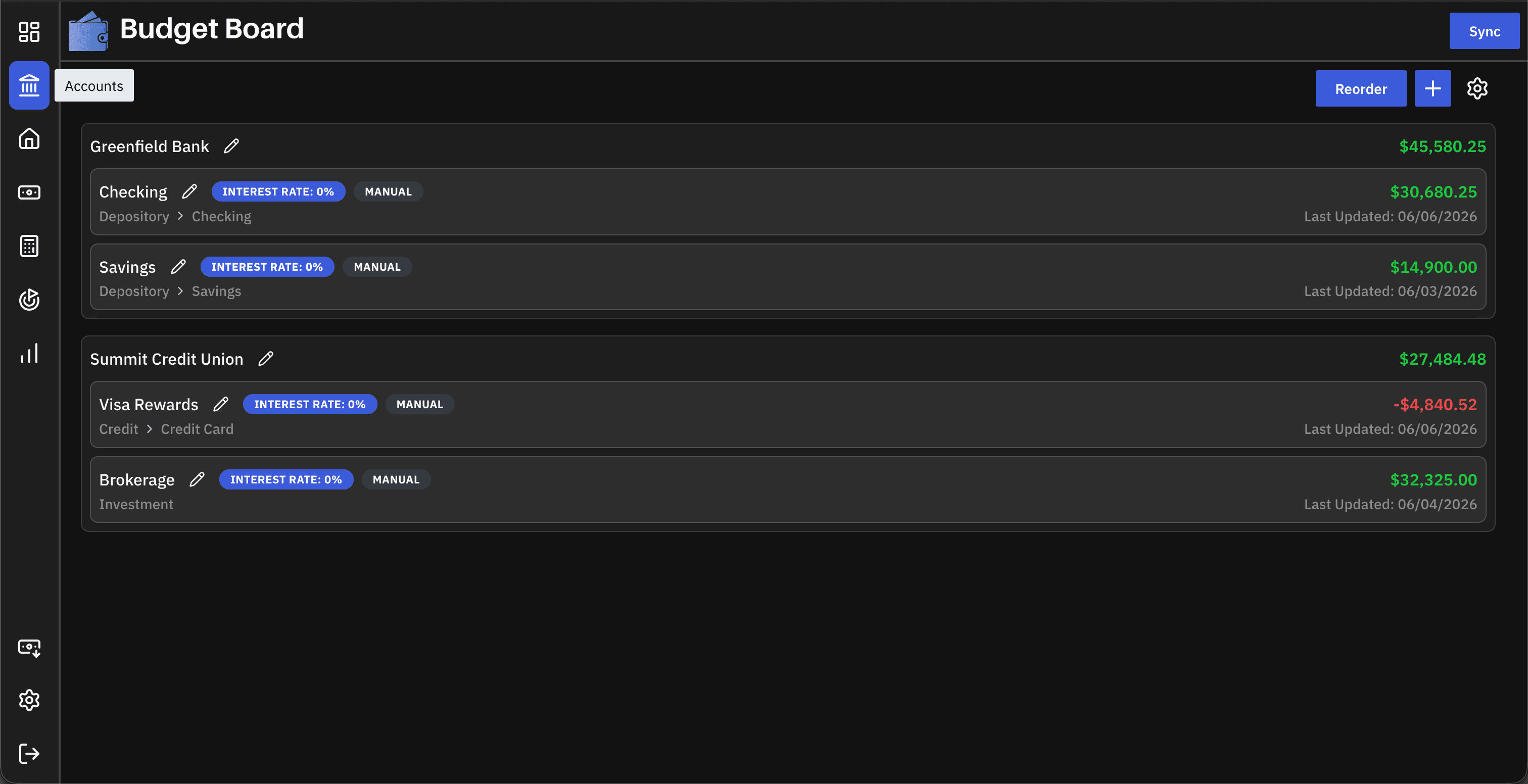
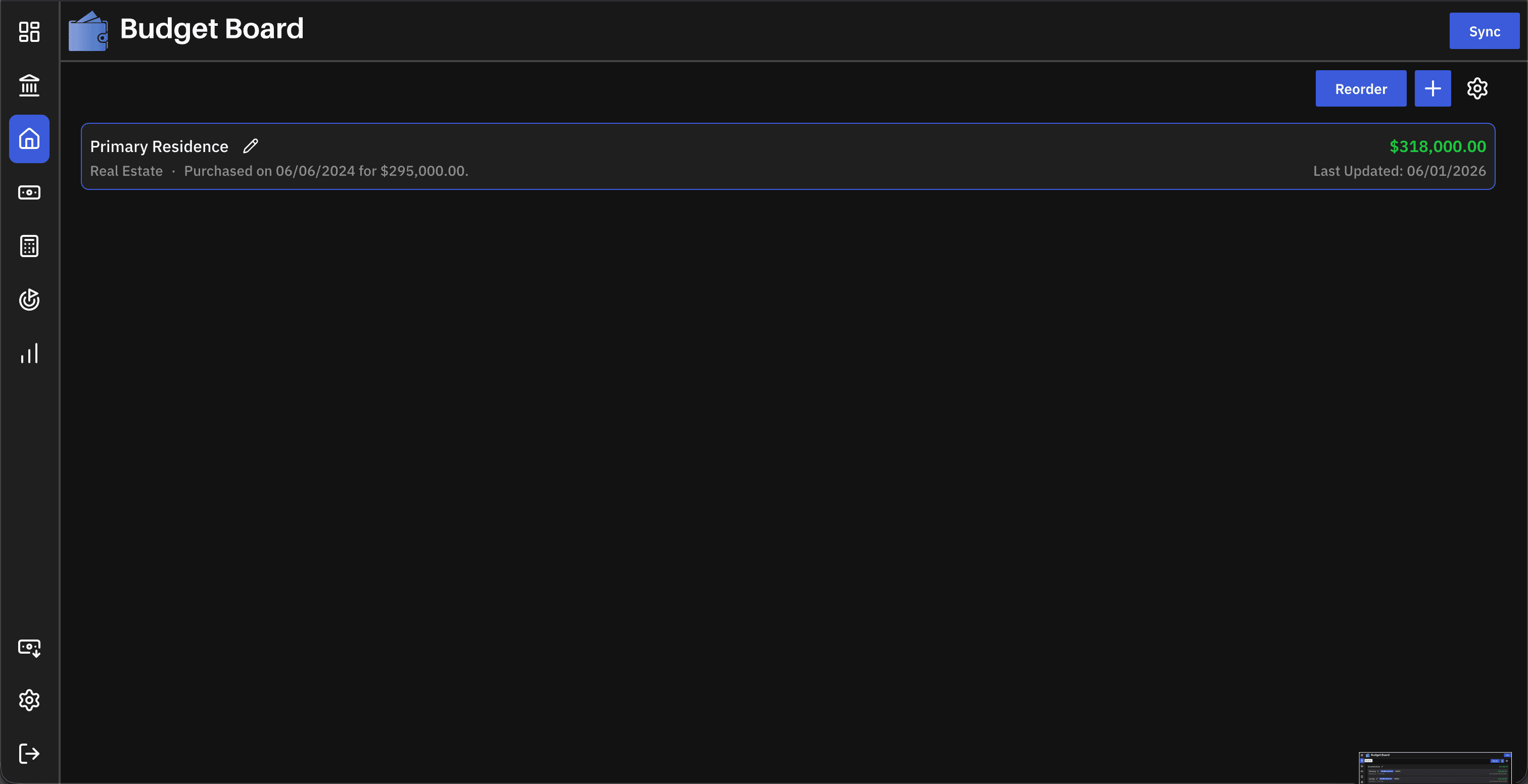
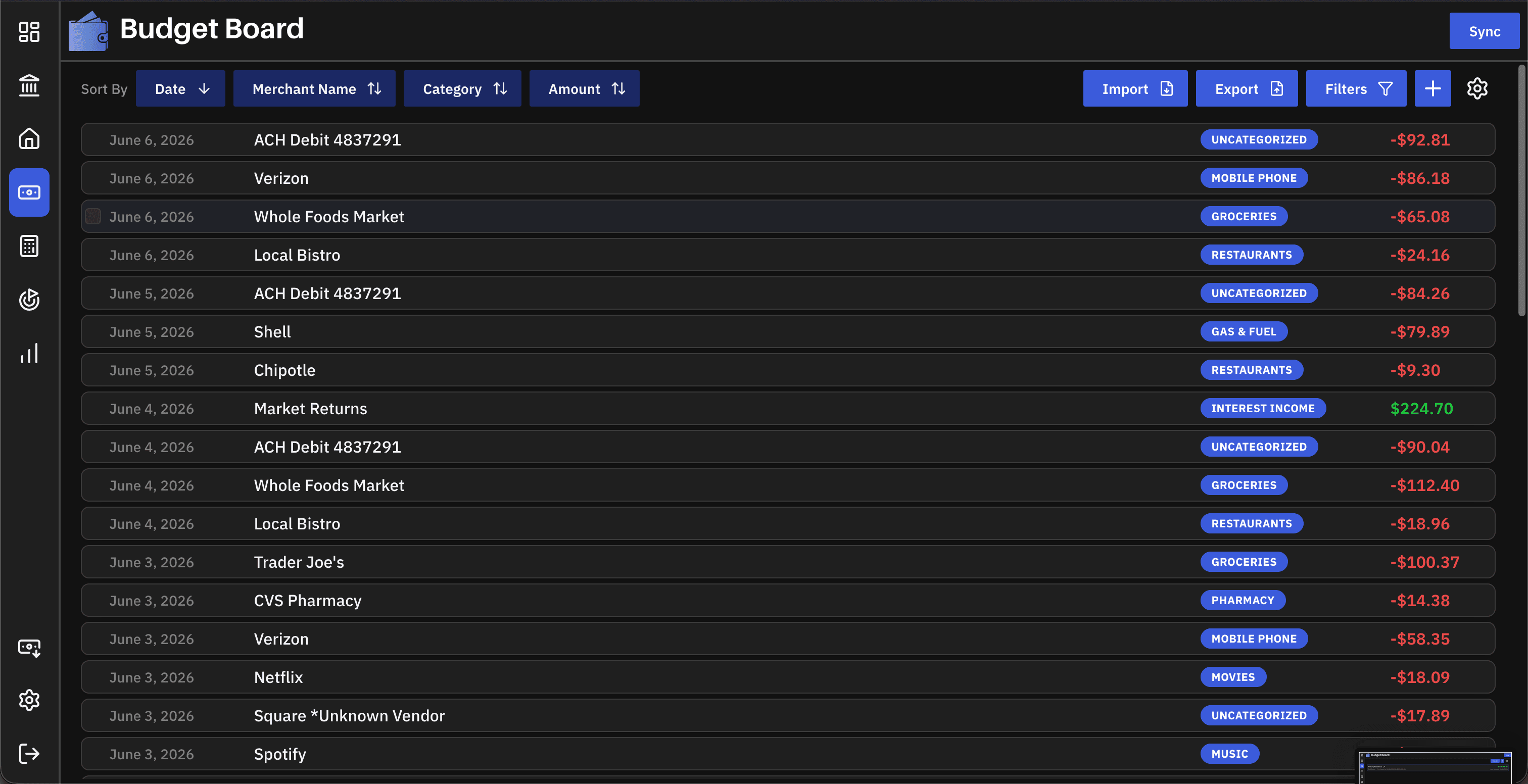
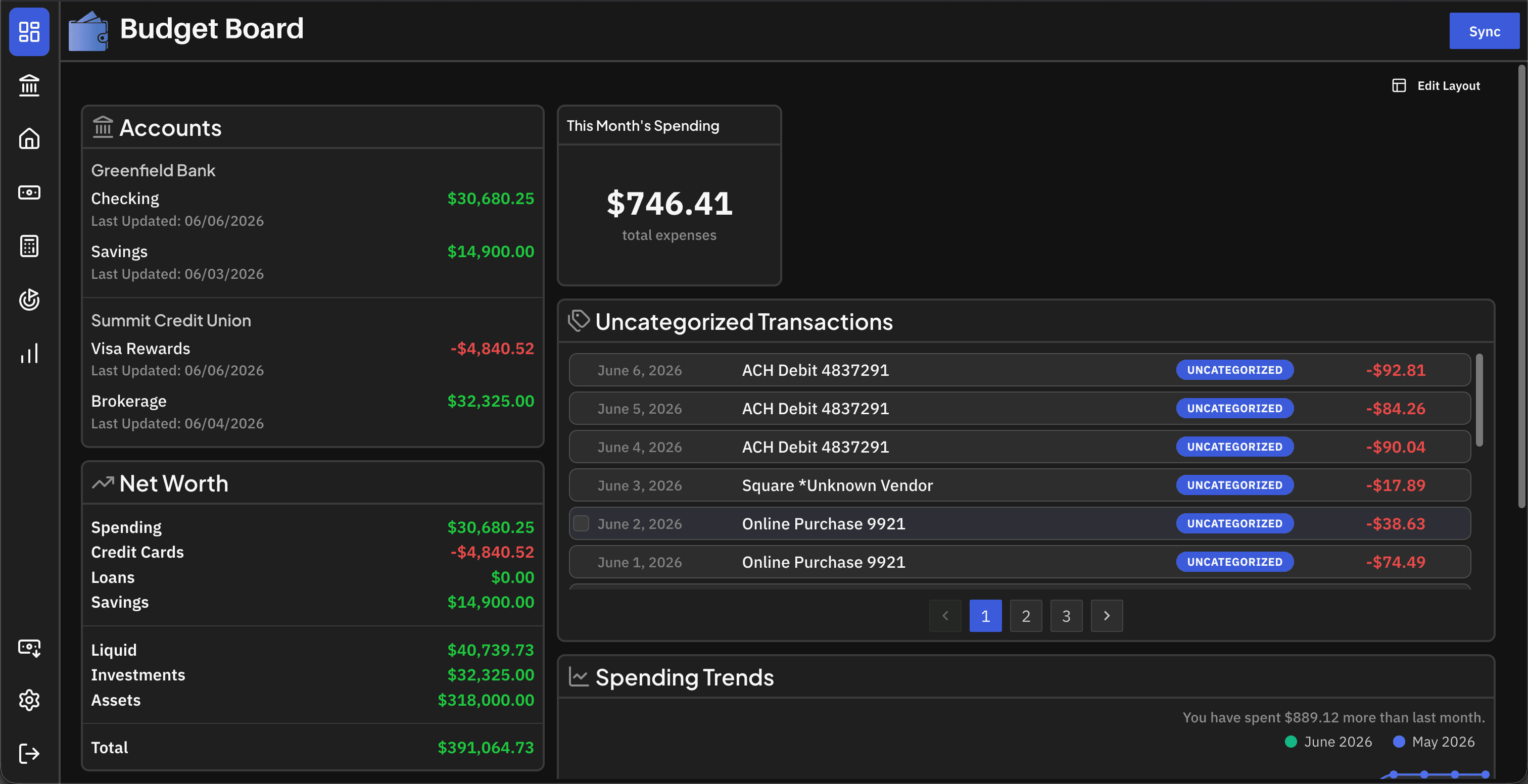
Budget Board is a self-hosted budgeting app built as a successor to Mint, the personal finance service that shut down in 2024. It brings your financial accounts (checking, savings, credit cards) and assets (property, valuables) together in one dashboard where you can record transactions, set monthly budgets per category, and work toward goals like saving for a house or paying off debt.
Getting data in is flexible: sync accounts and balances automatically through the SimpleFIN and LunchFlow aggregation services, import transactions in bulk via CSV, or add everything by hand. Categorization is largely hands-off — Budget Board trains a machine learning model on your own categorized transactions to predict categories for new ones, and a rule engine can automatically update transactions based on description, amount, or date. Customizable trends charts let you visualize spending over time with filters by date range, account, and category.
Because it runs on your own server, your financial data stays yours. The app supports local accounts with two-factor authentication or bring-your-own login through an OIDC provider, and the interface ships in English, German, French, and Simplified Chinese with localized date and number formats. Development is community-driven, with feature direction shaped by upvoted discussions and translations contributed through Weblate.

Frequently Asked Questions
How does Budget Board sync my bank accounts?
Automatic syncing works through the SimpleFIN and LunchFlow aggregation services — you create an account with the provider you prefer and connect it to Budget Board to pull in transactions and balances. Accounts without aggregation support can be added manually or fed via CSV import.
Can I import transactions from a CSV file?
Yes. Budget Board supports bulk CSV imports of transactions, which is the typical path for bringing in history from an exported bank statement or from Mint before it shut down.
How does automatic categorization work?
Budget Board trains a machine learning model on the transactions you have already categorized and uses it to predict categories for new transactions. You can also create rules that automatically update transactions based on criteria like description, amount, or date.
What authentication options does Budget Board support?
You can authenticate locally with two-factor authentication enabled, or bring your own identity provider and log in through OIDC. This makes it straightforward to integrate Budget Board into an existing self-hosted single sign-on setup.
Which languages does Budget Board support?
The interface is available in English, German, French, and Simplified Chinese, with additional community-contributed translations. Dates and numbers are displayed according to your selected language and locale, and new translations are contributed through Weblate.
OpenAltFinder Score
Project Details
Repository details
Updated 9/26/2026, 1:00:25 PM
View RepositoryRepository activity
Compare Budget Board with
Similar open source alternatives

Securo
Open-source self-hosted personal finance manager with bank sync, multi-currency budgets, investments, splits, and an optional self-hosted AI assistant.
 Mint
Mint
BudgetBee
BudgetBee is a Docker-based, self-hosted personal finance manager. Track expenses, budgets, accounts, savings goals, and net worth with full data ownership and zero subscriptions.
Mint
Renewlet
Self-hosted subscription tracker with timezone-aware reminders, budgets, spending insights, and ten notification channels.
 Rocket Money
Wallos
Open-source, self-hosted subscription tracker for visualizing recurring expenses, managing budgets, and saving money.
Rocket Money
ezBookkeeping
Lightweight, self-hosted personal finance and bookkeeping app with a mobile-friendly UI — an open alternative to Mint and YNAB.
Mint
Actual Budget
Fast, privacy-focused local-first personal finance app using zero-sum budgeting, with optional self-hosted sync.
 YNAB
YNAB